Salisbury Cathedral School
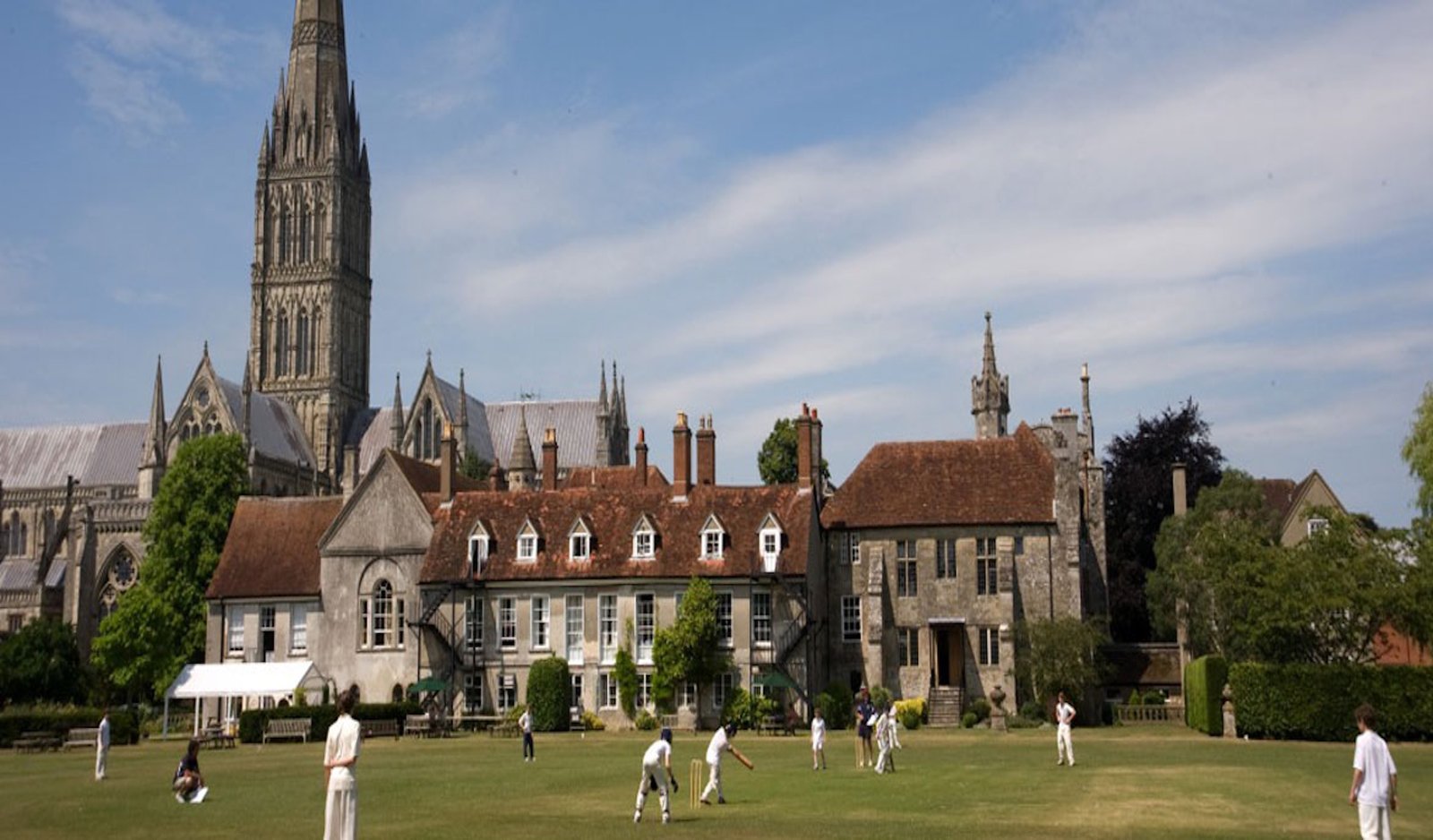
The 900 year history of the school, combined with its incomparable setting beneath the famous spire of Salisbury Cathedral, provides a unique atmosphere of tradition in which to educate our pupils. One of the oldest educational establishments in the world, our school was founded in 1091 by St Osmund, nephew of William the Conqueror and Bishop of Salisbury, to educate the choristers of his Cathedral at Old Sarum, a mile away from our present site.
After 150 years at Old Sarum, the choristers’ school moved to Salisbury, following the building of the new Cathedral and in 1947 the school finally came to its present home, based in the 13th century buildings and grounds of the Bishop’s Palace.

In more recent years, the school added a Pre-Preparatory department and in 1987, the school admitted girls for the first time. Today the school is fully co-educational. 1991 was a memorable year for the school and the Cathedral’s musical tradition with the founding of the first English Cathedral Girls’ choir. This quickly gained a strong reputation and has gone from strength to strength.
In March 2016, Salisbury Cathedral School merged with Leaden Hall School, also based in the Cathedral Close.
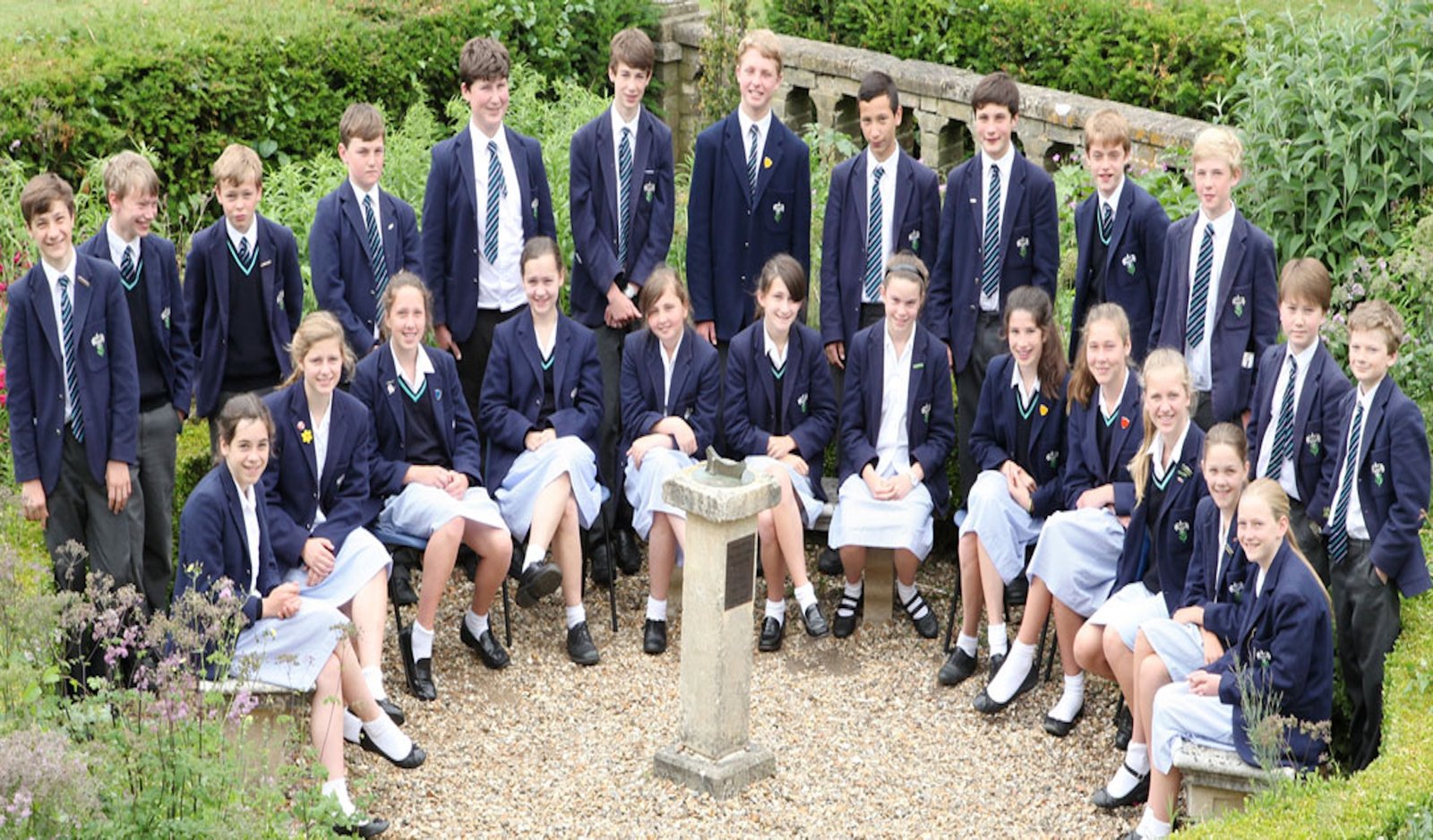
Today the school makes full use of its historic buildings and extensive grounds and continues to benefit from additional modern facilities.
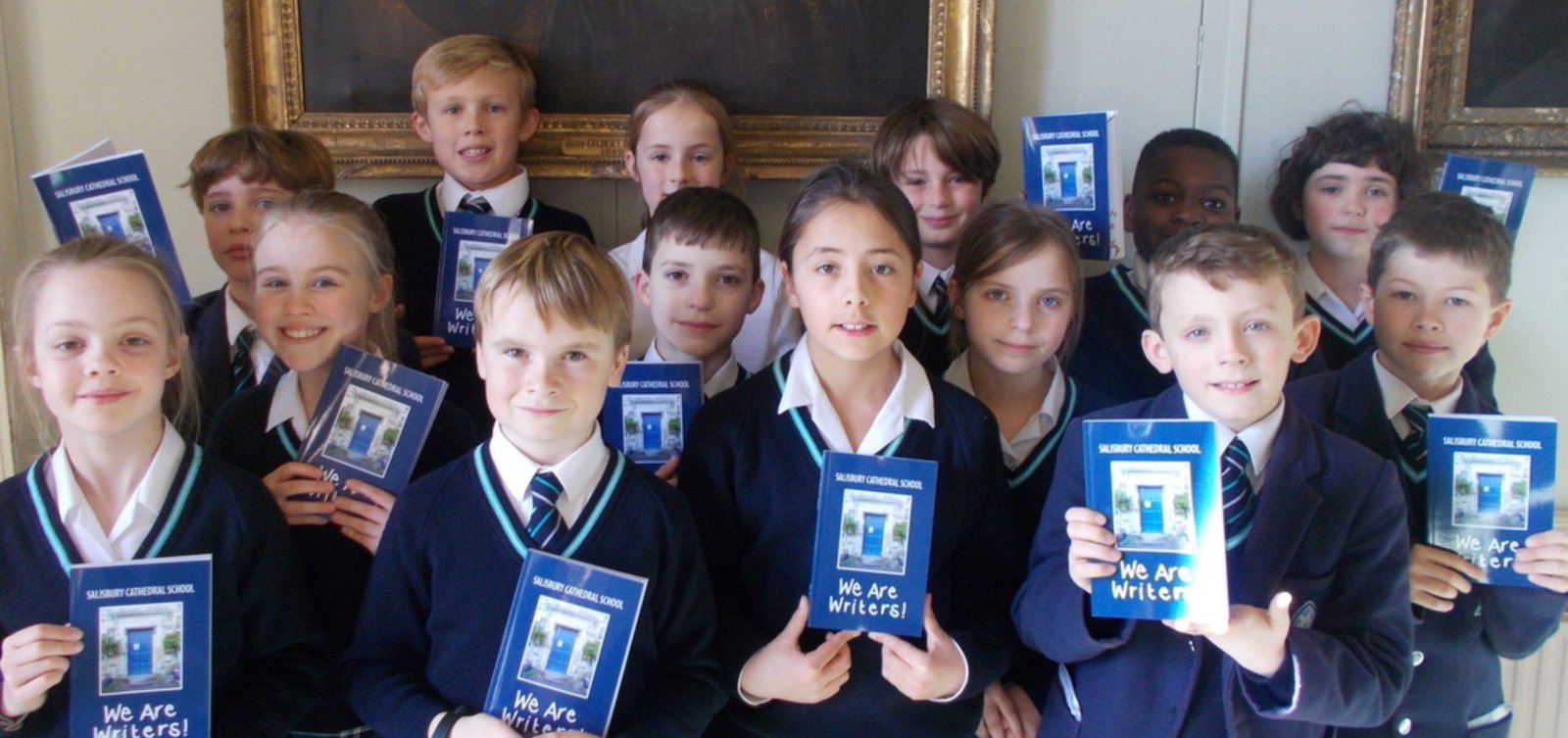
Salisbury Cathedral School foster an unpressured environment where pupils are encouraged and congratulated every step of the way, celebrating their achievements and promoting a strong sense of self-worth. The school focus on the individual child means that all staff play a role in discovering strengths and areas that need guidance and support.
Salisbury Cathedral School’s academic results are impressive and consistently out-perform competing schools but, more than this, the children who leave us are confident, self-assured, well-rounded and comfortable in their own skins.
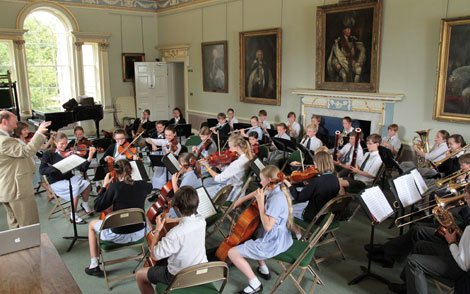
Music is at the heart of Salisbury Cathedral School and is undoubtedly one of our major strengths. The school educates the boy and girl choristers of Salisbury Cathedral and their expertise and skills enrich the lives of all members of our community. All children are encouraged to play an instrument and the wide range of ensembles, both choral and instrumental, is outstanding.
However, Salisbury Cathedral School offer so much more. Whether it is performing ambitious drama productions, winning regional science competitions and national sporting accolades, writing inspiring poetry or creating beautiful metal-work, pottery and art, we feel we have something to bring out every child’s talents.
UNDERSTAND SALISBURY CATHEDRAL SCHOOL
[su_tabs style=”default” active=”1″ vertical=”no” mobile=”stack” class=””]
[su_tab title=”CURRICULUM” disabled=”no” anchor=”” url=”” target=”blank” class=””]
Curriculum Overview
Salisbury Cathedral School broadly follow the revised primary curriculum through Key Stage 2 and combine Key Stage 3 topics with the requirements for Common Entrance and scholarship, following the ISEB syllabus. By the time they leave in Year 8, most children will be well on the way to GCSE standard in academic subjects and many report that, for the first year of their senior school, they go over material they have already been taught.
The School teaches a full range of subjects: English, Drama, Mathematics, Science, French, History, Geography, R.S. Computing, Class Music, PE and Games throughout the Prep school with pupils picking up Latin from Year 5.
Salisbury Cathedral School takes the view that all children have the potential to be gifted or talented in some fields and do not therefore label children as such. In preference, we offer a diverse range of activities both inside and outside the classroom which appeals to children with certain interests or talents. Additionally, there are formal workshops, often at senior schools, for those with particular skills. Sherborne’s ‘Cracking the Code’ day is popular, Godolphin run a number of activities including Classics and Creative Writing. There is the Dauntsey’s Dodecahedron competition and Southampton University’s Science challenge – at which we have an excellent record in winning! Additionally, we participate in a variety of national competitions and offer a broad range of activities, some designed for more able children: Code-breaking, Bridge, and Current Affairs to name but a few.
Children with learning issues are ably supported by our dynamic team in the Learning Centre and there is excellent communication between the Learning Support and teaching staff.
Children are taught in their forms for Years 3 and 4, being set only for Mathematics at this stage. They travel to subject specialists for PE, Games, French, Music, Computing and DT (sometimes Art). By Year 5, they are gaining independence and are moving to different teachers for most subjects. Years 7 and 8 are taught exclusively by specialists – always the Heads of Department – and are set in the following subjects: Mathematics, Science, English, Latin, French, Computing and Music.
Pupil progress is monitored closely and communication between staff and parents is excellent. Potential scholars are identified early and we have a pleasing track record of scholarships and awards in many disciplines. All pupils have proceeded to their first choice destination school in recent years.
Salisbury Cathedral School Aims:
- To provide outstanding teaching where academic, sporting, artistic and musical excellence is sought and celebrated; we want all pupils to be encouraged, excited and challenged through learning.
- To be an environment where self-esteem and strong friendships are fostered through outstanding pastoral care, and where open and trusting relationships with parents enable each child to flourish as they discover their individual interests; we want to develop children who better understand themselves, others and the world around them.
- To be an outstanding choir school, supporting a cathedral choir of international standing, which inspires and provides wide-ranging musical excellence for the benefit of every child.
[/su_tab]
[su_tab title=”TIMETABLE” disabled=”no” anchor=”” url=”” target=”blank” class=””]
THE CHARACTERISTICS OF The Day
08:00
Before school care
08:25
Years 3-5: Junior Choir (Tues), Hymn Practice (Weds)
08:30
Classrooms open
08:40
Registration/Assembly
09:00
Lesson 1 (Assembly – Mondays, Cathedral Assembly – Fridays)
09:40 – 10.40
Lessons
10:40
Break. Children are given a drink and healthy snack such as homemade flapjack, vegetable dips etc.
11:10 – 12.50
Lessons
12:50
Lessons continue for Years 5-8 (Years 3 & 4 lunch until 13:10)
13:10
Senior Lunch (Years 5-8)
13:50
Years 3 & 4 Lessons
14:10 – 16:10
Lessons
(15.30 – End of school on Wednesdays)
16.15
Sign Out in Form Rooms
16.15
End of School. Children may stay to ‘Little Tea’ (consisting of drinks, toast and fruit). This is free of charge
16.30 – 17.30
Clubs / Prep for day pupils
[/su_tab]
[su_tab title=”SUCCESS” disabled=”no” anchor=”” url=”” target=”blank” class=””]
THE SUCCESS OF THE SCHOOL
Salisbury Cathedral School is a co-educational day and boarding school for pupils aged from 3 to 13. It traces its origins to 1091 and throughout its history has provided education for the boy choristers of Salisbury Cathedral, and for girl choristers since 1991.
The school has a Christian ethos. The Cathedral Chapter, the governing body of the Cathedral, has ultimate responsibility for the appointment of the board of governors for the school. The composition of the board reflects the school’s close association with the Cathedral.
In March 2016 the school merged with the nearby Leaden Hall School, and since September 2016 it has occupied two sites owned by the Cathedral within the Cathedral Close. Currently the Lower School islocated on the old Leaden Hallsite and housesthe Nursery to Year 3 pupils, while Years 4 to 8 are located on the original Cathedral school site in the south-east corner of the Close, with the Bishop’s Palace at its heart.
From September 2017, all pupils will be taught on the Bishop’s Palace site and the small boarding house at Leaden Hall will merge with the other existing boarding house in to form one larger co-educational house. What the school seeks to do. The school aims to provide a rounded and fulfilling educational experience, through which confidence is gained and a love of learning is instilled. It seeks to: promote academic and musical excellence, alongside spiritual awareness; offer wide-ranging creative, physical and leadership opportunities which will enable pupils to develop skills and talents that equip them for life; and, particularly through its boarding community, provide a caring and happy environment and a strong community with Christian values at its core.
Support Individual Learning
The school have a team of qualified and experienced teachers who give specialist one to one lessons for Literacy, Numeracy and Study Skills. All the lessons are taught using multi-sensory techniques and they follow a highly structured and cumulative programme. Staff and pupils contribute to the targets that are set in Individual Education Plans and parents are encouraged to follow their child’s progress on a regular basis either by emails, phone calls or by coming in for a chat.
The school have a thorough screening programme in place and an efficient referral process which ensures that all children are carefully monitored for academic progress from an early age. Year 1 has a thorough catch-up programme which is available, if necessary, to ensure that the acquisition of basic literacy skills is secure. One to one help is available at an early age if pupils are deemed to be at risk of a delay in reading. Maths is also monitored closely and pupils are given the opportunity, at a young age, to work on building their basic understanding and appreciation of the subject. This could be in a small group or on an individual basis.
As children progress through the school we encourage pupils to develop their Study Skills. Memory techniques are taught alongside such skills as note taking, revision methods and mind mapping.
Educational Psychologists visit the school to assess pupils when necessary and access arrangements for exams are organised appropriately.
The pupils in the department have high self-esteem and a positive attitude to learning. Lessons are tailor made for each pupil and take into account an individual’s strengths and weaknesses. All of these approach have led the school to confidence and success.
[/su_tab]
[su_tab title=”QUALITY” disabled=”no” anchor=”” url=”” target=”blank” class=””]
THE QUALITY OF ACADEMIC AND OTHER ACHIEVEMENTS
The quality of pupils’ academic and other achievements is good.
The school successfully meets its aims of providing a rounded and fulfilling educational experience, through which confidence is gained and a love of learning is instilled. It does not take part in National Curriculum tests but the data available from results of standardised tests in English and mathematics, together with evidence from scrutiny of books and lesson observations show attainment to be above national age-related expectations. Pupils achieve very good results in selective senior school entrance examinations, with a significant proportion of them gaining awards and scholarships for academic success, music, art, drama, DT and sport. This level of attainment demonstrates that pupils make good progress from the Early Years Foundation Stage (EYFS) onwards. These achievements owe much to teaching which sets high expectations and standards. These qualities are not evident in all teaching, limiting pupils’ progress in some subject areas or age groups, as monitoring is not sufficiently consistent or regular to ensure this. The school has not fully addressed the recommendation of the previous inspection to ensure that the appraisal of staff is regular and is securely linked to individual professional development.
In the EYFS, staff know the children well which ensures that every child is well supported and fulfils their potential, assisted by a well-planned curriculum that ensures that each child’s particular interests and abilities are identified and encouraged. The children’s progress is tracked and suitable interventions are put in place should any gaps in learning be identified, which results in the children making good progress. Children make decisions about which activities to choose, and learn to work harmoniously with their peers. They are happy and enjoy their learning.
Throughout the school, pupils with SEND or EAL achieve at a good level in relation to their starting points as a result of the high quality of support they receive. Pupils of all ages reach their full potential as their individual needs are identified at an early stage and an individual education plan is put in place and implemented. They know the nextstepsrequired to improve their learning, as do parents and staff. One-to-one support and careful planning by class teachers ensures that pupils with particular needs access the curriculum and progress rapidly. Pupils with EAL grow in confidence quickly when using English, enabled by a programme of inclass support. More able pupils respond well when provided additional work that includes heightened challenge, but this is not uniform across all subjects and years. The ethos of the school encourages pupils to experience a broad range of opportunities to discover their particular strengths. Music is a significant strength of many pupils, particularly the choristers, meeting the school’s aim for musical excellence with greatsuccess. The achievements of those in the Cathedral choir are a source of inspiration to everyone.
By the time they leave the school, pupils develop independence and resilience, are comfortable taking risks with their studies and are able to take responsibility for their own learning. This is in response to the school’s great emphasis upon developing pupils’ independence, and encouragement of project work and individual study. In their responses to pre-inspection questionnaire, most pupils agreed that the school provides them the opportunity to learn and make good progress. Inspection evidence supports this view. Review of pupils’ work demonstrated many examples of excellent creative and extended writing and project work in the senior part of the school. These included history essays contrasting effectively the lives and deaths of Becket and Wolsey, and religious studies (RS) projects on Martin Luther King. Opportunities for independent learning for pupils in the middle years are less well developed. In their questionnaire responses, a minority of pupils expressed a view that marking does not help them improve their work. Scrutiny of pupils’ work revealed considerable variation in the quality of marking. Some is very thorough and helpful but much lacks detail to assist the pupils in understanding how they can improve, limiting pupils’ progress. A new assessment and tracking system introduced recently is not yet fully embedded or used, hence the recommendation of the previous inspection to expand and develop more effective tracking of individual and group progress has only been partially met.
Most parents of boarders agreed in their questionnaire responses that the experience of boarding has helped their children’s progress and development. Inspection evidence indicates that boarders make good progress due to the academic support they receive from the house staff, who liaise with academic colleagues regularly so that they fully understand the needs of boarders.
In many subjects such as RS, English, science and physical education, pupils exhibit a strong understanding of appropriate terminology. For example, junior pupils could identify alliteration in a story and used the word appropriately; they understood how regular and irregular verbs change when turning the present tenses into the past. In a senior science lesson, pupils displayed excellent knowledge and understanding of the appropriate terminology when discussing thermal energy. Pupils use their scientific knowledge well to devise investigations, encouraged by the use of open-ended questions in teaching.
Across the age range, pupils are extremely confident and can express their ideas very articulately. Younger children read confidently when sharing pieces prepared for a publicspeaking competition, and older pupils read their poems which were prepared for a competition fluently and with feeling. Pupils’ creative writing is well developed and improves rapidly asthey move through the school. Older pupils used complex sentence structure asthey debated whether the Gunpowder Plot was a ‘sting operation’. Pupils of all ages develop excellent public-speaking skills through the wide range of opportunities provided to participate in speech and language competitions in school. The many examples of pupils’ writing on display confirm their well-developed creativity which is underpinned by competent technical skills, for example in persuasive writing. These high standards are promoted by regular opportunities for extended creative writing.
Pupils display strong number skills and apply them effectively in subjects such as geography and science. In DT, mathematical skills learned in the classroom are extended and applied successfully to design projects such as building rocket-powered cars and measuring for construction purposes. Pupils enjoy their learning, as observed in a middle years lesson where pupils were fully focused upon devising cuboid nets to meet the criteria set at the start of the lesson. The youngest children were able to identify shapes and knew their properties.
Pupils’ ICT skills are well developed by the time they leave the school. Younger children demonstrated good keyboard skills as they used a graphics program to depict the story of Goldilocks and the Three Bears. Older pupils make good use of the tablet computers provided by the school to undertake research projects in some subjects and present their findings in a variety of ways, but these are only available for the top two years in the school. Use of ICT is restricted by limited accommodation. The single ICT room available is used as a passageway by other classes moving around school, which hinders pupils’ focus.
Pupils demonstrate high levels ofskill in the performing arts. Every pupil is encouraged to learn a musical instrument, sing or play in a number of choirs and bands. They do so successfully, for example through performing regular lunchtime concerts to their peers. Pupils respond to the numerous opportunities to perform in a range of disciplines and venues by giving highlevel, extremely confident performances. Pupils take an active role in assemblies; they read in the Cathedral and perform in competitions such as the poetry cup. Artistic skills are well developed throughout the school. The excellent facilities for art and DT, and very good specialist teaching enable pupils to be very creative, resilient and determined, particularly for their age, when tackling projects such as making bookends and clocks.
As they move through the school, pupils develop strong sporting skills whether as part of a team or in individual sports such as swimming, athletics, and cross country. All pupils have the opportunity to represent the school in sports matches. In recent times, school teams have been successful in a number of local competitions and several talented pupils have represented county teams for cricket, rugby and hockey. As a result of the time allocated to sport and high-quality specialist coaching, pupils of all ages develop their physical fitness and skill in a broad range of events. Several pupils have gained sportsscholarshipsto seniorschools over the last few years. Pupils develop very high levels of confidence and self-esteem as a result of participation in the daily programme of clubs and activities, open to both day pupils and boarders. These help to identify pupils’ particular areas of interest or skill such as music, creative subjects and individual sports including judo, golf and sailing.
Pupils’ attitudes to learning are extremely positive. The ethos of the school and high expectations in most teaching create an atmosphere which supports the development of a love of learning. Pupils come enthusiastically to class, want to learn and quickly settle to the task in hand. They are enthusiastic and demonstrate high levels of maturity as they support one another in class and in activities around the school. Pupils enjoy working together to achieve common goals, as demonstrated when junior pupils made fruit salad in a DT lesson. Pupils demonstrate good levels of independence from an early age as they take responsibility for their own personal hygiene.
[/su_tab]
[su_tab title=”PUPILS” disabled=”no” anchor=”” url=”” target=”blank” class=””]
THE QUALITY OF THE PUPILS’ PERSONAL DEVELOPMENT
The pupils come from a range of professional families, who are mostly White British and live within a twenty-mile radius of the school. Nationally standardised test data provided by the school indicate that the ability of the pupils is above average. The school has identified thirtyfive pupils as having special educational needs and/or disabilities (SEND) which include dyslexia and dyspraxia, all of whom receive additional specialist help. One pupil in the school has an education, health and care plan. English is an additional language (EAL) for eleven pupils, whose needs are supported by their classroom teachers. Data used by the school has identified twenty-nine pupils as the ablest in the school’s population, and the curriculum is modified for them and for twelve other pupils due to their special talents in sport, music, art, design technology (DT) and drama.
The quality of the pupils’ personal development is excellent.
Pupils are self-aware and have high levels of confidence, self-discipline and resilience. They understand that making mistakesis part of their learning, and excellent pastoral care including in the boarding houses ensures that pupils understand how they can learn from their errors and move forward. Most pupils and boarders said in their questionnaire responses that teachers are helpful and supportive. Pupils’ confidence and self-esteem develop well through the well-structured personal, social and health education curriculum, a good assembly programme, and a wide range of opportunities for them to take on responsibilities both within the school community and beyond. Most parents who responded to the questionnaire agreed that the school promotes an environment which successfully supports their children’s personal development, meets their pastoral and welfare needs and helps new boarders to settle easily.
From the earliest age, pupils organise themselves well and learn to make decisions about their daily needs and routines. The youngest children understand the need to wear coats for outdoor play in wetter weather. Pupils of all ages make appropriate decisions, whether it be choosing food options at lunch or about specific academic tasks. They understand that with these choices comes accountability. Pupils take responsibility for their own behaviour and support each other in a way which is mature for their age. Their social skills are extremely well developed, and they work together harmoniously and constructively to achieve common goals. Pupils are effective in managing their relationships with each other and are adept at resolving relationship issues themselves. Older pupils display a keen awareness of their responsibility for younger pupils and are quick to offer advice orsupport asthey take on a wide range of leadership roles around the school. Pupils take an active role in school improvement through the school council, which offers all pupils a forum at which to express their own ideas.
From an early age, pupils develop a very good understanding of the difference between right and wrong. They have a mature appreciation of the need for school rules and the importance of working within them, and as a result their behaviour is excellent. Pupils understand and support the rewards and sanctions system, and appreciate the need for community cohesion. From their own experience at school, pupils appreciate the necessity for rules in the wider national community and demonstrate respect for the rule of law. Pupils are polite, friendly and courteous. They have very positive relationships with staff which engender a sense of mutual respect and common purpose. In their questionnaire responses, almost all parents agreed that the school actively promotes good behaviour, and most pupils indicated that they are encouraged to behave well and that they understand the sanctions for poor behaviour.
Pupils throughout the school appreciate the many opportunities they are provided to take on responsibility, and they exercise these diligently. The younger pupils carry out their roles as class helpers with pride, and older pupilsspeak positively of working with the younger children during wet breaks. Pupils of different ages get to know each other astutor groups are arranged across ages; this enables older pupils to provide role models for the younger pupils, and enhances leadership opportunities for older pupils. Boarders said that their experience of boarding helps to prepare them for the senior school in terms of developing their self-reliance and confidence. Older boarders feel involved in helping younger ones, and stated that they always look out for younger members of the boarding community as they would in a family. Pupils feel that boarding creates a home from home due to the caring and efficient way it is run and managed. This demonstrates successful implementation of the recommendation of the previous boarding welfare inspection to improve self-evaluation.
Pupils have a very strongly developed sense of the non-material and spiritual aspects of life. They appreciate opportunities for reflection within their busy day, such as that offered during a chapel assembly. Pupils enjoy their chapel assemblies and appreciate their beautiful environment in the grounds of the Cathedral. They develop an understanding of a range of non-material aspects of life, as was observed when they listened with respect and appreciation to a lunchtime concert performed by their peers. Junior pupils undertook a study of the Cathedral using Constable’s painting asinspiration, by standing in the precise spot in the water meadows from where it was painted. They appreciated greatly both the beauty of the setting and the skill of the artist.
Pupils of all ages work effectively together, support each other and achieve common goals successfully. In the very successful ‘Junior Entrepreneurs’ scheme, pupils make excellent use of opportunities to devise a scheme to raise funds for their chosen charity, with the winning group judged on the quality of teamwork as well the amount of money raised. Through the many opportunities they have to play together, take part in team-building camps in year groups, solve problems in class, work in groups on specific projects and participate in charitable fundraising events, pupils understand clearly how working together achieves the best results.
Pupils of all ages enjoy undertaking positions of responsibility within the school community. Older pupils take on a range of practical roles in the school, such as organising pupils as they enter assembly and monitoring aspects of lunch. Older boarders also take on responsibilities in the boarding houses. The pupils have an excellent understanding of the needs of those who are less fortunate than themselves, both in the UK and abroad. They choose several charities to support each term. All pupils are involved in events to raise funds for their chosen charity. They support a significant number and range of charities including a school in the Sudan, a local almshouse and numerous well-known national charities. The pupils have very effective links with the local community through such initiatives as the ‘Magna Cantata’ which brought pupils together with 800 junior pupils from other schools for a production in the Cathedral. Pupils also have worked closely with pupils at a school for severely handicapped children to produce an evensong in the Cathedral.
Pupils respect those from other cultures and religions, and accept each other’s differences. As they grow older, they develop an increasing awareness of their own culture and that of other world faiths. Pupils possess a strong awareness of the need to support their friends from different backgrounds, and take pride in helping them to settle into their new environment as well as ensuring that they are confident and happy in the boarding houses. They benefit from a thoughtful RS programme which includes studies of other religions and how those beliefs can apply to their own lives. In a senior class study of the Sikh concept of Sewa, pupils thought perceptively about ways they could perform the services of Man, Tan and Dhan in their own lives for the benefit of others. In their questionnaire responses, almost all parents agreed that the school actively promotes the values of democracy, tolerance and respect for those with different faiths or beliefs.
Pupils have a very strong awareness of what constitutes a healthy and balanced lifestyle. They build an interest in and love for exercise from an early age due to time allocated to physical pursuits across the curriculum and in free time. The youngest children in the EYFS learn how to make healthy choices in their diet and understand the need for personal hygiene. Older pupils deepen their knowledge of what makes for a healthy diet and they understand the benefits that regular exercise has on their health. Pupils confirm that they know how to stay safe online. As they leave the school, pupils are healthy, self-confident and have a balanced view of life which prepares them well for the next stage of their education.
[/su_tab]
[su_tab title=”GOVERNANCE” disabled=”no” anchor=”” url=”” target=”blank” class=””]
The Quality of Governance
Appropriate leadership and management of boarding ensure that the required policies and records are maintained and effectively monitored. The proprietors have not discharged their responsibilities over time to ensure that the regulatory standards are consistently met for ensuring the welfare, health and safety of the pupils. They have not ensured that all recruitment checks are completed before staff commence employment at the school, nor that the premises of and accommodation at the school are maintained to a suitable standard to ensure pupils’ welfare, health and safety.
Arrangements are made in some areas to safeguard and promote the welfare of pupils by means that pay due regard to current statutory guidance; good behaviour is promoted; bullying is prevented so far as reasonably practicable; provision is made for first aid.
Pupils are properly supervised; admission and attendance registers are maintained as required. A disability access plan is in place. An appropriate induction process for pupils new to boarding is implemented, and suitable provision is made for boarders’ medical and health care, their food and drink and for managing boarders’ laundry and possessions. Boarders have suitable contact with friends and family and access to a programme of activities.
Boarding staff are appropriately trained and deployed. Recruitment checks on staff made as part of having regard to Keeping Children Safe in Education are not carried out or recorded consistently, including checks against the barred list and lists of those prohibited from teaching or management. The findings of fire risk assessments have not been followed up with appropriate action to ensure that the school meets the Regulatory Reform (Fire Safety) Order 2005.
Although staff sign a self-declaration form regarding their suitability to drive minibuses and a copy of this and their driving licence is kept on file the forms are not reviewed or monitored by the school meaning that in practice, no checks are carried out to confirm that staff are eligible or suitable to drive school minibuses Assessments to identify and mitigate risk have not been carried out in the EYFS to identify aspects of the environment which need to be checked on a regular basis, nor is it clear when and by whom these aspects will be checked and how the risk will be minimised or removed.
Parental complaints, if any, are handled effectively through a three-stage process, (informal, formal and a hearing before a panel of three, one of whom is independent of the school). Each stage has clear time scales, and at the third stage the panel can make findings and recommendations which are communicated to the complainant. Records are kept appropriately, including of any action taken, whether or not a complaint is successful, and identifying those relating to the boarding provision.
[/su_tab]
[/su_tabs]