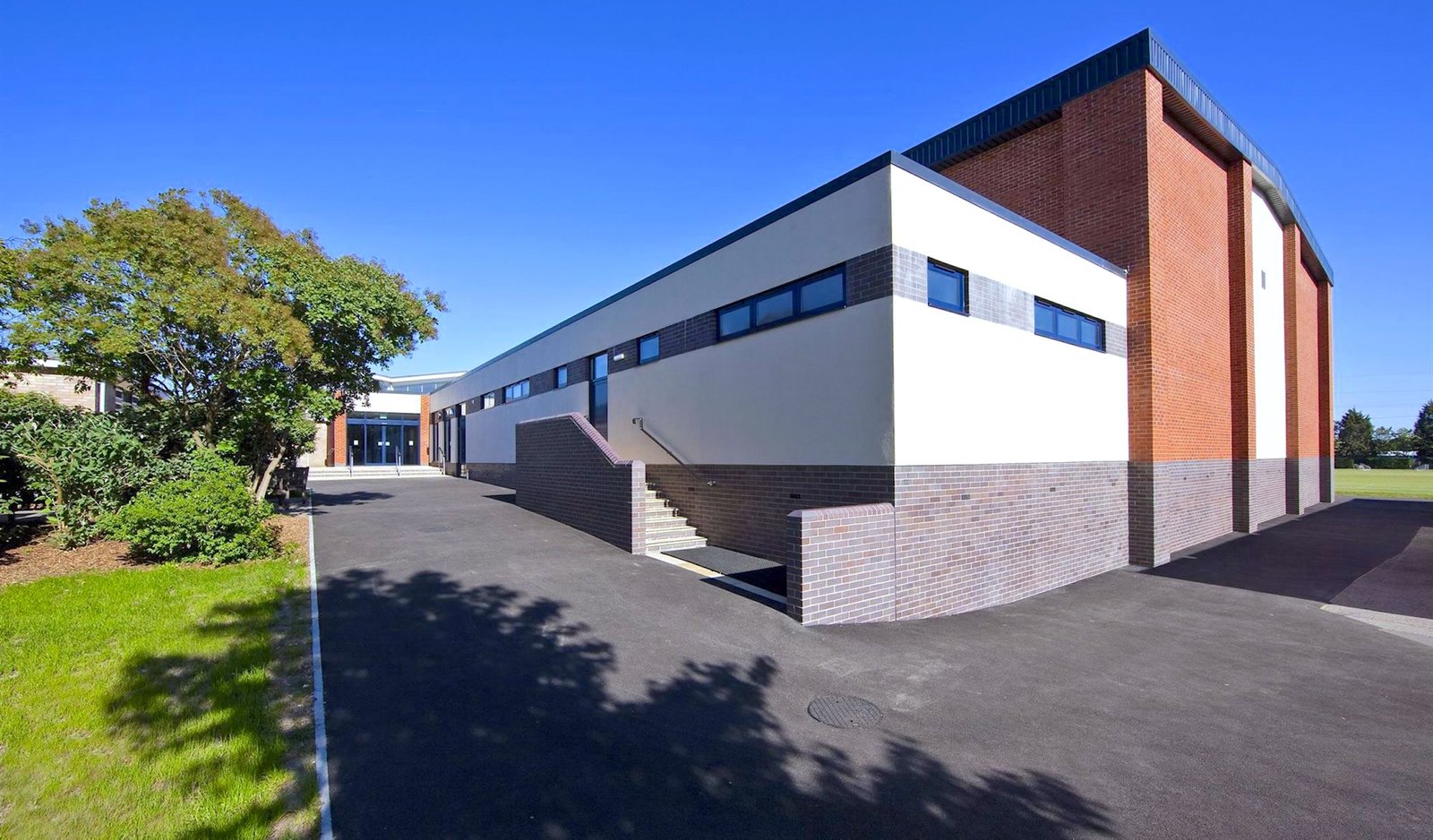
Parkstone Grammar School
Parkstone Grammar School is a large selective school for girls in Poole. It has a much higher proportion of most able pupils than the national average and lower proportions of pupils who are disadvantaged, who have special educational needs and/or disabilities or who speak English as an additional language.
The school does not meet requirements on the publication of information about its accessibility plan on its website.
The school does not comply with Department for Education guidance on what academies should publish about contact details, the special educational needs report and equality objectives.
The school uses one alternative provider, the Quay School.
Some subjects in the sixth form are taught jointly with a neighbouring school. A small number of post-16 students also attend A-level courses at that school.
The school meets the current government floor standards at key stage 4.
It is a larger-than-average-sized 11 to 19 school. It is an International School, an ITT partner with Exeter University, and holds awards for Sportsmark.
Parkstone Grammar School converted to become an academy school on 1 January 2011. When its predecessor school was last inspected by Ofsted, it was judged to be outstanding overall.
The school is a member of the South West Academic Trust. This consists of a partnership of 10 grammar schools in the South West region and the University of Exeter.
Over 90% of the students are from White British, Irish or other White or mixed White backgrounds. The proportion from minority ethnic groups is well below the national average. The proportion of students who speak English as an additional language is well below the national average.

The proportion of students eligible for the pupil premium is below the national average. The government provides additional funding to support these students because they are at particular risk of underachieving.
Around 2% of the students are disabled or have special educational needs. The proportion of students supported by school action, school action plus and those with a statement of special educational needs is well below national averages.
No students are enrolled on any alternative programmes operated by other schools or colleges.
The school significantly exceeds current government floor standards, which set the minimum expectations for students’ attainment and progress.
The school has seen a number of significant staff changes during the last six months, including the appointments of two new assistant headteachers and a new headteacher.
Understand Parkstone Grammar School
[su_tabs style=”default” active=”1″ vertical=”no” mobile=”stack” class=””]
[su_tab title=”CURRICULUM” disabled=”no” anchor=”” url=”” target=”blank” class=””]
CURRICULUM OVERVIEW
Attainment in the sixth form is very high. Students respond to their specialist teaching well so that by the time they leave at the end of Year 13 they are attaining at the highest levels. For example, in 2017 15% of A level grades were at A*, up from 10% in 2016. For a number of years, approximately three-quarters of all A-level grades were B or above.
For a school of its kind, the requirements for entry into the sixth form are relatively low. Approximately 20% of students join the school in Year 12 and as a group they make significant progress in their two years at the school.
Teaching in the sixth form is outstanding. Teachers deploy their specialist knowledge to push students on to high levels of attainment. As a result, they excel, including the most able. Students talk appreciatively of how their teachers help them to learn and how teachers encourage them to study their subjects beyond the confines of the examination specifications. They particularly appreciate the help that teachers give them in identifying and locating additional wider reading. Students recognise that this is very good preparation for their studies in higher education.
The school meets all the requirements of the 16 to 19 study programmes. Indeed, the decision that all students will take three A levels rather than four means that students now have broader opportunities to undertake meaningful, high-quality non-qualification activities, including work experience and volunteering. This ensures that they are very well prepared for future employment and life generally. This approach also ensures that students’ personal development remains at the heart of the study programmes.
There are no students in the sixth form who do not have at least a grade C or a grade 4 in both English and mathematics. There is no need for the school, therefore, to provide tailored retake courses in these subjects in the sixth form.
Attendance in the sixth form is high and improving. There is very little unauthorised absence indeed. This is because students value their learning and enjoy coming to school. Rates of retention are very high and few students do not complete the courses they start.
High-quality careers guidance ensures that students move on to meaningful and sustained destinations, chiefly in higher education. In 2017, all students who had been eligible for the pupil premium when they were in key stage 4 went on to university.
As it is in the main school, safeguarding is highly effective in the sixth form. Students say that they feel safe and are well prepared for adulthood.
[/su_tab]
[su_tab title=”CHARACTERISTICS” disabled=”no” anchor=”” url=”” target=”blank” class=””]
THE CHARACTERISTICS OF THE SCHOOL
Teachers at Parkstone Grammar are knowledgeable, enthusiastic and highly skilled. They inspire pupils with a love of learning and build successfully on pupils’ high levels of self-motivation.
Teachers have high expectations of pupils and set high standards. Pupils rise willingly to these. Teaching is characterised by strong subject knowledge. Teachers use highly effective questioning to assess, probe and develop pupils’ understanding. Feedback, in whatever form it is given, is particularly good at helping pupils to make rapid progress. Pupils say that the feedback they receive from teachers is one of the most effective things that help them to make rapid progress. Teachers quickly identify misconceptions and use these as a springboard to further learning and deeper understanding.
Lessons are well planned to ensure that pupils are challenged, whatever their starting points. Pupils are made to think, and think hard, about the material they are studying. Teaching is particularly effective in using challenge to promote very rapid progress by the relatively small number of pupils who join this selective school with prior attainment in line with the national average.
Teachers are unswerving in their belief that all of their pupils can succeed at the highest levels and give their time unstintingly to pupils as a result. When asked by inspectors what they liked most about the school, pupils almost invariably mentioned the teachers, and their willingness to help, as the first thing they thought of. Relationships between pupils and their teachers are very strong and provide a solid foundation upon which to build success.
Teaching is at its most effective where it is targeted precisely at pupils’ individual needs, of which teachers have a good understanding. Teachers are adept at letting pupils drive forward their own learning by responding effectively to their questions and capitalising on their interests and enthusiasm.
Teachers’ excellent, specialist subject knowledge makes teaching in the sixth form highly effective.
Pupils join the school with typically very good skills in reading, writing and mathematics, which teaching goes on to develop very rapidly, promoting high levels of attainment. Very occasionally, teaching does not identify some errors in literacy quickly enough.
[/su_tab]
[su_tab title=”SUCCESS” disabled=”no” anchor=”” url=”” target=”blank” class=””]
THE SUCCESS OF THE SCHOOL
Students make good progress over time because teaching is typically good. Students themselves describe teaching as good and a significant proportion of parents are also happy. The majority of parents believe that an appropriate level of homework is set.
Teachers know their subjects extremely well and enjoy sharing their knowledge with students to develop and enhance their understanding. Good classroom management and good relationships with students are features of the very best lessons.
Where teaching is good or better, teachers plan their lessons well and really interest and inspire their students. Good questioning challenges students and deepens their thinking. The activities that the majority of teachers plan in these lessons enable students to make full use of their time and gain new knowledge, skills and understanding rapidly.
Where teaching is outstanding, teachers and students generate a lively atmosphere within the lesson where there is a strong desire to seek to improve their knowledge and understanding and make rapid progress. An example of this was observed in the Year 9 Conference, where older students generated a lively and engaging discussion with others about life and the impact our choices have on ourselves and others. Students thoroughly enjoyed the experience and made outstanding progress.
In a few lessons, teaching requires improvement. Whilst most teachers know how well students are doing and provide tasks to promote learning for a range of different abilities, these lessons lack the drive, challenge, excitement and activities that are typical in the better lessons. This is often because classes are given the same activity or all students begin working from the same

Inspection report:Parkstone Grammar School, 17−18 December 2013 5 of9 starting point. As a result, there is not enough challenge, especially for the more able, who spend too long marking time.
The marking of students’ work is generally good. There are examples of outstanding practice, where teachers really make every effort to ensure that students learn from their mistakes. Marking usually identifies ways in which students can improve their work, but not all teachers provide this advice and guidance or ensure that it has been followed. As a result, examples of unfinished or incomplete work can be found that have not been followed up later and, therefore, misunderstandings and misconceptions may remain.
[/su_tab]
[su_tab title=”QUALITY” disabled=”no” anchor=”” url=”” target=”blank” class=””]
THE QUALITY OF ACADEMIC AND OTHER ACHIEVEMENTS
Attainment on entry to the main school is well above average for current students and for those who completed GCSE examinations in 2013 and before. Examination results at the end of Key Stage 4 have risen year on year and are consistently, and significantly, well above the national average. The school does not make early entries for GCSE examinations.
The proportions of students making and exceeding expected progress in both English and mathematics are extremely high compared with national figures and can only be described as outstanding. Students of all abilities make very good progress in lessons.
Achievement in subjects across the curriculum, including science, modern foreign languages and humanities, is outstanding.
This year has seen the first students enter the school at Year 7. They attain good levels of development that far exceed national expectations. Students make at least good progress in lessons and their books contain a large amount of high quality, well presented work.
The small numbers of students who are entitled to support through the pupil premium funding and those with special educational needs are achieving in line with their peers and there is no gap between their performance and those of other students in the school. This is because the progress of these students is monitored closely and great care has been taken to ensure that their needs are fully catered for.
Literacy and numeracy are promoted well within the school. Reading is positively encouraged and literacy skills are particularly well developed across the curriculum. The library reports high numbers of students borrowing reading books. Good support is provided to weak readers and the school quickly ensures that they are not disadvantaged in lessons.
progress than other students nationally. A high number already secure A- level grades between A* to E, and an ever increasing proportion are achieving the highest grades of A* to B at both AS and A2. Large numbers progress to university, including those in the Russell Group and Oxbridge.
[/su_tab]
[su_tab title=”PUPILS” disabled=”no” anchor=”” url=”” target=”blank” class=””]
THE QUALITY OF THE PUPILS’ PERSONAL DEVELOPMENT
In their time at the school, pupils make outstanding progress as a result of the outstanding teaching they receive. Most pupils enter the school with very high levels of attainment; nonetheless, they go on to make rapid advances in their knowledge, understanding and skills from these high starting points. This is true across all year groups and subjects. The work being produced by pupils currently in the school is of exceptionally high quality.
For a number of years, the progress made by pupils at the end of key stage 4 has beensignificantly above the national average. In 2016, the school’s progress score put it in the top five percent of schools nationally. The results from 2017 indicate that overall progress has improved even further. Moreover, in each of English, mathematics, science, humanities and languages, progress has been significantly and consistently higher than the national figure for a number of years.
The same is true of attainment at key stage 4 and in the sixth form. For example, over 60% of grades in the new, more rigorous GCSEs in English language, English literature and mathematics were grade 7 or above.
Two groups of pupils do particularly well at the school. The school is a selective grammar school and the vast majority of pupils who are admitted are among the most able nationally. A small number of middle-ability pupils join the school, however, and they make even more rapid progress than the other pupils. Results from 2017 indicate that they get approximately a grade and half more in each GCSE than pupils nationally with the same starting points.
Similarly, the small number of disadvantaged pupils in the school do at least as well as, and sometimes better than, other pupils in the school. This means that they achieve substantially better outcomes than other pupils nationally with the same starting points. For example, all the disadvantaged pupils in 2017 achieved higher than a grade 5 (a good pass) in both English and mathematics and achieved on average half a grade higher in each of their GCSEs.
The relatively small number of pupils who have special educational needs and/or disabilities make very good progress as a result of the high-quality support they receive.
The high levels of progress that pupils achieve in key stage 4 are sustained very well in the sixth form and students leave the school with exceptionally high levels of attainment at the end of Year 13.
Pupils read widely, regularly and enthusiastically. The library is a key part of the school and pupils make good use of it. One indicator for this is the waiting lists for popular books, such is the demand for them from pupils.
As a result of their outstanding progress, pupils are exceptionally well prepared for their next stage of education, employment or training. All pupils go on to meaningful education, employment or training at the end of their time in the school, with over 80% going to university after Year 13.
Students embrace the values promoted by the school’s charter. They accept that with rights come shared community responsibilities. All cooperate and try their hardest to maintain the highest standards in all aspects of their school lives.
Students are extremely polite, well mannered and courteous towards each other and to adults, and are very welcoming to visitors.
Behaviour in lessons and around the school is often exemplary. Despite the size of the school and the large number of students on site, movement around the building is very orderly and the vast majority arrive promptly to lessons.
Positive attitudes are adopted by students to their learning in lessons and, as a result, they make a good contribution to their own learning.
Students have an excellent understanding of how to keep themselves safe. They are very aware of the many forms of bullying and unacceptable behaviours and articulate how they would deal with them. All the young people spoken to described the increased expectations of the new headteacher and expressed real confidence in the school’s ability to deal effectively with any issues.
Exclusions are extremely rare and positive behaviours are encouraged and promoted very effectively.
Records show that attendance is high compared to national averages, and this reflects positively on students’ very good attitudes towards their learning, enjoyment and engagement in school. The number of persistent absentees is extremely low.
Students are extremely proud of their school. They feel extremely safe and talk openly about the real sense of community that permeates throughout the school. They genuinely value and appreciate the considerable academic and personal support that all staff give them. They are most positive about the wide range of enrichment activities available to them.
Parents are equally vocal in their praise for the school. They are overwhelmingly positive about the way in which the school operates, keeps their children safe, develops the skills and talents of their children and promotes their progress.
[/su_tab]
[su_tab title=”GOVERNANCE” disabled=”no” anchor=”” url=”” target=”blank” class=””]
The QUALITY of GOVERNANCE
The new headteacher has quickly galvanised the staff, who clearly share the school’s goals to secure higher levels of achievement through great teaching, high expectations and effective tracking. All staff know what it is that the school wants to achieve and support it wholeheartedly.
The determination of leaders to make the school even better is evident. The school improvement plan sets out what it is the school needs to work on to make it even more successful. The plan rightly focuses strongly on improving teaching and achievement, but should make it clear how success will be measured in terms of these, particularly in the sixth form.
The quality of teaching is now checked more regularly. Only recently has the impact of this on student progression been considered when making a judgement. Systems are in place to ensure that those staff who require improvement receive support and mentoring to help them improve.

Inspection report:Parkstone Grammar School, 17−18 December 2013 6 of9 their practice. Training for teachers, for example in the use of data, has improved the quality of lesson planning and, subsequently, the quality of learning in classrooms.
The school recognises the need for a greater rigour in the management of the performance of teachers, their appraisal and their pay. The school is finalising its policy which places the national teaching standards at the heart of the process and links student achievement, the quality of teaching and pay progression. All staff speak positively about the support they receive from leaders and managers to improve their work.
The school’s curriculum is well matched to the needs of students. There is a good range of academic courses supplemented by a diverse range of enrichment programmes provided on the school site. Links with schools, extensive sporting, musical and performing experiences, and an abundance of extra-curricular activities make strong contributions to the development of students at the school.
Leaders of each Key Stage and Heads of year contribute positively to the achievement and well- being of students. They are highly pro-active in the identification of learners who might be in danger of underachieving, signpost and support learners on an individual basis by finding solutions that help them move forward, and secure the best outcomes, particularly at the end of Key Stage 4.
Some students in the sixth form are not achieving as well as they could as their progress has not been monitored closely enough by leaders. As a result, some students have fallen behind with their work and this has not been picked up rapidly enough to ensure that they catch up in time to secure better than expected progress in external examinations.
The spiritual, moral, social and cultural development of students is outstanding. Students work and socialise extremely well together. Students of all ages are keen to learn about other cultures and show respect for each other. Students are prolific fundraisers and play a very active role in their communities. Opportunities are taken in lessons to encourage students to reflect and empathise with others in different circumstances.
Safeguarding arrangements are thorough and meet requirements.
The governing body is determined to ensure that the school is amongst the best in the country. It has a comprehensive knowledge and accurate understanding of the school’s strengths and has proven itself quick to act in the greater interest of its students. Governors challenge the school’s actions robustly to ensure that the school continues to improve and can sustain the impact of the actions going forward. They keep up to date with training and understand performance management procedures and expectations. Governors understand national data well and know both how pupil premium funding is spent and the very positive impact of the school’s work. This knowledge of data is used to ensure the governors have a clear and accurate understanding of the standards of teaching throughout the school. Governors are also aware that the more able are not consistently challenged and that some sixth form students could, and should, be doing better.
[/su_tab]
[/su_tabs]