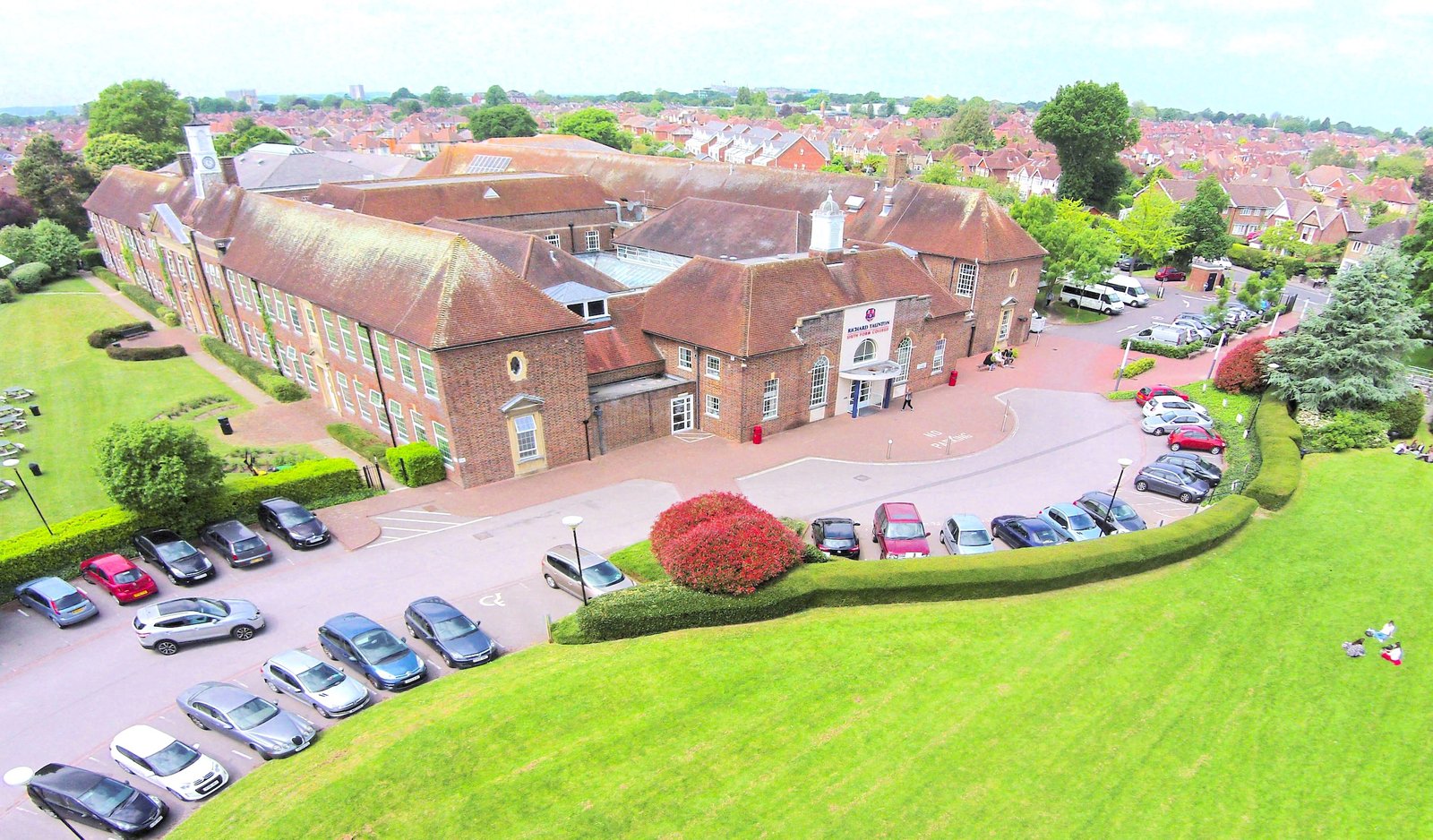
Richard Taunton College
Richard Taunton College is a sixth form college in the north east of Southampton and is one of two sixth form colleges in the city. The college offers a wide range of academic and general vocational courses from level 1 to level 3 on one site with a new, small off-site subcontracted course for those studying sport. Most students are aged 16 to 18, with the large majority of the much smaller cohort of adults studying on the access to higher education course. The college has a small cohort of students with high needs and a very small number of 14- to 16-year-old students. The college also offers a number of part-time adult education courses and embraces and supports the local community of Southampton by opening its doors for evening and weekend lettings.
The proportion of pupils in Southampton who gain five or more GCSEs at grades A* to C, including English and mathematics, is lower than the national average. Unemployment rates for those in the 18 to 24 age group are lower in Southampton than in the south east and nationally.
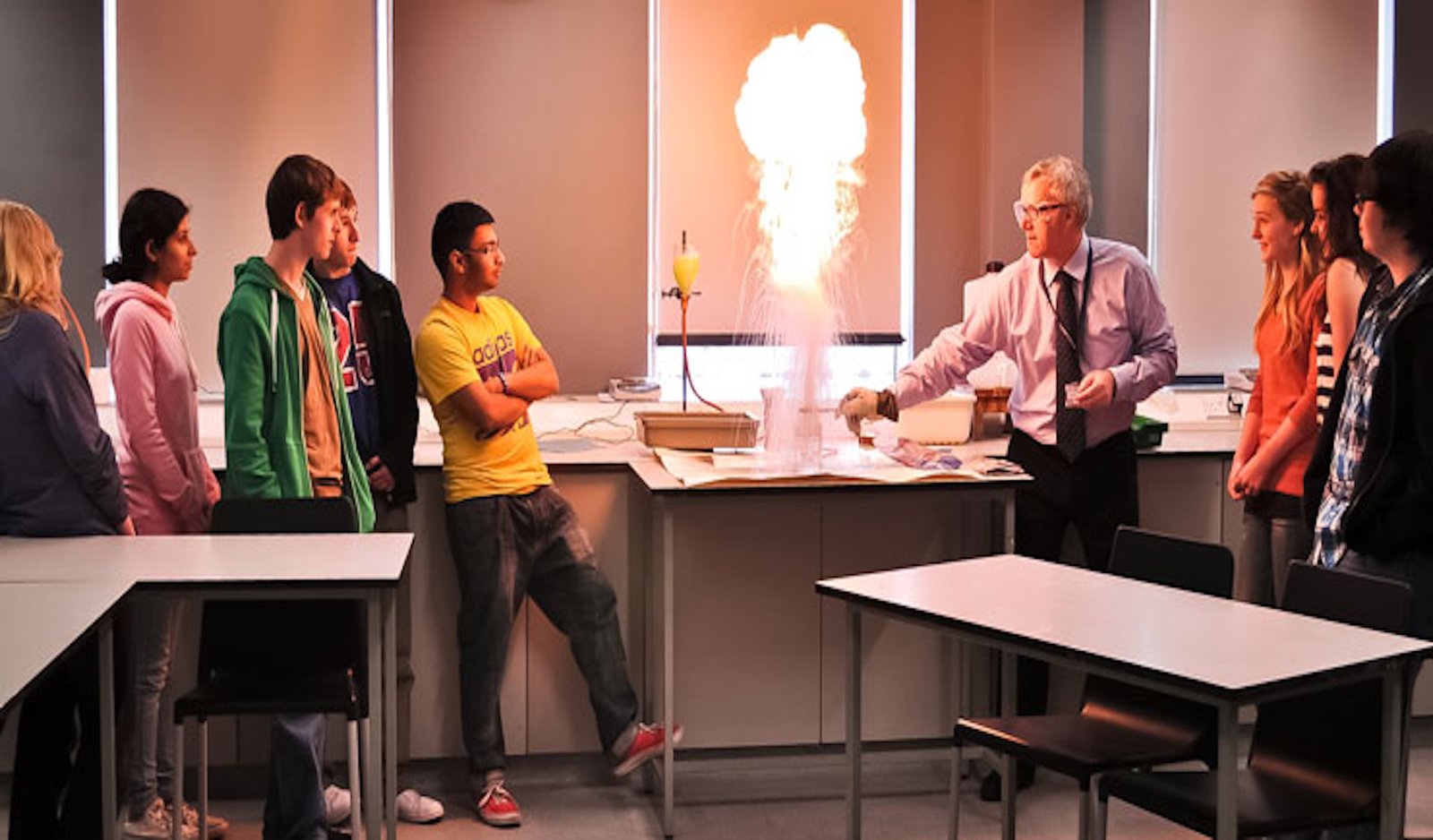
The College has a rich history! In 1989 Hill College merged with the original Richard Taunton College, created in 1969, to become Taunton’s College, and then changed its name in 2012 to Richard Taunton Sixth Form College. Here’s a short history lesson…
Hill College:
- From 1907 to 1967 Hill College was known as the Southampton Grammar School for Girls
- In 1936 the Girls’ Grammar School moved to a new purpose built building on Hill Lane
- In 1967 it became one of the country’s first sixth form colleges, called the Southampton College for Girls
In 1978 the college admitted boys and renamed itself Hill College to reflect the fact that ‘Hill Farm’ had once existed on the college’s site.
Taunton’s School:
- Taunton’s School was founded in 1760 by Richard Taunton, the former Mayor of Southampton
- It changed its status over the years from trade school, to primary school and then to a grammar school
- It started to admit girls in 1968.
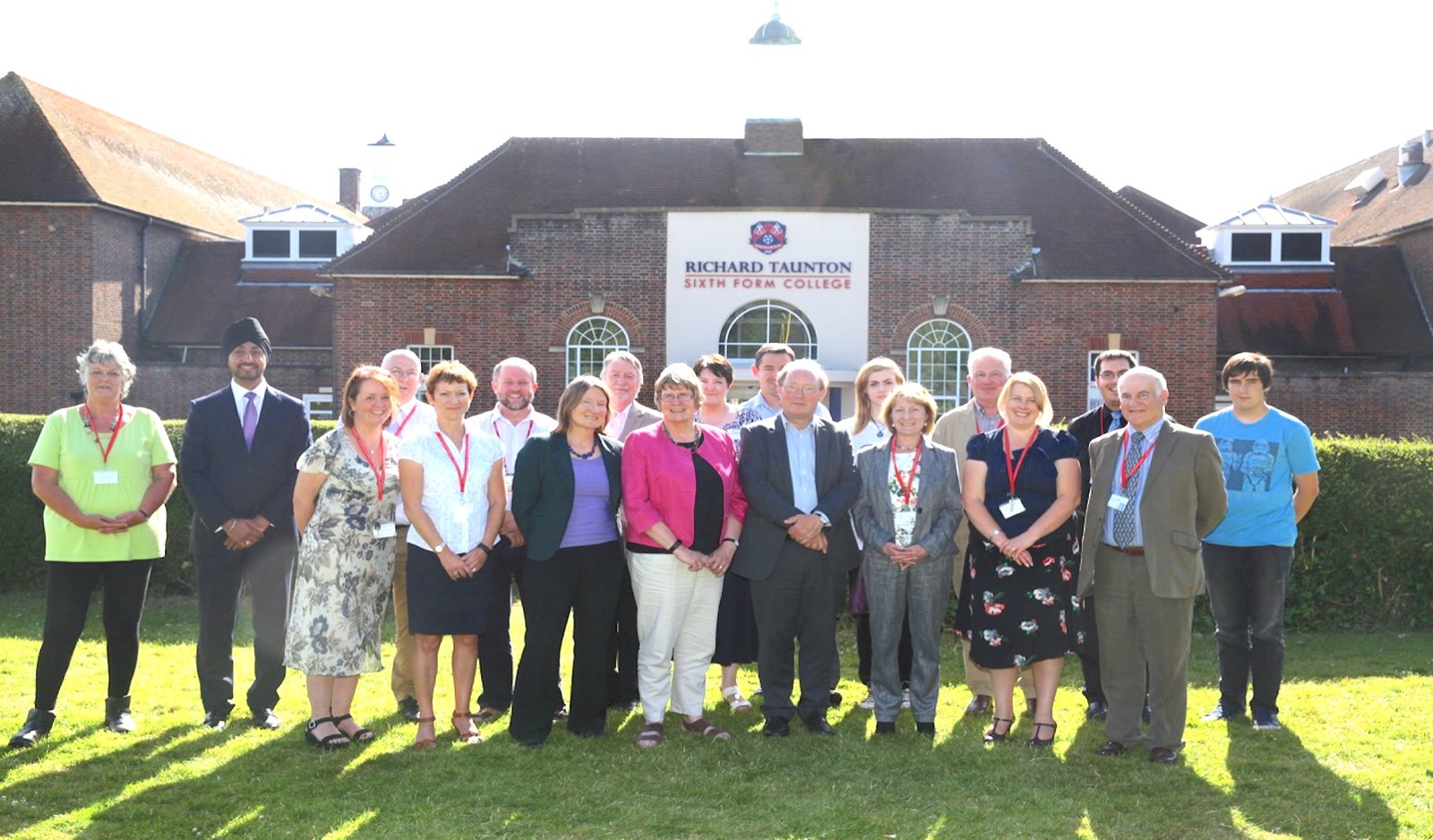
The college’s student success stories
Some of our famous alumni include:
- Theo Walcott and Gareth Bale, footballers
- Chris Packham, naturalist and television presenter
- Chris Tremlett, cricketer
- Manisha Tank, World Report presenter
- Joe Stilgoe, singer/songwriter
- Emma Vardy, BBC political correspondent.
Facts and stats
- Winner of UK Rock Challenge Open Final 2017
- Recipient of the 2017 Ambassador for All Award
- Winner of the Balletboyz 14 Day Challenge 2017
- Only college in Hampshire to have a boxing gym.
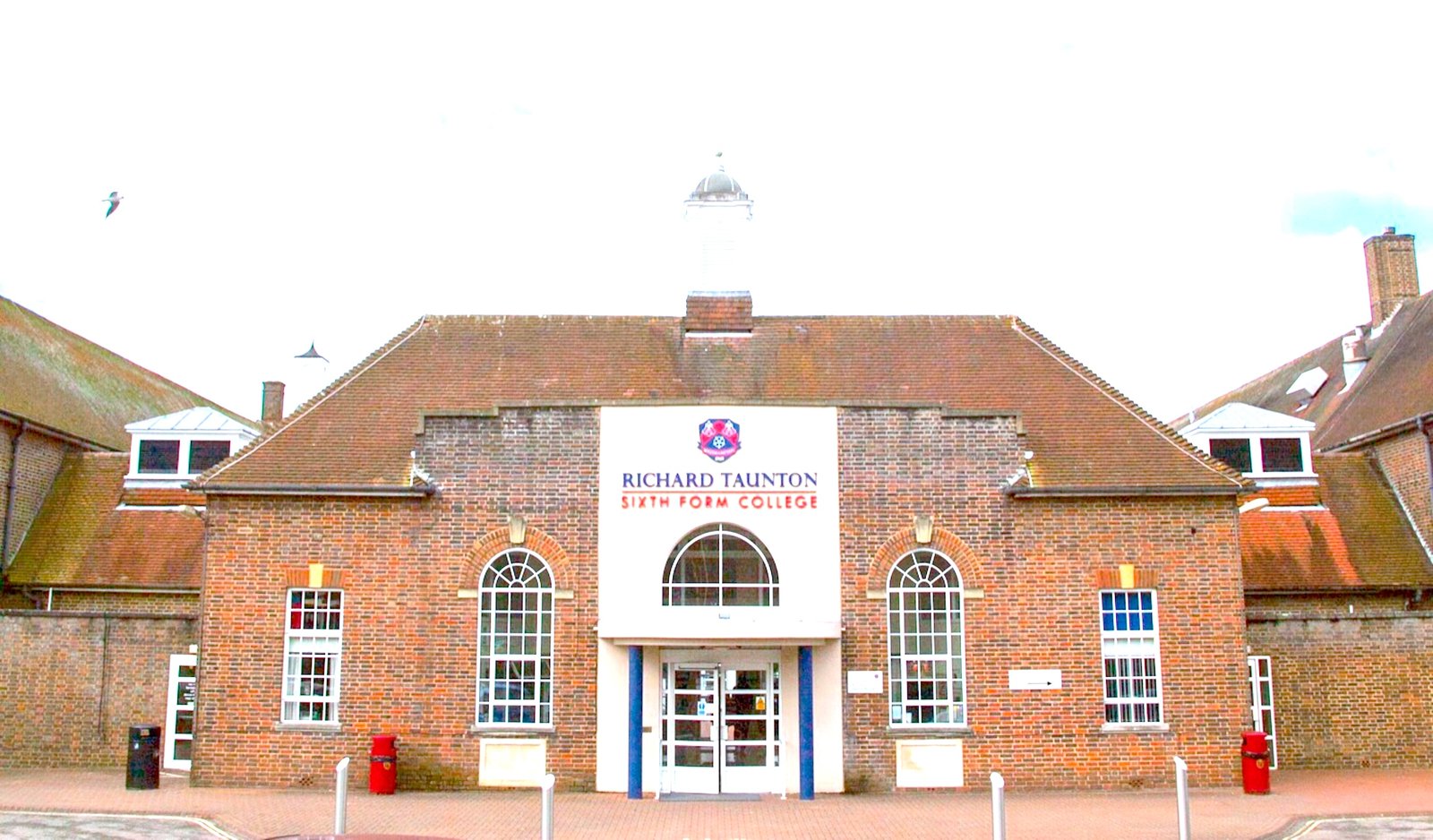
The quartile of the most deprived areas of England. Some 13% of students travel to the college from the inner city area and 20% of students are from minority ethnic groups compared to 7.6%, predominantly Asian, for the city as a whole. Economic activity rates in Southampton are low, with 72.9% of the population aged 16 to 59 in employment compared to 80% for the South East as a whole.
Richard Taunton College
[su_tabs style=”default” active=”1″ vertical=”no” mobile=”stack” class=””]
[su_tab title=”CURRICULUM” disabled=”no” anchor=”” url=”” target=”blank” class=””]
Curriculum Overview
The college offers AS-level and GCE A-level courses in biology, chemistry, electronics, physics, mathematics and further mathematics and statistics. Options in mathematics include mechanics, decision mathematics and statistics. Courses in the use of mathematics are only provided at AS level. Free-standing mathematics qualifications are available for students who are not ready for AS- level work. There are GCSE courses in science and mathematics including part-time GCSE courses for adults. Free-standing mathematics qualifications are provided at foundation level to prepare students for GCSE courses. Some 700 students, mostly aged 16 to 18, enrol on full-time courses. There are 36 part-time, mostly adult, enrolments.
Retention rates on most AS-level and GCE A-level courses are at the national average for sixth form colleges. Pass rates for AS-level statistics are high, but pass rates for AS-level chemistry and physics are below the national average. At GCE A level, pass rates are consistently at or above national averages. Retention rates on free-standing mathematics units are at the national average, but pass rates are below. The intake of AS-level students has lower GCSE achievements than normally found in sixth form colleges. For most AS-level and GCE A-level courses, students achieve higher grades than predicted by their GCSE results. Retention rates on GCSE courses are in line with national averages for sixth form colleges. Pass rates for GCSE mathematics are at the low national average, but well above for GCSE science. Adults perform better on GCSE mathematics courses than students aged 16 to 18.
Students are attentive in lessons, make good progress and develop good practical skills. During practical lessons, chemistry and biology students use laboratory equipment and instruments confidently. Physics and electronics students assemble apparatus deftly for investigations. Students relate theory to practical work well. Mathematics students carry out complex calculations competently and often offer creative solutions to problems. They analyse data well, have good mathematical modelling skills and are able to test ideas experimentally. Students in pre-GCSE lessons in finance can tabulate data and calculate interest on mortgages. GCSE students find difficulty with algebra and equations and are sometimes slow to recall basic concepts. Students use computers confidently and most communicate effectively both verbally and in writing. At 76%, attendance was well below the national average of 87%.
[/su_tab]
[su_tab title=”CHARACTERISTICS” disabled=”no” anchor=”” url=”” target=”blank” class=””]
THE CHARACTERISTICS OF THE SCHOOL
Teaching and learning are good. Teachers are enthusiastic about their subjects and motivate their students well. Schemes of work are detailed and lessons are planned thoroughly. Good use is made of practical work in science to reinforce theory. Teachers are aware of students’ different learning styles and abilities and accommodate different needs well. Science teachers use a range of activities to motivate and engage students. Group work is used well to challenge more able students whilst providing the less able with more time to complete their work. During a well-organised biology lesson, students used plates of starch agar to investigate the properties of the enzyme amylase. The teacher was careful to spend time with each of the students in the group to ensure they were learning. Some teachers make good use of computers to help students to understand abstract scientific concepts. In a chemistry lesson, for example, a computer simulation helped students to understand the movement of ions in half-cells during electrolysis. Students in a statistics lesson used a computer programme well to analyse bivariate data and calculate correlation coefficients.
Some of the teaching in mathematics is unimaginative, with too few opportunities for students to exchange ideas and clarify their understanding. In some lessons, students are given tasks which are too challenging for their prior knowledge and understanding. There is too much dependence on teacher exposition followed by students practising similar examples independently. Too little use is made of ILT to stimulate and motivate students.
Homework is set regularly and students’ progress is monitored well through frequent tests. Work is marked thoroughly and returned promptly. Teachers provide detailed feedback with helpful comments to help students to improve the standard of their work. The performance of individual students is carefully monitored against target grades which are set according to prior attainment and ability.
Academic and personal support for individual students are very good. Additional learning needs are assessed at enrolment and students’ learning styles identified. Support is provided either through tutorials or during lessons. Regular lunchtime workshops, additional tutorials on specific topics and support from subject teachers help students who experience difficulties with their studies. Attendance is compulsory for students whose progress gives cause for concern. There is a good range of additional activities to broaden students’ experience. These include visits to universities, field trips and involvement in national competitions.
Teachers are well qualified and committed to updating their skills through relevant staff development. Laboratories and teaching rooms are spacious, comfortable and well equipped. Displays and examples of students’ work add interest to corridors and rooms. Students have good access to computers during lessons, but teachers do not have sufficient access to ILT equipment to enhance their teaching. Some rooms do not have data projectors and some overhead projectors give poor quality images.
[/su_tab]
[su_tab title=”SUCCESS” disabled=”no” anchor=”” url=”” target=”blank” class=””]
THE SUCCESS OF THE SCHOOL
Teaching, learning and attainment were graded in 75 lessons. Teaching was good or better in 75% of these, satisfactory in 24% and less than satisfactory in only 1%. The proportion of good or better teaching is at the national average for sixth form colleges. Teaching was consistently good in all the curriculum areas inspected. Only one unsatisfactory lesson was observed. Learning was also good and the profile again reflected the national average. Of the lessons observed, 76% were good or better, 21% satisfactory and 3% less than satisfactory.
Most lessons are well planned and teachers are careful to accommodate students’ different needs and learning styles. Across the areas inspected, most teaching is purposeful and teachers motivate their students well. They use a variety of methods to stimulate students’ interest in their work and are careful to check that all their students are learning. In business and administration, many lessons are lively, with a busy and productive atmosphere. Teaching is mostly purposeful and enjoyable in the humanities and resources are often used well to enliven lessons. Some of the teaching in the visual and performing arts is insufficiently challenging and teachers’ expectations are too low. In mathematics, some of the teaching is unimaginative with lessons depending too much on teacher exposition. Students across the areas inspected contribute confidently to discussions and work well together in groups. Foreign languages students use their developing language skills well. There is a good balance of theory teaching and practical work in science and theory is related well to commercial practice in business and administration. Teaching is carefully related to examination requirements and teachers develop students’ examination techniques well. Some teachers make good use of ILT in their teaching, but not consistently so across all areas. Students have good access to computers and the Internet and use them confidently.
Key skills development is integrated into all courses with some additional key skills lessons to help students to prepare for tests and complete portfolios. Criteria for key skills and assessment opportunities are not consistently included in schemes of work and lesson plans.
In some of the lessons judged to be satisfactory, teachers often fail to provide tasks and activities that are suitable for all the students, particularly the weaker ones. There are examples of too little use of ILT to stimulate and motivate students and unclear use of whiteboards or overhead projectors. Weaknesses also included some failure to include students in discussions and insufficient checks on students’ learning.
Teachers are well qualified and knowledgeable about their specialist subject areas. Some 96% of full-time and 79% of part-time teachers have teaching qualifications and most of the remainder are undergoing training. Part-time teachers are well integrated into curriculum teams. Support staff and teachers work together well. A range of strategies have been developed for attracting staff to curriculum areas where there are teacher shortages. In basic skills, for example, the college provides extensive internal training and development opportunities because of difficulties encountered in attracting and appointing staff. Opportunities for personal and professional development are good, but improving standards of teaching and learning further is not being given a sufficiently high priority.
The library is well stocked with books, periodicals and electronic sources of information. There is also an open-access computer facility where students can work independently. Library and computing staff are well qualified, work well with curriculum teams and provide effective services for students. The college is well stocked with computers. The ratio of students to computers is 2.5:1 and there is one computer to each full-time equivalent teacher. Both teachers and students have good access to the Internet and the college intranet. The information and communications technology (ICT) strategy is not placing sufficient emphasis on the use of the technology by teachers during lessons.
Teaching accommodation is generally good and the college provides an attractive and accessible environment for learning. Common areas are enhanced by displays of students’ work. All classrooms and facilities are accessible to students with restricted mobility. Sports facilities have been improved since the last inspection. Improvements include a new soccer pitch and hard court, resurfaced tennis courts and additional classrooms. Rooms are used efficiently, but overall occupancy rates are low mostly due to low rates of occupancy of some large spaces such as the sports hall and central hall. The college has developed a clear accommodation strategy and has identified the need to extend the refectory and library and to improve students’ social and recreational facilities. Similarly, the accommodation strategy addresses the need to relocate student services as a central, integrated facility. The college has not been able to complete the implementation of its accommodation strategy due to the local LSC’s review of college provision across Southampton.
Assessment and monitoring of students’ progress are good. All full-time students are assessed to identify their learning styles and additional support needs. Additional support is provided quickly and effectively. Teachers use an appropriate range of strategies to meet different learning needs.
Assessment is well planned and coursework deadlines are co-ordinated centrally. Teachers set and mark work regularly and students receive constructive feedback on their progress. However, feedback is not always sufficiently detailed or specific to guide improvement. Marking of set work is generally accurate and meets awarding body requirements.
Students have a clear understanding of their progress and the process for setting target grades. Subject tutors agree target grades with students and these are reviewed regularly against actual performance. Students’ progress is monitored through regular tutorials. In some areas, the actions students need to take to improve their performance following reviews are not sufficiently explicit and lack clear timescales. The college has identified this as an area for further development. Parents and carers receive regular progress reports and parent consultation evenings are held each year.
Internal verification of students’ coursework is rigorous for both vocational and academic programmes. Samples of students’ work are marked by two or more teachers and grades moderated within teams to ensure consistency of assessment. Faculty leaders and course teams work together to resolve any issues raised by external moderators. Internal verifiers provide feedback to assessors, although this is sometimes more focused on students’ work than the validity of assessment decisions.
The college offers a wide range of subjects at advanced level and an increasing range of vocational courses at levels 1 and 2. Progression routes are good. In 2004, 46% of students on courses at levels 1 and 2 progressed to a higher level. Detailed records of students’ destinations are kept and the curriculum is reviewed regularly to meet the needs of the local community. The recently introduced sixth form academy supports more able students in raising aspirations and achievement. The college has demonstrated a longstanding commitment to developing effective partnerships with local schools, colleges and the local authority. The college management team works hard to increase post-16 participation levels in the city, which are currently below the national average. Over 100 students aged 14 to 16 take courses at the college through the 14 to 19 Pathfinder initiative and more than 400 take part in taster activities. College staff also teach additional courses in local schools, and the college is actively working with the Aim Higher initiative. Links with employers are very good in supporting the sports academy, but less well developed in other areas such as business.
Students benefit from a wide range of enrichment activities with particularly strong provision in sport and music. One third of students participate regularly in activities. Themed weeks include activities related to human rights issues and health promotion.
The college provides good support and guidance for students. Pre-entry guidance is comprehensive and impartial. College staff organise a good range of events and activities, both at schools and in college, to guide students on to appropriate courses. The college has achieved the Matrix quality award for information and advice for adults. Professionally produced publicity materials contain clear information about courses and the range of support services available. Information is accessible to students and provided in different formats and languages.
All full-time students are assessed on entry to the college to determine their learning styles, levels of literacy and numeracy skills and additional support needs. Results are usually circulated quickly to teachers and the learning support team, and support is arranged promptly. Cross-college and subject inductions enable students to settle into college life quickly and confirm their choice of course. A student diary and handbook provides clear information about college life and the support available to them. Subject-specific handbooks give detailed information about the structure and content of courses.
Academic and personal support for students are effective. A good range of support services is available. These include counselling, finance, careers and progression and learning support. The college provides excellent support for students with physical disabilities and sensory impairment, and a good range of specialist equipment is available. At the time of inspection, 415 students were receiving financial support through the educational maintenance allowance and 31 students receive other learner support funds to support their studies. The college recently revised its child protection policy. The assistant principal with responsibility for student services co-ordinates actions and liaises with external agencies and there are named staff to deputise, where necessary. All teaching and support staff and governors have been briefed about the requirements and guidelines have been provided.
Two thirds of full-time students who are identified as having specific learning support needs attend support sessions. Classroom assistants provide effective support to students on entry level courses and courses at levels 1 and 2. The college has identified the need to monitor the progress of students identified as having support needs, but who do not take up the support offered. The impact of learning and financial support on students’ performance is not monitored sufficiently. There is insufficient tracking of the combined effectiveness of different programmes such as key skills and GCSE courses in raising the literacy and numeracy levels of individual students during their time at college.
Teachers monitor academic progress closely. Students at risk of failure are well supported through tutorials and drop-in and learning support workshops. Teachers and tutors provide students with considerable support and encouragement both during and outside formal lesson times. Attendance data are accessible through the central management information system and well used by teachers, personal tutors and senior managers in monitoring students. There is a clear disciplinary procedure for students aged 16 to 18.
Tutorials are well structured and effective. Tutors monitor students’ progress against targets during review weeks each term. Some reviews do not specify sufficiently clear actions and timescales to help students to improve. Students receive good support from personal tutors, the careers guidance team and Connexions personal advisors to help them progress to HE or employment. Careers education is an integral part of the tutorial programme, and is facilitated by good resources.
[/su_tab]
[su_tab title=”QUALITY” disabled=”no” anchor=”” url=”” target=”blank” class=””]
THE QUALITY OF ACADEMIC AND OTHER ACHIEVEMENTS
Pass rates are consistently high on most courses. In AS-level textiles, critical studies and photography all students who completed their courses in 2004 passed. Similarly, in GCE A-level textiles, photography, drama and dance pass rates were 100%. Pass rates on music courses have been consistently high for the three years prior to inspection. In AS-level art and design, pass rates have been significantly below national averages for three consecutive years. Students on many courses achieve a higher proportion of high grades than the national average. This is the case in AS-level music, music technology and art and design and in GCE A-level art and design, drama and theatre studies and dance.
Students make very good progress relative to their prior attainment in AS-level textiles, critical studies, drama and theatre studies and music. Standards of music performance are particularly high. Music students demonstrate consistently high-level skills. They play and sing with technical accuracy and physical control. Performance work is also strong in drama and dance. Publicly performed pieces are often thought provoking, intelligent and sophisticated in concept and presentation. Students’ practical work in the visual arts is often good, but students do not always fully explore the potential of their ideas. Sketchbooks and workbooks in art and photography do not have sufficient breadth of research, experimentation and development of ideas. Students’ attendance and punctuality are good, with attendance at 91% at the time of inspection.
[/su_tab]
[su_tab title=”PUPILS” disabled=”no” anchor=”” url=”” target=”blank” class=””]
THE QUALITY OF THE PUPILS’ PERSONAL DEVELOPMENT
Most students who enrol at the college are aged 16 to 18. Overall retention rates for young people following foundation level programmes were well above the national average for sixth form colleges for the three years prior to the inspection. For intermediate programmes, mostly GCSE, general national vocational qualification (GNVQ) and precursor programmes, retention rates have improved steadily since 2002 and were well above the national average in 2004. At advanced level, mostly AS-level and GCE A-level courses, retention rates have improved and were at the national average in 2004.
Pass rates overall on foundation level programmes have been consistently above average for the three years prior to the inspection. At intermediate level, overall pass rates have been consistently below average. However, for GCSE, GNVQ and precursor courses, which constitute the major programmes offered at this level, pass rates were high in 2004. The pass rate for GCSE English was very high and the rate for mathematics was at the national average. For GNVQ and precursor programmes, pass rates have been consistently good over a three-year period. The majority of students attending the college follow AS-level or GCE A-level courses. Overall pass rates for young people on advanced level programmes have been just below the national average for the three years prior to the inspection due to below average pass rates on AS-level programmes. Pass rates on GCE A-level programmes are consistently at the national average.
Of the students enrolling on GCE A-level programmes, some 15% do not have a C grade in GCSE mathematics and 4% do not have a C grade in English. The average GCSE point score of students enrolling on GCE A-level programmes is below the average for students enrolling at sixth form colleges nationally. In 2003/04, for example, 47% of students enrolling on AS-level courses had low entry qualifications compared to 27% nationally. Only 9% of students had high GCSE point scores, compared to 17% nationally. Differences are not as marked for GCE A-level programmes, but are still significant, with 35% of students having low point scores at entry to the college compared to 26% nationally. Similarly, only 11% of students had high point scores compared to 17% nationally.
On the basis of the progress students make relative to their GCSE point scores, the overall performance of AS-level students at the college has improved over a three-year period and was outstanding in 2004 when compared to that of sixth form college students nationally. The performance of students in AS-level English literature, drama, and French, for example, was outstanding over a three-year period, but was consistently weak in sociology. GCE A-level students do not make such impressive progress. This is because medium and high ability students at the college do not take as many subjects at GCE A level as students attending most other sixth form colleges. Their overall performance relative to their GCSE point scores is still good when compared to the progress students make nationally.
Although students perform well relative to their entry qualifications, the level of performance is not uniform across subjects. In 2004, students following 57% of the AS-level subjects offered by the college demonstrated better progress than predicted by their entry qualifications. Performance was in line or better than predicted for 76% of subjects. At GCE A level, 48% of subjects outperformed predictions, with 68% being at least in line with predictions.
The majority of students are well motivated and respond well to the high expectations of most teachers. Students receive much help and advice from their teachers, both during and outside lessons and many students produce work of a high quality. They are attentive in lessons and communicate effectively both verbally and in writing. Many students develop good study skills and examination techniques.
Science students relate theory to practical work well, develop good practical skills and use computers competently. In mathematics, students often offer creative solutions to problems. Essays and assignments completed by business and administration students demonstrate their ability to analyse information well, evaluate evidence and present arguments logically and coherently.
Standards of music performance are particularly high and music students demonstrate consistently high-level skills. Performance is also strong in drama and dance. The practical work produced in the visual arts is often good, but students do not always fully explore the potential of their ideas. Much of the written work produced by humanities students demonstrates their interest in their chosen subjects. Many students develop ideas and arguments well. Some students, however, particularly at AS level, have difficulty structuring answers and expressing their ideas. Students on English courses make perceptive comments about literature and respond appropriately to each other’s ideas. Foreign language students speak with reasonable fluency relative to their level of study. The written work produced by English and languages students is of a suitable standard.
Many students pass key skills tests, but a very small proportion complete their portfolios and overall pass rates are low. Students do not value key skills as highly as the rest of their subjects and often fail to see their relevance. However, the college is successful in developing the literacy and numeracy skills of students who do not have level 2 qualifications in English or mathematics at the start of their course. The proportion of students without these qualifications is significantly reduced by the time they complete their main programme of study.
At 83%, attendance in lessons during the inspection was below the national average of 86% and the 89% attendance rate observed during the last inspection. College data indicate that average weekly attendance for the previous term was 89%. Attendance was lowest in science and mathematics at 76% and highest in the visual and performing arts at 91%. Students’ punctuality was good. Over 90% of students completing courses in 2004 progressed to HE, training or employment, with 86% of HE applicants gaining university places.
[/su_tab]
[su_tab title=”GOVERNANCE” disabled=”no” anchor=”” url=”” target=”blank” class=””]
The Quality of Governance
Leadership and management are good. The mission of the college clearly reflects governors’ and senior managers’ intentions for the institution to play a key role in raising achievement levels and widening participation in education and training in Southampton. The proportion of students from minority ethnic groups attending the college is significantly higher than for the city as a whole. Managers place particular emphasis on developing effective working relationships with schools and on providing progression opportunities for pupils whose achievements at Key Stage 4 are below the average for sixth form colleges nationally. Partnership arrangements include some sharing of teaching staff to enhance schools’ Year 11 curriculum and help prospective students to make appropriate choices at age 16. Students are well supported and the college makes good use of analyses of students’ achievements relative to their qualifications on entry to improve the performance of individual students and the college overall.
Retention rates, at all levels, have improved steadily since 2002 and are well above the national average for sixth form colleges at levels 1 and 2 and are at the national average at level 3. Pass rates are also above the national average at level 1 and for GCSE and GNVQ programmes. Overall pass rates for young people following level 3 programmes have been just below the national average for sixth form colleges for the three years prior to the inspection. Below average pass rates on AS-level programmes reflect the attainment levels of students recruited to the college. On the basis of students’ performance relative to their qualifications on entry, the college has been successful in achieving year-on-year improvement for the three years prior to the inspection with outstanding overall performance by AS-level students in 2004 and good performance by those following GCE A-level courses.
Communication within the college is good. Senior managers are approachable and consult staff regularly on matters of policy and practice. There is a comprehensive calendar of meetings at
different management levels and meetings and action points are mostly well recorded. Course teams are well led and managed and teachers, tutors and support staff work together effectively. They share a commitment to helping students maximise their potential. Management is good overall in four of the curriculum areas inspected and satisfactory in the fifth. In the humanities, there is insufficient co-ordination of measures to bring about improvements in students’ achievements at faculty level. Some curriculum managers have been slow to address weaknesses identified through self-assessment. Teaching time on AS-level courses was increased at the start of the year of the inspection and students provided with additional academic support as part of the strategy for improving students’ performance on these courses.
Governors bring a wide range of expertise to the college which they use well to shape its educational character. Meetings of the corporation are well attended and members play an active part in the life of the college. Governors are well supported by the corporation clerk. There is a well planned cycle of meetings and governors receive well set out and informative reports. Governors and senior managers work together well in setting the strategic direction of the institution and make good use of twice yearly planning days for establishing clear strategic objectives and challenging targets for improving the performance of the college. The corporation and its committees carefully scrutinise academic and financial performance as well as progress in achieving strategic objectives.
Quality assurance procedures, based on annual self-assessment, are effective. Course reviews are mostly rigorous and action plans are leading to improvements. Targets are set for key indicators including enrolments, retention and pass rates and progress against students’ prior achievements. Performance against action plans and targets is closely monitored by senior managers and governors. Teaching was judged to be good or better in 75% of lessons, which is similar to the national average for sixth form colleges. The level of unsatisfactory teaching is low at 1%. All teachers are observed annually and, although weaknesses in teaching and learning are identified, college observers do not place sufficient emphasis on the impact of teaching on students’ learning when grading lessons and judged 90% of lessons to be good or better. The college has recognised this weakness through self-assessment and, at the time of the inspection, was planning to provide further training and development to ensure that teachers take full account of the wide ranges of ability and previous attainment in most teaching groups.
The college has clear policies for promoting equality and diversity and complies with the Race Relations (amendment) Act 2000 and SENDA. All areas of the college are accessible to students with restricted mobility. The equal opportunities policy incorporates a race equality action plan. Appropriate training has been provided for governors and staff to support its implementation. Pass and retention rates are analysed by gender, ethnicity, post code and feeder school. Governors, managers and teachers receive useful monitoring reports to help identify areas for improvement. Most curriculum areas are improving the range of programmes offered at foundation and intermediate levels. Alternative progression opportunities to AS-level and GCE A-level courses are being developed. Measures to improve the performance of boys who had underachieved prior to enrolment at the college are having significant impact.
The college’s finances are monitored closely by managers and governors who receive clear information about expenditure to date. Systems are in place for estimating the cost of individual courses, but not for identifying actual costs. From an improving financial position, the college was forecasting a deficit for the year of the inspection due to a decline in enrolments in 2003. Managers and governors have taken action to reduce expenditure and there has been some restructuring to reduce staff costs. Expenditure on pay as a percentage of income has been reduced, but is still high at 80%. Strategies for increasing enrolments are clear and the three-year financial forecast shows the college remaining solvent. Reserves from the sale of property are available to complete a capital programme to support growth strategies. On the basis of the overall financial position of the college, improvements in students’ achievements and the progress they make relative to their prior achievements, the college provides good value for money.
[/su_tab]
[/su_tabs]