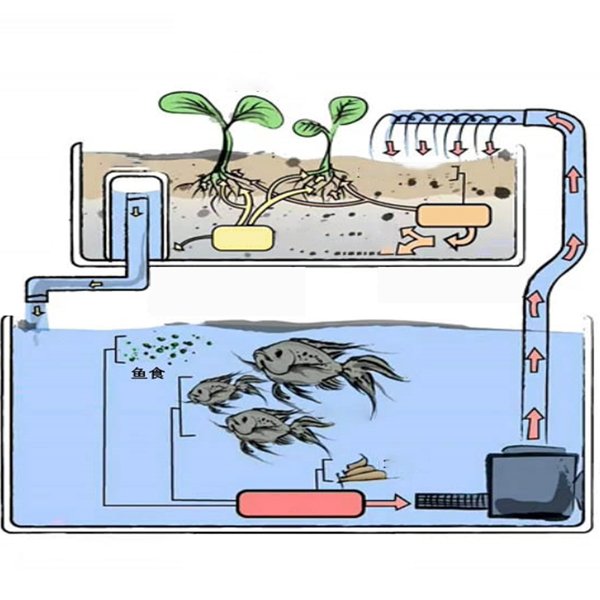
Science Behind Soilless Culture
Benefits Of Hydroponics:
No Soils Needed
The most significant advantage of this technique is that the crops can be grown where the land is limited or is heavily contaminated.
Low water requirement
This soil less method uses only 10% of water in comparison to soil agriculture.
Effective use of nutrients
All the essential nutrients required by the plants for their growth are mixed with water and directly applied to their roots. Hence, they can be readily utilized by the plants.
Less soil related problems
All the weeds and vulnerable soil-borne pests and diseases are eliminated in a hydroponic system.
Controlled environment
Growers can take control of the surrounding environment and can bestow with the ideal conditions that plant requires optimum temperature, light, humidity, pH, etc.
Better growth rate
With a sufficient amount of nutrients and controlled conditions, the growth of a hydroponic plant is twice as that of soil-grown species.
High Yield
Higher yields are possible in a disease-free and well-controlled environment.
Types of Hydroponics System
There are six types of hydroponic systems. These systems can either be active or passive in nature. If the nutrient solution is moved usually by a pump, then it is considered an active system. The passive system contains a wick which helps the nutrients to flow to the plant roots.
Wick system:
As the name suggests, this system consists of a wick by which the nutrients are drawn into the growing medium from the reservoir.
Water culture:
It is the purest type of active recovery system. It contains a platform made up of styrofoam which holds the plant upright. An air pump is used to supply oxygen to the roots of the plants.
Ebb and flow:
This system usually consists of a pump connected to a timer which is used to pull the nutrients in the grow tray periodically and then drain the solution back into the reservoir.
Drip System:
In this system, a small drip line is placed near the base of each plant by which the nutrient solution is drawn using a submerged pump which is controlled by a timer.
Nutrient film technique(NFT):
It works by continuously flowing nutrient solution into the grow tray. Hence, it doesn’t need a timer. The nutrient solution flows through the roots of the plants and then drains back into the reservoir. Usually, this system doesn’t use any growing medium except air.
Aeroponics:
This is probably the most advanced system among all. It doesn’t require any growing medium as the roots hanging in the air. The roots are misted continuously using a nutrient pump which is controlled by a timer.
Research Questions:
Which method of growing the bean plants worked the best? Which produced the fastest growth? Which produced the tallest growth? Overall, which do you think was the better medium – soil or water?
Materials:
- Bean plant seeds
- Four plastic plant pots
- One bag of potting soil
- Two- to four gallons of distilled water
- Two peat pellets
- Two potting nets for hydroponic growing
- Ruler
- Journal/logbook
Experimental Procedure:
- Prepare two soil pots with potting soil. Plant bean plant seeds about ¼ to ½ inch into the soil and cover loosely with a sprinkling of soil on the top. Give the plants plenty of sun and keep them in the same climate. Any variables between the soil and hydroponic plants can affect the experiment, so try to keep variables nonexistent or at a low.
- Prepare the hydroponic growing pots by placing the seeds in a peat pellet and saturating with water to cause them to “puff up.” Make sure the bean plant seeds are covered by a little bit of peat before “planting.”
- Fill the other two pots with distilled water. Place the hydroponic potting nets on top of the pots, making sure that the water touches the nets. Place the peat pellets with the seeds inside the nets.
- Water the soil plants every three days or when the soil feels dry to the touch. For the hydroponic pots, sprinkle a little water on the peat pellet to keep the pellet moist. As the roots grow, they will grow down into the pot of water. Remember to keep the pot full!
- Observe, record, and analyze: Measure the hydroponic bean plants and the soil plants every three days or so. Determine a good schedule in which to measure the plants. Record in millimeters how tall the plants are getting and how quickly they are growing. Compile a chart of the results.