Primary and Secondary Education in China


Primary and Secondary Education in China


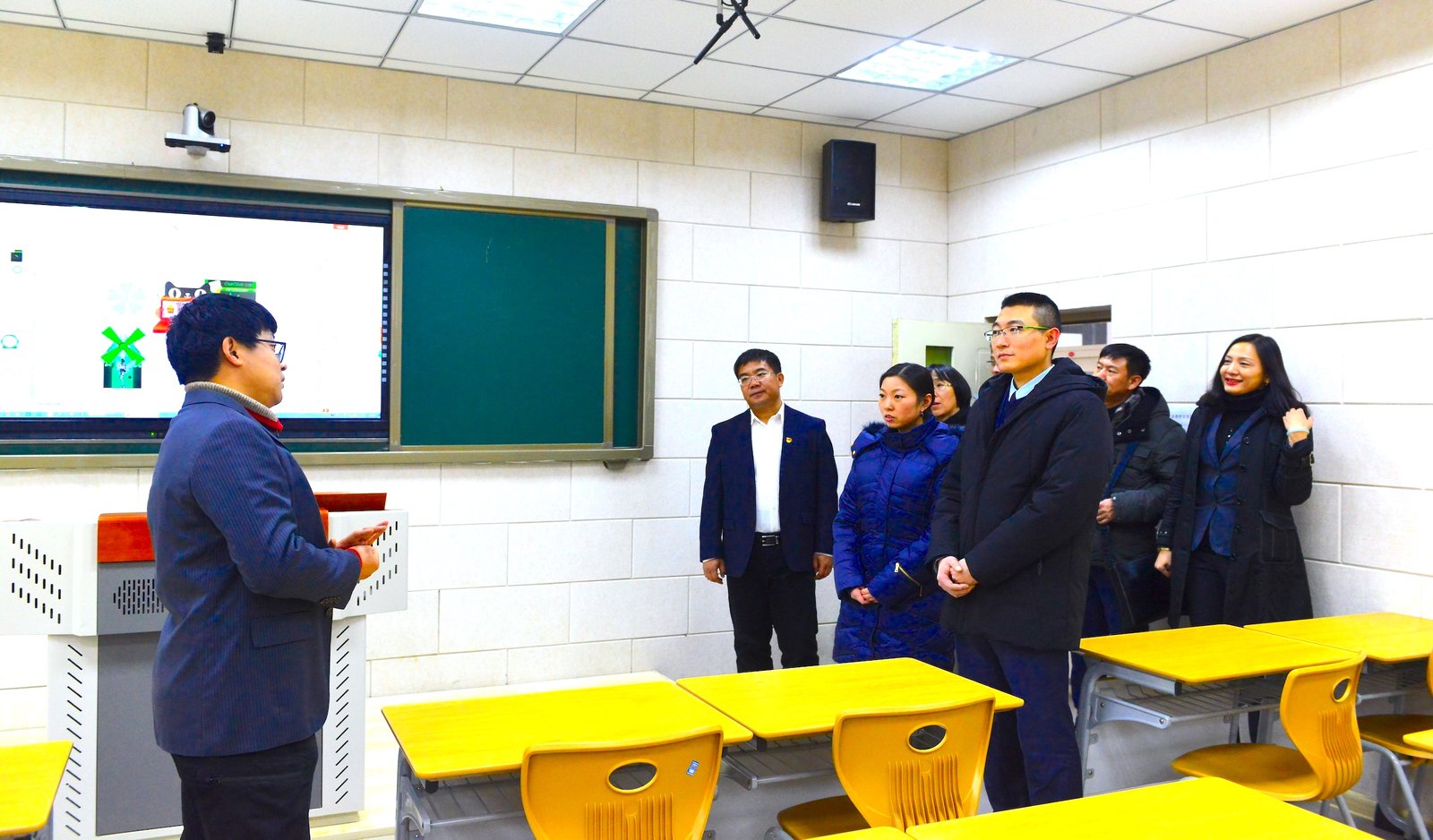
In China, primary and secondary education takes 12 years to complete, divided into primary, junior secondary and senior secondary stages. The 9-year schooling in primary and junior secondary schools pertains to compulsory education. General senior secondary education lasts 3 years.
Implementation of 9-year Compulsory Education
Since the promulgation of the “Compulsory Education Law of the People’s Republic of China” in 1986, the 9-year compulsory education has been implemented by governments at various levels and made significant progress. According to the statistics of 2017, the net enrollment rate of primary school age children above 99%. In the urban areas of large cities and economically developed coast areas, the universalization of senior secondary education has been launched. In 2017, there were altogether 176,718 primary schools with an enrollment of 101,691,216 students and there were total 77,018 secondary education schools with an enrollment of 84,257,502 students in China.
Chinese government attaches great importance to the universalization of compulsory education in rural, poor and minority areas. In 1987, the former SEDC and the ministry of Finance jointly issued the “Opinion on Some Issues Concerning the Reform of Administration of Basic education in rural Areas”. At present, basic education is provided by the governments at the county, township and administrative villages levels with the administrative power assumed by county and township governments and with major decision made by the county governments. Efforts are made to integrate the development of education and the upgrading of quality of labor force with the development of the local economy and the advancement of culture and ethical and living standard of the people. As a result, the development of rural education and local economy have been promoted.
School Year of Primary and Secondary School in China
The school year of primary and secondary school is divided into two semesters. The school year of primary schools comprises 38 weeks of teaching sessions with an additional week in reserve and 13 weeks for holidays and vacations. The school year for junior secondary schools comprises 39 weeks for teaching with an additional week in reserve and 12 weeks for holidays and vocations. The school year for senior secondary schools comprises 40 weeks of teaching with one or two weeks in reserve and 10 to 11 weeks for holidays and vocations. A five-day week has been implemented in primary and secondary schools.
In the autumn of 1993, primary and junior secondary schools began to implement the “Teaching Scheme (Curriculum) for Full-time Primary and Secondary Schools (Pilot)”, and this scheme includes the arrangement of subjects and syllabuses of them. According to the scheme, subjects are divided into two categories: state-arranged subjects and locally-arranged subjects, with the latter determined by the authorities of provincial-level governments in the light of local realities and needs.
The current curriculum of senior secondary schools consists of two parts: subjects courses and activities. Subjects taught in senior secondary schools are divided into obligatory ones and optional ones. Activities include out-class activities and practice activities.
In 1999, MOE began to design the new basic education curriculum system for the 21st century. Any child reaching 6 years of age should enter the primary school and in places where conditions are not available, the age for a child to enter a primary school could be postponed to 7 years old. In areas where junior secondary education has been basically universalized, all primary school graduates should enter nearby junior secondary schools, without sitting for any entrance examinations. However, those gradates from junior secondary schools seeking to continue their education in senior secondary schools have to sit for and pass locally organized entrance examinations before admission.
Throughout compulsory education, students are required to take end-of-term examinations and tests or check-ups at the end of each semester, school year of before graduation. In primary schools, the Chinese language and mathematics are the required examination subjects for graduation, while the other subjects are checkup subjects. In secondary schools, the graduation examination subjects are determined within the scope of the general subjects taught in the graduating class set by the state, while the students’ performance in other subjects are only checked up
After-School Education in China
After-school education plays an important role in the all-round development of primary and secondary school students. Under the cooperative administration of departments in charge of education, culture, physics, worker’s union, the Communist Youth League, Committee for Women’s and Children’s Work and science and technology, after-school education is conducted by joint efforts of the concerning central departments. In 1986, the First national Conference on After-school Education was convened and the Second One in 1991, and consequently a number of regulations on after-school education have been formulated, providing guidance to such work.
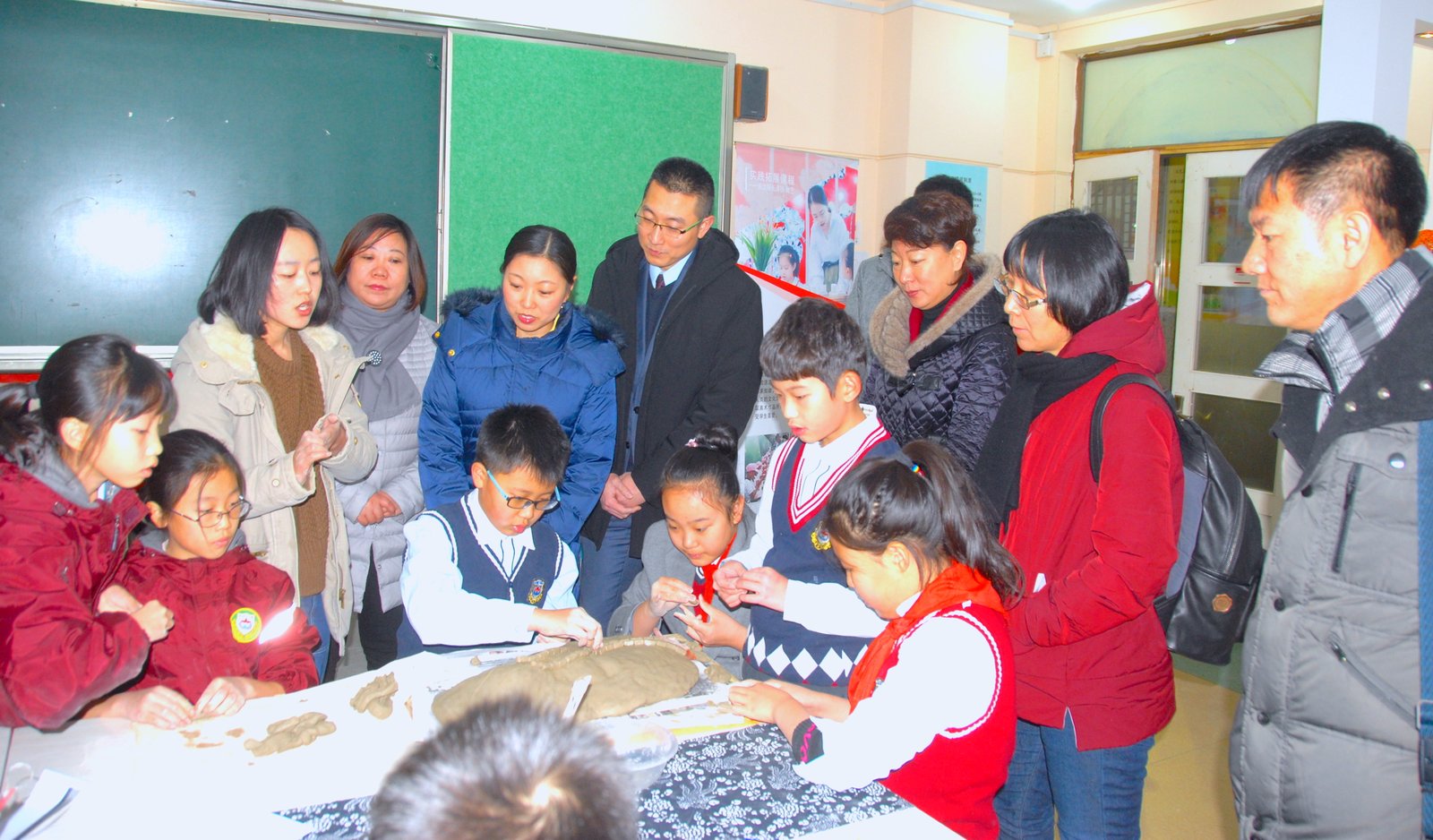
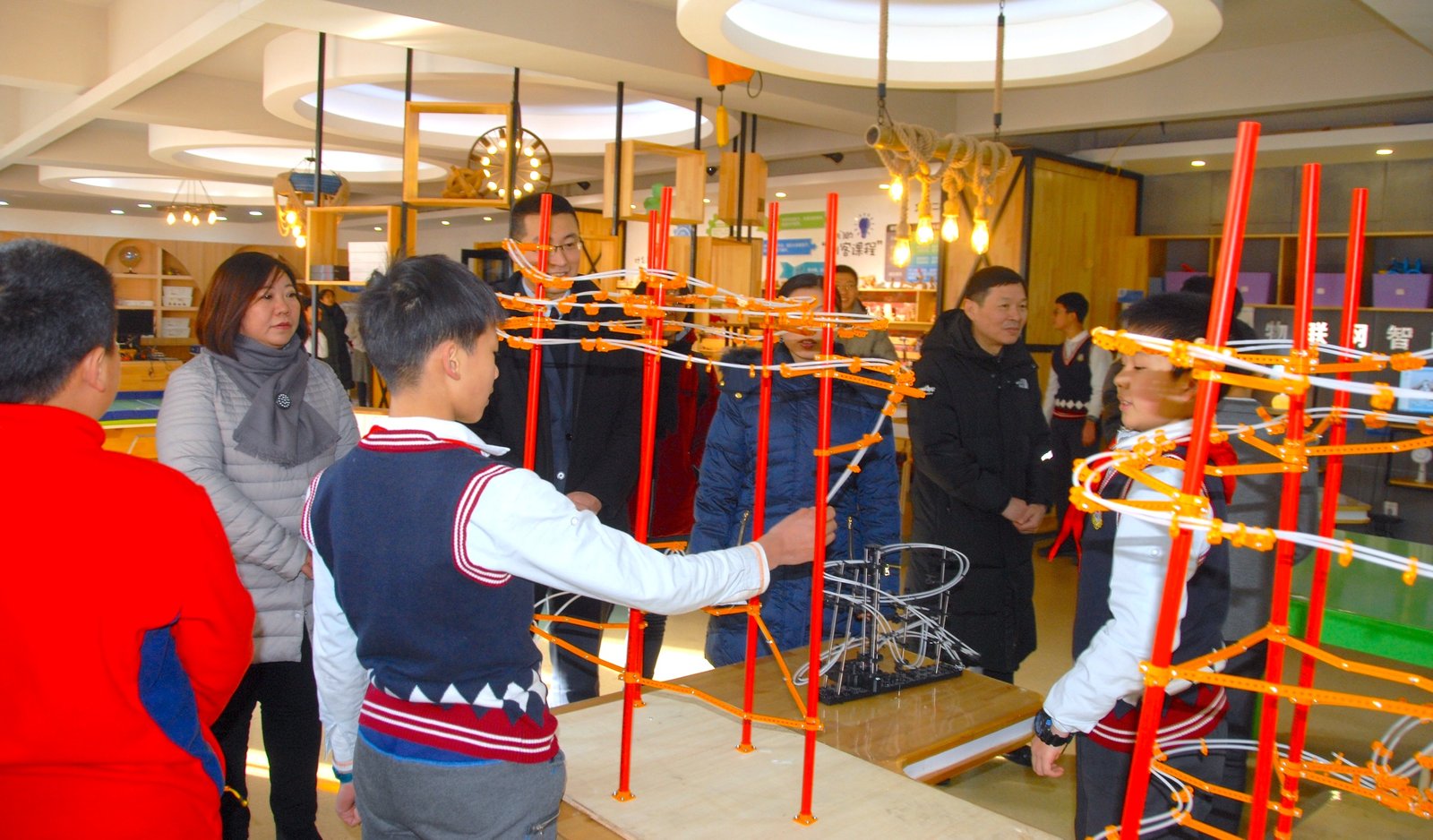
After-school education always adheres to the policy of integration of schools, the society and families, and strive to give full scope to the unique educational role of after-school activities. After school, children may take part in the scientific, cultural, and recreational activities organized by children’s palaces, children’s clubs, scientific and technological centers for teenagers, and other similar institutions. After-school education is conducted through rich and colorful extracurricular activities organized in the light of the age and interests of school children, such as stage performances, competitions of aircraft, ship and motor vehicle models, exhibitions of small inventions and handicraft making, literary writing, summer and winter camping and so on, to mould the students’ temperament and temper their willpower.
Development of Teaching Materials
After the founding of the People’s Republic of China in 1949, the government began to pay great attention to the preparation and production of school textbooks and other teaching materials. In 1950, the Ministry of Education formulated curricular standards for primary schools. Afterwards, in 1956, 1963, 1978 and 1986, four conservative sets of syllabuses of subjects taught in primary and secondary and secondary schools were formulated, and eight sets of school textbooks were complied and published by the People’s Education Press for nationwide use in compliance with the requirements set in these syllabuses.
In 1992, syllabuses of various subjects taught in full-time primary and secondary schools were drawn up under the guidance of the former SEDC to provide guidance for teaching and complying the textbooks used in primary and secondary schools within the 9-year compulsory education. The new textbooks for regular senior secondary education linking the 9-year compulsory education which was implemented in 1993 in under pilot exercise in Shanxi Province, Jiangxi Province and Tianjin.
As China is a vast country with significant regional disparities in economics, and social development, it is quite understandable that the conditions of different schools vary a deal lot, and consequently it is desirable to develop multiple sets of textbooks at various levels to meet the needs of different localities and with their own specific characteristics and styles. For this reason, in 1986, the former SEDC adopted a policy of diversifying the preparation and production of school textbooks in the whole country under the condition that unified basic requirements must the complied with. In areas where conditions permit, regional educational departments, educational institutions, experts, scholars and individual teachers are encouraged to compile textbooks for subjects taught in primary and junior secondary schools in compliance with the basic requirements set forth in the syllabuses of 9-year compulsory education schooling.
As a result, different sets of textbooks will compete with each other bringing a radical change to the old practice in which only one set of textbooks was used throughout the whole country and promoting the prosperous development of school textbooks. In addition, a lot of reference and manuals for teachers, illustrated booklets, atlas for school use, wall charts, slides and audio-visual materials for classroom instruction or dong homework have been produced to complement and supplement the textbooks. A number of items of computer software developed for school use have been produced. The textbooks for special education have been compiled (by the state Education Commission) to meet the needs of special education development. Many supplementary teaching materials with local color and flavor have been produced in many localities to meet the needs of local economic and cultural development.
To ensure the quality of textbooks and other teaching materials produced, a system of examination and approval of textbooks has been established in China. All textbooks for obligatory subjects taught in primary and secondary schools have to be examined and approved by the State Textbooks examination and Approval Committee before publication in terms of ideological content, scientific spirit and adaptability to classroom instruction. The textbooks approved are allowed to be used by the local educational departments. However, supplementary teaching materials with local figures are to be examined and approved by a provincial-level School Textbook Examination and Approval Committee and allowed to be used within the province concerned.

Education in Liaoning


Education in Liaoning


General Situation
Education has developed rapidly in Liaoning since the founding of the People’s Republic of China in 1949. As a result, the proportion of the population with various educational levels has changed notably over the past few decades. In 2000, there were a total of 58 institutions of higher learning with 297,710 students and 61,707 faculty. There were also 2,401 secondary schools with 2.167 million students and 175,455 teachers and 13,356 primary schools with 4.621 million students and 216,677 teachers. The proportion of illiterate and semi-literate persons in relation to the entire population has decreased drastically, with an illiteracy rate of 4.76 percent in 2000, amounting to about 2.02 million people.
While the educational increase has been promising, there still remains a low proportion of people with higher learning, which must be improved in order to keep up with the province’s rapid economic development. Part of the PRC’s goal with their “Revitalize the Northeast” campaign is to help improve education in these areas, so that should help Liaoning and other provinces in the region moving forward into the future.
Northeastern University
Northeastern University is a public university in the city of Shenyang, Liaoning Province, China. With an annual enrollment of over 20,000 students, it is one of China’s high level universities designated for the state key construction of the 211 Project and 985 Project.
The university was founded on April 26, 1923 in the capital city of Liaoning province, Shenyang (previously known as Mukden), which was also the historic political and economic center of Northeast China. Northeastern University attracted top scholars and teachers from throughout the region, and it quickly developed into a comprehensive university, with six schools in science, engineering, humanities, law, agriculture, and education. In July 1928, the university was taken over by Marshall Chang Hsüeh-liang (張學良, Zhang Xueliang), the military warlord who controlled all of Northeast China at the time. Marshall Chang assumed the title of president and became the university’s most important financial and political patron in its early history.
Less than a decade after it was founded, the university was forced to evacuate following the Mukden Incident on 18 September 1931. After the incident, the Japanese invaded and annexed all of Northeast China, including Shenyang, and reorganized the region into the puppet state of Manchukuo. Like many other national universities in China during the Second Sino-Japanese War, Northeastern University was repeatedly displaced and re-established in several cities. The university was relocated to Beijing, Xi’an, and the city of Santai in Sichuan Province, before the war ended in August 1945. The university returned to its original campus in Shenyang in February 1946.
After the establishment of the People’s Republic of China on 1 October 1949, Northeast China became the beneficiary of substantial Soviet investment. The region became heavily industrialized and one of the most prosperous regions in China. Northeast University was renamed Northeast University of Technology in August 1950, and it became primarily an engineering school.
By the 1990s, economic reforms had caused most of the nation’s economic investment to shift to the Pacific Coast cities. While most of China became increasingly prosperous, factories throughout Northeast China closed and the region fell into an extended economic recession. On 8 March 1993, Northeast University reverted to its original name.
Today, Northeastern University is part of the 211 Project and Project 985, nationwide efforts to expand and modernize the nation’s university system. The university is also part of the national government’s initiative to replace the region’s heavy manufacturing industry with a modern high-tech manufacturing economy.
Northeastern University consists of the School of Liberal Arts and Law, the School of Business Administration, the School of Sciences, the School of Resources and Civil Engineering, the School of Materials Science and Metallurgy, the School of Mechanical Engineering, the School of Information Science and Engineering, Sino-Dutch School of Biomedical and Information Engineering, and the Department of Foreign Languages. It has 46 undergraduate programs, 53 master’s degree programs, and 23 doctoral degree programs, as well as an adult education program.
The campus has 1.98 million square meters and 730,000 square meters of floor space.
Dalian University of Technology
Dalian University of Technology (DUT) is one of the key national universities under the direct jurisdiction of the Chinese Ministry of Education. DUT, located in the coastal city of Dalian, is a multi-disciplined university concentrating on science and technology and covering economics, management, applied liberal arts, foreign languages and social sciences as well. There are graduate school, 7 faculties and 5 colleges with 32,000 full-time students.
DUT has been active in academic exchange and cooperation both home and abroad. It has signed academic agreements with more than 120 institutions of higher education or scientific research in more than 20 different countries and regions.
The School of International Cultural Exchanges was set up to take the responsibility for the enrollment, education and management of international students. To date, about 6,000 students from 102 countries have studied here, either for degrees or Chinese language training. Through many years’ practice, the school has gained in experience and reputation in both the areas of teaching and management.
Dalian Maritime University
Founded in 1909, Dalian Maritime University (DMU) is one of the largest and best maritime universities and is the only key maritime institution under the Ministry of Transport, China. DMU enjoys a high reputation internationally as an excellent center of maritime education and training as recognized by International Maritime Organization. DMU has 4 Post-doctoral Research Centers, 6 Primary Discipline Doctoral Programs, 32 Subordinate Discipline Doctoral Programs, 18 Primary Discipline Master’s Programs, 64 Subordinate Discipline Master’s Programs, and 48 undergraduate programs. DMU now consists of 19 teaching and research institutions, including Navigation College, Marine Engineering College, Information Science and Technology College, Transportation and Management College, Environmental Science and Engineering College, Transportation Equipments and Ocean Engineering College, Law School, Foreign Languages College, Public Management and Humanities College, Department of Mathematics, Department of Physics, etc. The current student population has risen to approximately 20000. Up to now, more than 60000 advanced professionals have been educated and trained at DMU, most of which have become the backbone of China’s shipping industry.
China Medical University
China Medical University (CMU) is one of the top ten medical schools in China. It is a university with a history of nearly 81 years. CMU started as the Military Medical School and Health School of the Chinese Workers’ and Peasants’ Red Army and later merged two medical schools in Shenyang:the governmental Shenyang Medical College and the former private Liaoning Medical College, both of which had a history of about one hundred years. CMU was a university affiliated with Ministry of Health (MOH) previously and became a university co-constructed by Liaoning Province together with MOH in the year 2000. CMU has 28 colleges, 56 disciplines or specialties offering doctoral degrees, 67 disciplines or specialties offering master’s degrees, 4 postdoctoral research stations, 13 specialties for undergraduates and 10 higher technical specialties. CMU also has 3 affiliated general hospitals and 1 dental hospital. The number of CMU staff now is 13,121 and that of the registered students is 54,609.
Northeast Yucai School
Northeast Yucai School is an educational institute in Shenyang, China, offering education from kindergarten to pre-university (senior high) level.
NEYC has eight campuses in Shenyang City. The main campus (South Campus) covers an area of 164-acre (0.66 km2) and a building area of 343,000 square meters.
Each school year consists of two semesters with courses and subjects depending on the grade.
All students in the senior high school division (grades 10 to 12) have courses in Chinese Language, Math (including algebra, geometry and basic calculus), English Language, Physics, Chemistry, Biology, History, Geography, Economics, and Philosophy. All science courses include lab courses and lectures.
Four times a week students have elective courses. There are almost 35 elective courses in grades 9 through 11, such as Computer science, Pottery, Theatre and Drama, Chinese traditional painting, Art History and Appreciation.
Science Accelerated Programs are offered in Maths, Physics, Chemistry, Biology and Computer Science. Specialized Classes include Japanese Language, French Language, English Language, and Advanced Level Mathematics.

How to Make a Change to Your Life


How to Make a Change to Your Life


Between work, home life, physical health and wellness, and a social life, it can be hard to keep all the balls in the air. In order to manage our responsibilities effectively while still taking care of our own needs, it’s essential to find balance in our day-to-day lives. Striking a balance might seem overwhelming, but don’t worry. Better life balance can begin with a few simple steps. Here are eight tips to help you create more balance in your life.

8 Tips to Find Balance in Your Life

1. DETERMINE YOUR PRIORITIES.
To feel balanced and fulfilled, we need to figure out what we want out of life (not what we think we should want). Take some quiet time to reflect on what you truly want and value in life. Pick five things that are most important to you. This list might include time with your family, a reliable work schedule, volunteer work, or a creative pursuit. While you will, of course, face times when other responsibilities require your attention, this is your list of main life priorities.

2. CONDUCT A LIFE AUDIT.
For one week, track how much time you spend on the various aspects of your life: work life, home life, social life, hobbies, etc. Does one area of your life dominate all of your time? Do you find yourself wishing you had more time to dedicate to something else? Do the tasks on your schedule align with your list of priorities? Determining where imbalances exist in your life is the first step in making shifts in how you use your time.

3. SET A SCHEDULE.
When you have a meeting or deadline on your calendar at work, you probably treat it as a firm commitment. Why not do the same for your other life events? Scheduling specific times for your priorities will make you more likely to follow through with them. Put doctor’s appointments, parent-teacher meetings, and other appointments on your calendar. Remember to schedule in exercise, family time, and time for yourself – and honor those commitments!

4. ALLOW FOR FLEXIBILITY.
Yes, having a schedule is important. But life throws us curveballs sometimes, so we also need to remain flexible. Try not to overschedule yourself so you have some flex time in your weekly calendar. Don’t stress too much if something unexpected happens, and don’t beat yourself up if you need to make changes to your plans. Remember that life comes in seasons: sometimes our family responsibilities will take precedence, and sometimes we’ll need to devote more time and attention to a work project or to our health. Striking a balance is not about doing it all, all of the time.

5. PRIORITIZE SELF-CARE.
You’ve probably heard the saying, “You can’t pour from an empty cup.” If we don’t take care of ourselves, physically, mentally, and emotionally, we won’t be able to keep up with our other responsibilities and goals. Make time in your schedule to move your body regularly, sit down for healthy meals, and engage in activities that help you relax.

6. DON’T SKIMP ON SLEEP.
This goes hand-in-hand with self-care but it’s so vital, it deserves its own point! On average, Americans get less than the recommended seven hours of sleep per night, and many of us struggle to fall asleep and/or stay asleep. A lack of quality sleep impacts every aspect of our lives and can make us irritable, anxious, unproductive, and more prone to illness and stress. So resist that urge to watch one more episode and hit the hay!

7. PUT DOWN THE DEVICES.
Technology has so many benefits but it can also be a major distraction. Set aside some daily device-free time. This will help you remain more present so you can focus on the people around you or the task at hand.

8. LEARN TO SAY “NO.”
We all only have so much time, energy, and attention. It can seem hard, but it’s all right to decline invitations or refuse to take more on your plate if you are already busy. Saying “no” is a critical part of effective time management and life balance!

By striking a balance in our everyday lives, we can reduce stress and burnout and live with more joy and fulfillment.


Shenyang City


Shenyang City


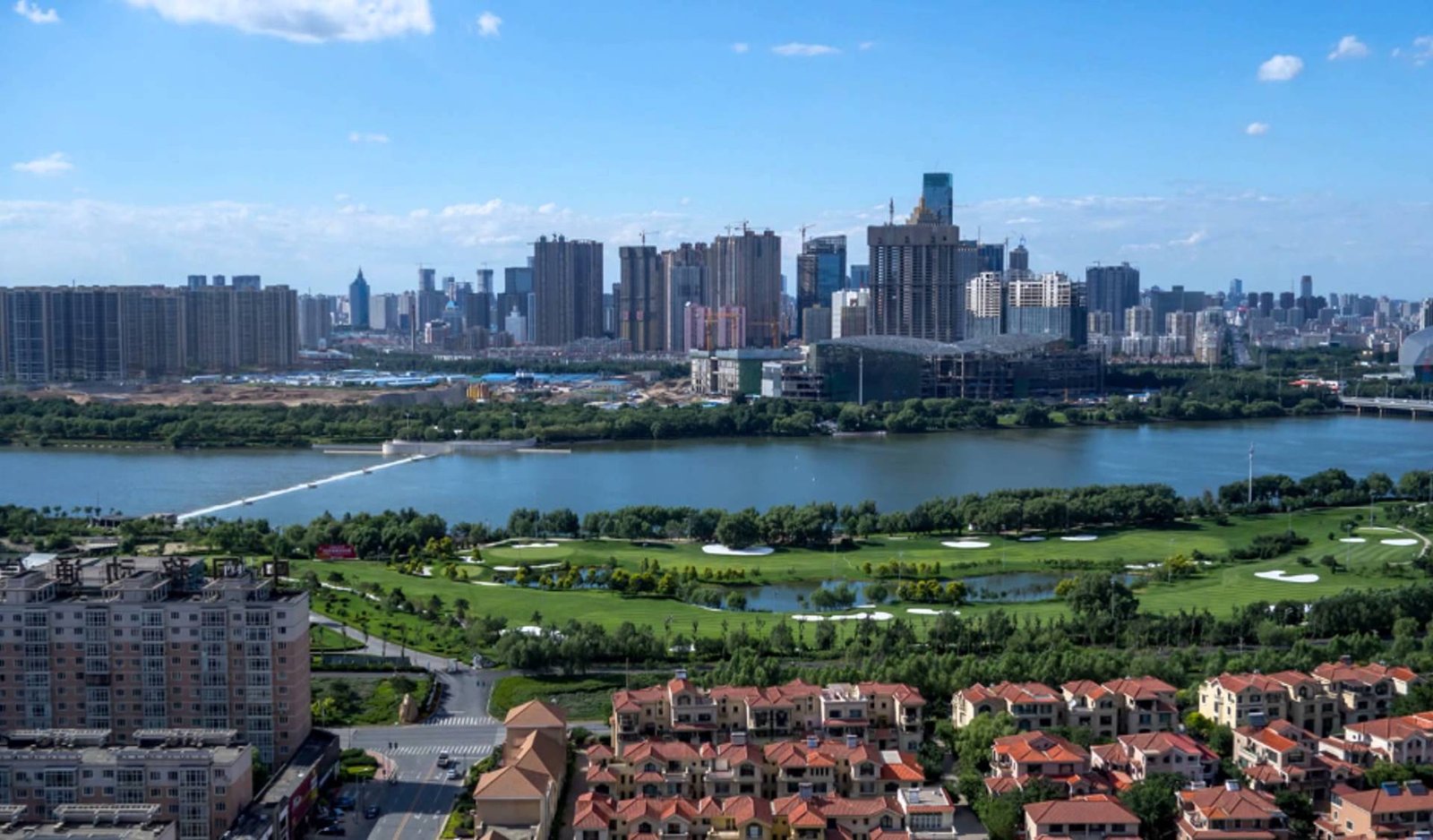
Shenyang, Wade-Giles romanization Shen-yang, conventional Mukden, capital of Liaoning sheng (province), China, and the largest city in the Northeast (formerly Manchuria). It is one of China’s greatest industrial centres. Shenyang is situated in the southern portion of the vast Northeast (Manchurian) Plain just north of the Hun River, a major tributary of the Liao River. The city site is a flat, low-lying alluvial plain, although the land rises to the east toward the forested slopes of the Changbai Mountains. Pop. (2002 est.) city, 3,995,531; (2007 est.) urban agglom., 4,787,000.

Since the time of the Han dynasty (206 BCE–220 CE), the lower Liao River basin has been known as the Chinese Pale, an area settled chiefly by Han Chinese immigrants from what are now the provinces of Hebei and Shandong. During the Xi (Western) Han period, a county called Houcheng was set up in the area of what is now Shenyang. The rest of Manchuria was long under the control of various nomadic and tribal peoples, of whom the Manchu became the most important. In later centuries the Pale was at least symbolically set off from the rest of Manchuria by a discontinuous barrier known as the Willow Palisade.

By the 10th century, Shenyang, known as Shenzhou at the time, had become a major frontier settlement of the Khitan kingdom; its dominant peoples, also known as the Khitan, founded the Liao dynasty (907–1125). Southern Manchuria was conquered by the Jin, or Juchen, peoples by 1122–23 and a century later by the Mongols, who by about 1280 had completed their conquest of all of China and established the Yuan dynasty (1206–1368). It was under the Mongols that the name of Shenyang was first applied to the city. By 1368 the Ming dynasty had displaced the Mongols.

In the early 17th century the Manchu controlled all of Manchuria, and Shenyang, renamed Mukden (Manchu: “Magnificent Metropolis”; the equivalent Chinese name is Shengjing), proved an admirable organizing base for the conquest of China. In 1644, when the Manchu supplanted the Ming on the imperial throne and established the Qing dynasty (1644–1911/12), they transferred their capital to the former Ming capital at Beijing. However, Mukden retained its prestige as the older capital of the reigning dynasty; the tomb complexes of earlier Manchu rulers—Zhao (Beiling, or North) Tomb and Fu (Dongling, or East) Tomb—are among the most famous monuments of China; in 2004 both were added to an existing UNESCO World Heritage site protecting Ming- and Qing-era tombs.

Thereafter the city grew steadily, especially in the last half of the 19th century, when Chinese immigration to Manchuria reached flood proportions. For a time during the Qing dynasty, the city was called by the name Fengtian (for Fengtian prefecture, set up there in 1657). In 1929 the city’s name changed back to Shenyang.

In the period of struggle between Russia and Japan for dominance in Manchuria after 1895, Mukden was inevitably one of the key positions. From that time, when the Russians gained rights to build railroads in Manchuria, Mukden was a Russian stronghold; during the Russo-Japanese War (1904–05), it was the scene of the Battle of Mukden, which lasted from February 19 to March 10, 1905, when the city was finally taken by the Japanese. In the early 1920s the Chinese warlord Zhang Zuolin, a protégé of the Japanese, participated with other warlords in the struggle for control of Beijing. The last warlord to resist the advance of the Nationalist Party (Kuomintang) Army against Beijing in 1928, he was killed in his retreat with his defeated troops. Three years later, on Sept. 18, 1931, an explosion touched off the Mukden Incident. A bomb, alleged to be Chinese, went off on the railway track near Mukden (Shenyang) and gave the signal for a surprise Japanese attack on the Chinese Nationalist garrison and arsenal in the city. After protracted fighting, the Chinese forces were driven out of Manchuria. During the Japanese occupation (until 1945), the name of the city was once again changed to Fengtian.

The Soviet Union declared war on Japan in early August 1945 and soon took Shenyang. Several months after the surrender of Japan on Aug. 14, 1945, Shenyang was occupied by Chinese Nationalist troops (March 1946). During the ensuing civil war (1946–49), Shenyang was taken by Chinese communist forces on Oct. 30, 1948. The city then served as a base for the subsequent communist conquest of the entire Chinese mainland.

Since 1950, Shenyang has continued as the hub of the heavy industrial complex of the southern region of China’s Northeast. The chief manufactures are machinery and fabricated metals. Rolling stock, machine tools, wire and cables, cement, electrical equipment, chemicals and chemical fertilizers, and pharmaceuticals are produced there. The complex also includes oil-seed-processing plants, flour mills, paper plants, soap and leather factories, textile mills, and glass factories. The smelting of metals such as copper, zinc, lead, and manganese also is an important part of the industrial mix of the city.

Shenyang remains one of the leading railway centres in China. In addition, a network of roads converges on the city, with expressways (completed in the 1990s) leading north to Changchun (Jilin province) and south to Dalian at the end of the Liaodong Peninsula. Taoxian International Airport, some 12 miles (20 km) south of the city, opened in 1989 and completed the first portion of a major expansion of its facilities in 2001. Within the city, construction began in 2005 on a multiple-line subway system.

Shenyang has long functioned as the education and cultural centre of the Northeast. The city houses more than 20 universities and colleges, including Liaoning University, Northeastern China Technical University, Northeastern Engineering College, Northeastern Institute of Finance and Economics, and two medical colleges. Dozens of scientific research institutes are located in the city as well. In addition to theatres and libraries, there are also an institute of fine arts and music conservatories.

Tourism has become increasingly significant in Shenyang. The central attraction is the city’s Qing-era Imperial Palace complex, which in 2004 was added to an existing World Heritage site encompassing the Forbidden City in Beijing. In addition to this and the two tomb complexes, there are also numerous other historical monuments and sites and religious buildings in and around the city. Notable among Shenyang’s many museums is the Liaoning Province Museum (formerly the Northeast Museum). The city is also noted for its many parks and lush greenery. Shenyang played host to several of the preliminary football (soccer) matches during the 2008 Olympic Games.

Salisbury City


Salisbury City


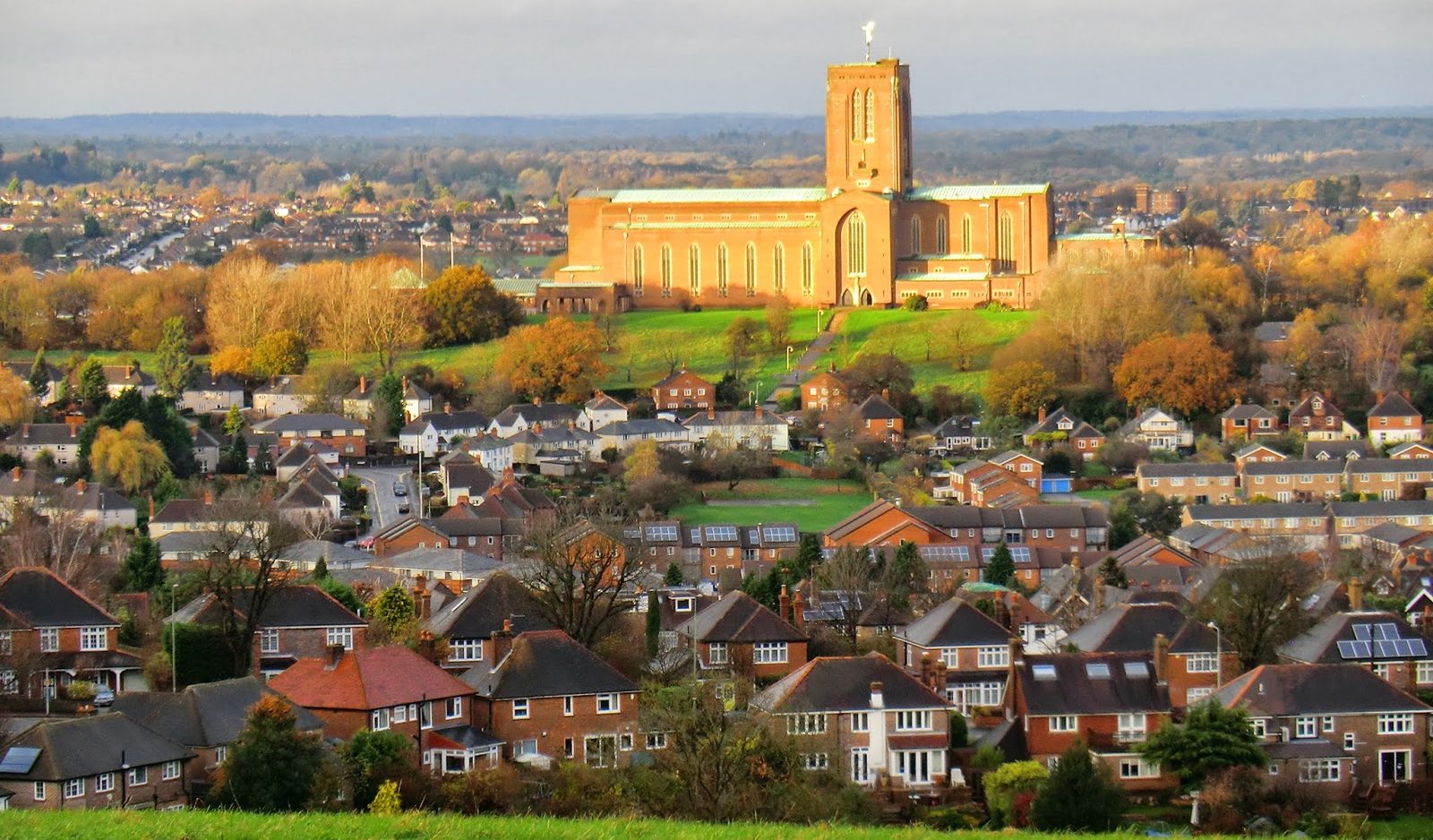
Salisbury, formerly New Sarum, city in the administrative and historic county of Wiltshire, southern England. It is situated at the confluence of the Rivers Avon (East, or Hampshire, Avon) and Wiley. It functioned historically as the principal town of Wiltshire and is the seat of an Anglican bishop.


SAXON SALISBURY

The story of Salisbury began 2,500 years ago when an iron age fort was built on Salisbury Hill about 2 miles north of the modern town center. In the 6th century, the Saxons invaded Wiltshire. In 552 Saxons and Celts fought a battle at Salisbury Hill. The Celts were defeated and fled westwards. The fort probably lay abandoned for centuries.

However by the early 11th century a settlement had grown up on the site of the old fort. In 1003 the Vikings raided Wilton some of the survivors may have fled to the safety of Salisbury Hill and founded a new settlement. The new town had a mint and a market.

About 1069 William the Conqueror built a wooden castle to overlook the settlement and keep the inhabitants in line. In 1075 a bishop moved his seat there. However, Sarisberie, as it was called, was a small settlement, much smaller than nearby Wilton. It probably only had a population of a few hundred.

SALISBURY IN THE MIDDLE AGES

The modern town of Salisbury began about the year 1217 when the Bishop decided to move his seat to land owned by the church south of the hill. Perhaps there was friction between the clergy and the soldiers in the Norman castle. A shortage of water on the hill may have been another reason for the move. He created a new town on the plain. The Bishop laid out streets in a grid pattern and leased plots of land for building houses. So a new settlement grew up at Salisbury but the town at Old Sarum continued for centuries.

The new town of Salisbury was given a charter in 1227 (a charter was a document granting the townspeople certain rights). By 1219 Salisbury had a market and an annual fair. In Middle Ages fairs were like markets but they were held only once a year. People would come from all over Wiltshire to buy and sell at a Salisbury fair.

Medieval Salisbury was very successful. This was partly because it was on the road from Wilton to Southampton. It was also on the road from London to Exeter. (In those days Exeter was a large and important town and much traffic went between those two towns). In 1244 a stone bridge was built across the Avon, which increased the traffic flowing through Salisbury. Obviously travelers would stop at Salisbury and spend money in the town.

Fish Row where fish was sold

However the main industry in Medieval Salisbury was making wool cloth. The wool was woven. It was then fulled. Before it was dyed the wool was beaten in a mixture of water and clay to clean and thicken it. This was called fulling. Wooden hammers worked by watermills beat the wool.

Much of this wool was exported through Southampton. Salisbury grew to be one of the largest towns in England by the 15th century with a population of perhaps 8,000.

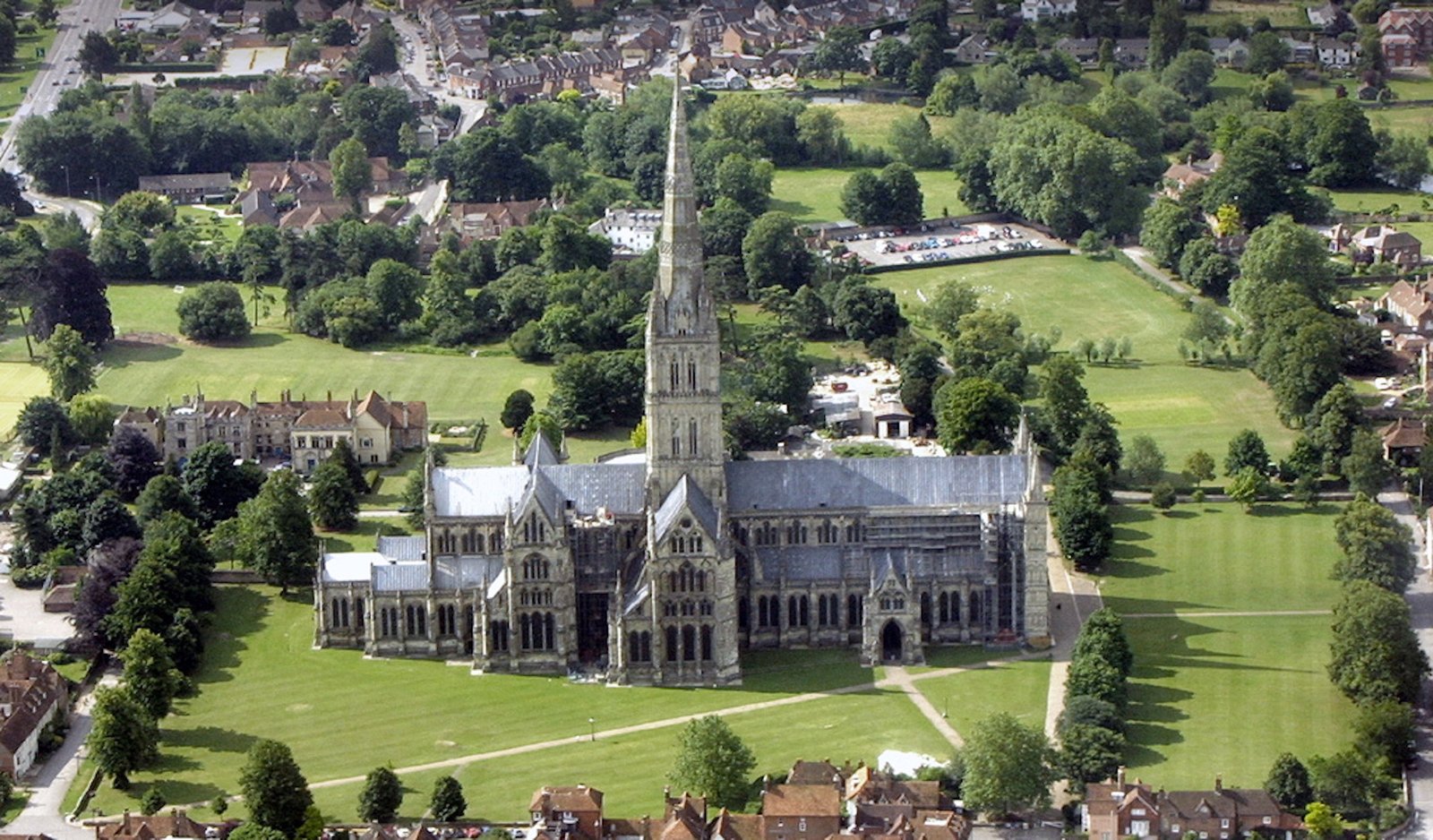
Work on Salisbury Cathedral began in 1220 and continued until 1258. The tower and spire were added in 1334. The Bishops Palace was also built in the 13th century. Then in 1269 Salisbury was divided into 3 parishes.

Meanwhile in the 13th century the friars arrived in Salisbury. The friars were like monks but instead of withdrawing from the world they went out to preach. In Salisbury there were 2 orders of friars, the Franciscans (called grey friars because of their grey costumes) and the Dominicans (known as black friars). In the late 14th century the Hospital of the Holy Trinity was founded where monks cared for the sick and poor as best they could.

Life in the Middle Ages

The House of John A’Port in Queen Street was built in the 15th century.

SALISBURY IN THE 16th CENTURY

In 1538 Henry VIII closed the friaries in Salisbury. However the 2 ‘hospitals’ continued to function.

During the 17th century the wool industry in Salisbury slowly declined. The population of the town also declined slightly to about 7,000. Salisbury was a large and important town in the Middle Ages but by 1700 it had dwindled into a medium sized market town. On the other hand in 1612 Salisbury was given a new charter. This one made the town completely independent of the Bishop.

Like all towns in those days Salisbury suffered from outbreaks of the plague. It struck in 1563, 1604 and 1627.

SALISBURY IN THE 17th CENTURY

In 1642 came civil war between king and parliament. For 2 years Salisbury escaped the fighting then in October 1644 a royalist army occupied the town. In December 1644 a parliamentary army attacked Salisbury and quickly defeated the royalists taking many of them prisoner. However in January 1645 another royalist army attacked Salisbury. They drove out the parliamentary troops. Salisbury remained in royalist hands until January 1646. By then the king was losing the war and he withdrew his troops from Salisbury as they were needed elsewhere.

The civil war ended in 1646 but in 1655 a royalist uprising took place. Not many men from Salisbury were willing to join the revolt. The uprising was soon crushed and 7 rebels were hanged in Salisbury. Others were transported to the West Indies.

The Joiners Hall was built in the 16th century. Matrons College for the widows of clergymen was built by Bishop Seth Ward in 1685.

SALISBURY IN THE 18th CENTURY

One of Salisbury’s famous buildings, Mompesson House, was built in 1701 for Charles Mompesson a merchant.

However during the 18th century Salisbury remained a market town of only local importance. Cloth manufacture was still the main industry in Salisbury but it continued to gradually decline. Furthermore Salisbury suffered outbreaks of smallpox in 1723 and in 1752.

Yet there were some improvements in Georgian Salisbury. Salisbury gained its first newspaper in 1715. Then in 1737 an Act of Parliament formed a body of men with powers to pave, clean and light the streets of Salisbury with oil lamps. They also appointed a force of night watchmen. An infirmary was built in Salisbury in 1774 and a theater was built in 1777.

SALISBURY IN THE 19TH CENTURY

In 1801 Salisbury had a population of 7,668. By the standards of the time it was a fair sized town. However Salisbury grew little in the early 19th century and had a population of less than 9,500 in 1851. In the late 19th century the population grew more rapidly. It reached 17,000 by 1901.

In the 19th century the industrial revolution transformed Britain but it largely passed Salisbury by. Salisbury remained a market town and the old cloth industry died out altogether.

However there were some improvements in Salisbury during the 19th century. In 1833 Salisbury gained gas street light and 1836 a modern police force was created in the town. Then in 1847 the railway arrived.

However in 1849 Salisbury suffered a severe outbreak of cholera and 192 people died. Afterwards, in the 1850s sewers were dug under the town and a piped water supply was created. Salisbury museum was founded in 1860. In 1892 a public swimming pool opened.

The original settlement at Salisbury was on a hill north of the town. By the early 19th century it had dwindled to almost nothing. It became a ‘rotten borough’ where 10 voters elected 2 MPs! This situation was finally ended in 1832. Then in 1882 Old Sarum was finally extinguished when it became a public park.

SALISBURY IN THE 20th CENTURY

In the 20th century Salisbury continued to grow quite rapidly but it remained an agricultural town. Today one of the main industries in Salisbury is tourism.

The first cinema in Salisbury opened in 1908. Then in the 1920s and 1930s the first council houses were built. Some of them were needed to replace demolished slums. More council houses were built in Salisbury after 1945.

Old George Mall opened in 1968. A new library opened in Salisbury in 1975. A new swimming pool opened in 1976. The Redcoats In The Wardrobe Museum opened in 1982. The Maltings Shopping Centre opened in 1986. Wilton Shopping Village opened in 1998.

Southampton City


Southampton City


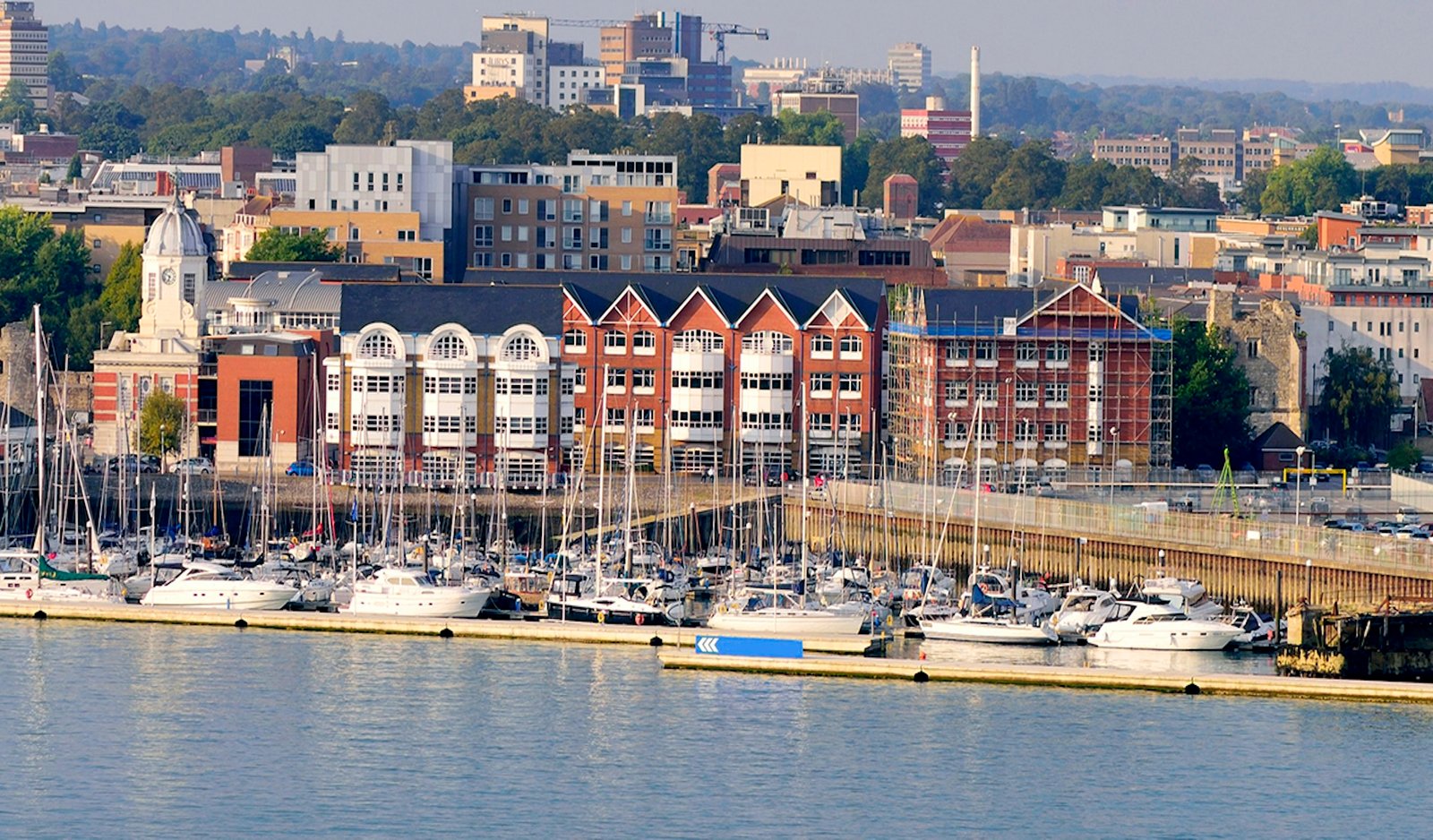
Southampton, city and English Channel port, a unitary authority in the historic county of Hampshire, southern England. It lies near the head of Southampton Water, on a peninsula between the estuaries of the Rivers Test and Itchen.


ROMAN SOUTHAMPTON

About 70 AD the Romans built a town on a bend in the River Itchen, where Bitterne now stands. The Roman town near Southampton was called Clausentum. The streets were laid out in a grid pattern and they were graveled. All the buildings in the Roman town were, at first, built of wood but in the 2nd century, wealthy people re-built their houses in stone. They had panes of glass in the windows, painted murals on the walls and mosaic floors. Of course, poor people could afford none of these things. They lived in wood and plaster huts.

In the 2nd century the little town was fortified. An earth rampart with a wooden palisade on top was erected and ditch was dug. In addition, an inner area of 8 acres was given its own ditch, rampart, and palisade. In the 4th century, the inner area was strengthened when it was given stonewalls. The Roman army left Britain in 407 AD and the town of Clausentum was abandoned soon afterward.

SAXON SOUTHAMPTON

The Saxon king, Ine, built a new town on the other side of the Itchen about 690-700 AD. It stood where St Mary’s church is today. The new town was called Hamwic or Hamtun. (The ham in Hampshire comes from Hamtun. It was once called Hamtunshire). Saxon Southampton was a large and important port. It is estimated that the population of the Saxon town was 4,000-5,000, which was very large, by Saxon standards.

Saxon Southampton was laid out with streets on a grid pattern like the old Roman town, but all the buildings in it were of wood. In the town, craftsmen made things like needles and combs from animal bone. There were also blacksmiths, bronze smiths, carpenters, thatchers, leather workers, and potters. Women wove wool into cloth. The main export from Southampton was wool. Wine and fine pottery were imported as well as millstones. By the 9th century, there was a royal mint in the town.

Southampton suffered severely in the Danish raids of the 9th and 10th centuries. The Danes sacked the town several times. Late in the 9th century, King Alfred created a network of strongholds called burghs across his kingdom. In the event of a Danish raid, all the men in the area were supposed to gather in the stronghold or burgh. It is recorded that there was a burgh called Hamtun (later this name changed into Southampton). Some historians think it may have been within the stone walls of the old Roman town.

In the 10th century Southampton went into decline. This may have been partly due to the Danish raids but it was probably also due to the silting up of the Itchen. As Southampton declined many people probably moved to Winchester but at least some moved to a new settlement beside the Test. This new settlement was also called Hamtun but it was much smaller than the old town. At the time of Domesday (1086), it may have had about 1,000 inhabitants.

Nevertheless the Witan, the Saxon parliament declared Canute king of England at Southampton.

SOUTHAMPTON IN THE MIDDLE AGES

After the Norman conquest Frenchmen came to live in Southampton. They settled around French Street and Bugle Street. They worshiped in a church dedicated to St Michael (the patron saint of Normandy). High Street was once called English Street. It and East Street were where the original Saxon inhabitants lived. (English Street changed its name to High Street in the 16th century). The Normans also built a wooden castle in Southampton. In the 12th century, the castle was rebuilt in stone.

Medieval Southampton grew rapidly and probably had about 3,000-4,000 inhabitants by the 14th century. In the town craftsmen of one kind tended to live in one street. Bakers lived in Simnel Street (simnel was a type of fine flour). West Street was known as Butcher Row, Bugle Street was also a street of butchers (a bugle is an old name for a young bull). Wincle Street derives its name from the old word wincel meaning nook, corner or angle.

By the 13th century there was a small suburb north of Southampton where Above Bar is today. By 1250 another little suburb had grown up outside the East Gate on the road to St Mary’s church. It was called Newtown, a name that has lasted to the present day.

At first all of the buildings in Medieval Southampton were of wood but in the years 1150-75 many wealthy merchants rebuilt their houses in stone.

The main export from Southampton was wool. The main import was wine from France or Spain. In 1305 the merchants said the prosperity of the town depended on wine.

In the Middle Ages there was a shipbuilding industry at Southampton, off West Quay. During the hundred years war in the 14th and 15th centuries, several naval vessels were built for the king. Apart from this, there were many craftsmen in Southampton making things for the people of the town (carpenters, blacksmiths, potters, leatherworkers, and thatchers).

In Medieval Southampton there were weekly markets. There was also an annual fair. A fair was like a market but people would travel from all over the country to attend. The fair was held for 3 days each year near the Chapel of St Mary and the Holy Trinity. So it was called the Chapel or Trinity fair. At first, Southampton was run by a man called a portreeve assisted by bailiffs. A mayor was first mentioned in 1217.

In 1127 an Augustinian Priory (small abbey) was founded at St Denys. In 1185 the Portreeve of Southampton Gervaise Le Riche founded God’s house. It was a home for sick and poor people. It also gave shelter to poor travelers. There was also a leper hostel built in the 12th century just outside the town. It stood in the middle of fields and was dedicated to Mary Magdalene. The surrounding fields were called Magdalene’s fields which became corrupted to Marlands.

About 1237 Franciscan friars arrived in Southampton. Friars were like monks but rather than trying to live separately from the world they went out into the world to preach. The friars were responsible for the first water supply in the town. They were given a spring north of Southampton at the end of the 13th century and they built a lead pipe to the friary. In 1311 they gave the townspeople permission to use their water supply.

By the 13th century Southampton was fortified with an earth rampart with a wooden palisade and a ditch. In the years 1260-1300 a stonewall replaced it. Unfortunately, the wall only protected the landward side of the town. The wall did not extend along the shore. The result was a disaster.

In 1338 a force of Frenchmen and Sicilians landed on a shingle spit near St Michaels Square while the people of Southampton were at mass. The enemy broke into St Michael’s church and killed many people including women and children. Some people fled to the countryside. They and men from the surrounding area gathered together and prepared to counterattack. Meanwhile, the French burnt many of the houses in Southampton. Early the next morning the English counterattacked and killed about 300 French and Sicilians. The rest fled to their ships and sailed away.

In 1339 the king visited Southampton and ordered improvements to be made to the fortifications. The work went on for decades and was a huge burden on the town. The cost of the new fortifications was immense. Several new towers were added to the walls and in 1378-80 the keep of the castle was rebuilt. The Bar Gate was given a new facade with machicolations. (Holes in a ledge overhanging the gate through which boiling water could be poured and large stones could be dropped). This time the walls of Southampton were extended along the seafront. Some merchants had houses overlooking the sea. Their houses were incorporated into the wall.

In the late Middle Ages the prosperity of the town partly depended on trade with the Italians. From the early 14th century, they brought luxuries like spices, perfume, and silk to Southampton as well as cargoes like alum and woad (used in dyeing wool). On their return journey, the Italian ships took English wool. Southampton became a busy port and ranked third in the kingdom behind London and Bristol.

Southampton also benefited from the Hundred years war which dragged on from the middle of the 14th to the middle of the 15th centuries. Ships were built for the navy in Southampton and the town was used as a departure point for armies on their way to France. The departing English armies needed large quantities of supplies such as bread meat and beer providing plenty of work for bakers, butchers, and brewers in the town.

Life in the Middle Ages

SOUTHAMPTON IN THE 16th CENTURY AND 17TH CENTURY

In the late 15th century, for various reasons, the Italian trade went into a steep decline and it ceased altogether in the early 16th century. Worse, in the 15th century, Southampton was the only port in England from which lead and tin could legally be exported but it lost this monopoly in 1531.

At first Southampton was able to compensate. The wine trade with France flourished after the end of the hundred years war in 1453. Furthermore, English kings made commercial treaties with Spain and trade between Southampton and that country thrived. Southampton also did a great deal of business with the Channel Islands at this time.

Nevertheless Southampton ceased to be an important port during the 16th century. By 1600 it was described as a ‘decayed’ port. There was, however, still have a coastal trade. In those days it was expensive to transport goods by road. It was cheaper to do so by water. Many goods were transported by a river or along the coast. Items like coal, salt, iron, malt, woad, alum, and timber were brought along the coast to Southampton then taken inland by horse and cart.

In order to help the port in 1554 it was decreed that Malmsey wine, from France, could only be imported through Southampton. In 1567, after much complaining, the rules were changed. Other ports were allowed to import it but only if they charged a tariff, half of which went to Southampton Corporation.

In 1541 a visitor said Southampton had ‘many fair merchants houses’ and the High Street was ‘one of the fairest in all England for timber buildings’. In 1552 another person wrote ‘The town is handsome and for its size has houses as fair as those in London’. But by the end of the century, it was a different picture. The walls were said to be overgrown with ‘elders, yew and such other weeds’. Poor people used towers around the walls as dwellings and local butchers grazed their animals on the hill under the castle keep. Some houses, it was said, were ‘greatly decayed and likely to fall down’.

However Tudor Southampton was not entirely impoverished. It became a manufacturing center. In 1567 craftsmen fleeing religious persecution in Belgium settled in the town. They introduced the manufacture of serge cloth into England. Furthermore, craftsmen from other English towns such as Salisbury came to work in Southampton. A survey in 1596 showed Southampton had a population of 4,200.

There were 2 outbreaks of plague in Southampton in the 16th century, one in 1563 and one in 1581. But after each outbreak of plague, the population quickly recovered. There were always plenty of poor people from the countryside looking for work and they drifted into towns.

In 1550 William Capon, rector of St Mary’s left 100 pounds in his will to be used to found a grammar school in Southampton. It opened in 1554 in Winkle Street.

In 1618 King James sold Southampton castle, which was now falling into ruin. The king visited the town and said it was ‘one of the healthiest and sweetest towns in the kingdom’.

However Southampton languished in the 17th century. At the end of the century, people commented that its trade had decayed and the town had fallen into neglect.

SOUTHAMPTON IN THE 18th CENTURY

In 1750 Prince Frederick went bathing in the sea at Southampton. He liked it so much he returned again the same year. Although he died the next year his 3 sons came to visit the town. Soon many rich visitors followed. People believed that bathing in seawater could heal many diseases.

In 1762 Southampton was called: ‘one of the prettiest and healthiest towns in England, it is rather extensive and well populated and possesses several fine houses’.

Furthermore 18th century Southampton began to recover as a port. In 1753 a writer said that it had ‘lately improved its position. Much of the wine trade with Portugal formerly handled by London in now finding its way to the port’. From the 1780’s trade in Southampton began to revive even more. Coal from Newcastle was imported in increasing amounts. Wool stockings were imported from the Channel Islands.

From 1770 Southampton began to grow north of the Bargate. By 1802 growth had spread as far as Commercial Road. The population rose from about 6,000 in 1770 to about 8,000 in 1801.

From 1745 the authorities planted trees along the road across the Common. In 1761 an assembly room was opened on West Quay. Balls were held there and games of cards. A visitor described it as ‘very elegant, handsomely lighted up with 5 glass chandeliers’. In 1766 Southampton got its first theatre in French Street. The town gained its first bank in 1778.

In 1770 an act of Parliament set up a body of men called the Improvement Commissioners with powers to pave and clean the main streets of Southampton. From 1782 they provided 150 oil lamps to light some of the streets. In 1775 Eastgate was demolished as it impeded the flow of traffic. In 1765 a passage for pedestrians was cut through the east arch of the Bargate. Later another was cut through the west gate. In 1799 a wooden bridge was built across the Itchen at Northam.

The improvement commissioners in Southampton also towed away carts blocking the streets of Southampton. They were chained to a tree known as the pound tree and the owner had to pay a fine to get them back.

Life in the 18th Century

SOUTHAMPTON IN THE 19th CENTURY

During the Napoleonic wars Southampton prospered because of the soldiers passing through on their way abroad. They spent lots of money in the town.

Furthermore by the early 19th century the port was booming again. Timber was imported from the Baltic, grain from Ireland and Eastern England. Coal, slate, and building stone were brought from Scotland. Also, wine and fruit were imported into Southampton from Portugal and Spain.

On the other hand Southampton lost its position as a seaside resort to Brighton. By 1820 sea-bathing had largely ceased. However, the quays at Southampton were not sufficient for the number of ships visiting the port. In 1838-42 a dock was built.

Also in the early 19th century many new shipyards were built along the Itchen. In 1822 a paddle steamer began running between Southampton and the Isle of Wight. In 1823 paddle steamers began running from Southampton to France and the Channel Islands. By 1830 100,000 people were travelling from Southampton by steamship every year.

Meanwhile between 1807 and 1809 the novelist Jane Austen lived in Southampton.

In the early 19th century the Saltmarsh, east of Southampton was drained and the land was sold for building houses. At the same time, the 4 fields north of Southampton were purchased by the town council and turned into parks. In the 1840s growth spread to Northam. Then in the 1850s, it spread to Freemantle and Newtown. In the 1860s many new houses were built in Shirley, St Denys, and Portswood and by 1900 growth spread to Swaythling. After 1900 Bitterne Park Estate was built.

In 1840 the railway reached Southampton. Stagecoach building was a major industry in the early 19th century. However, with the coming of railways, it slowly declined. From the 1840s there were horse drawn buses in Southampton and from 1879 horse drawn trams. The trams were electrified after 1900.

There were several other improvements in 19th century Southampton. Gas street lights were installed in 1820. Then in 1836, the first modern police force was founded. In 1838 the Royal South Hampshire hospital opened. In 1846 the first cemetery opened near the southern end of the Common. In 1889 the first public library in Southampton opened in St Marys Street.

However in common with most towns in the early 19th century Southampton was dreadfully unsanitary. The improvement commissioners only paved and cleaned the main streets and the back streets were very dirty. Out of 230 streets in the 1840s 145 were without sewers. In one case 77 people shared one toilet. Not surprisingly in 1849, there was a cholera epidemic in Southampton, which killed 240 people.

Life in 19th century Southampton gradually improved. After 1850 the town council took over the duties of the improvement commissioners. From then on all streets were cleaned and sewers were enlarged and improved. Nevertheless, there was another epidemic of cholera in Southampton in 1865, which killed 151 people. At first poor people obtained their water from conduits, wells or pumps but in 1888 a new waterworks opened at Otterbourne. By that time most people had piped water.

Also in 1888 an electricity generating station in Southampton opened in Back of the Walls. The first electric streetlights were switched on in 1889.

Life in the 19th Century

SOUTHAMPTON IN THE 20th CENTURY

From the 1880’s North Atlantic trade increased and in 1907 White Star transatlantic liners moved to Southampton. New docks for ships were built in the years 1890-1911. In 1919 Cunard made Southampton the terminus of their New York service. In 1919 the first motor buses appeared in Southampton.

From 1913 flying boats were made in Southampton and from 1923 there was a flying boat service to the Channel Islands. In 1932 the council purchased an airport at Eastleigh which, by 1934 was the 3rd most important airport in Britain.

About 1910 the Chessel Estate at Bitterne was built. From 1913 cigarettes were manufactured in Southampton.

During World War I more than 2,000 men from Southampton lost their lives. More than 8 million men passed through on their way to the front.

In 1920 the boundaries of Southampton were extended to include Bitterne, Sholing, Woolston, Weston, Peartree, Bassett and Swaythling. In the 1920s the first council houses were built at Hampton Park, Freshfield Estate, Freemantle, Woolston, and Bitterne. Many private houses were also built in Highfield, Swaythling, Woolston and Bitterne.

In the 1930’s passenger traffic boomed. In 1933 some 75,000 people passed through Southampton. So did imports of fruit, potatoes, grain, timber, and wool. Many manufactured goods were exported. The booming port meant that Southampton escaped the worst of the depression. General Motors opened a factory on reclaimed land by the Test in 1938.

Southampton Civic Centre was built between 1932 and 1939. In 1938 a new sports centre was opened at Bassett.

During the Second World War 631 people in Southampton were killed by bombs. More than 4,000 houses were destroyed as well as many shops in the High Street and above Bar. About 11,000 houses were seriously damaged.

After the war Southampton was left with a severe housing shortage and some people were forced to live in old army huts. In the late 1940s, the council erected prefabs to house people temporarily. However permanent houses were built in Weston Park in 1946.

In 1954 the boundaries of Southampton were extended to include Millbrook, Redbridge, Harefield and part of Thornhill. From the mid-1950’s a huge program of council housing began on the eastern and western outskirts of the town. at Millbrook, Thornhill and Harefield. Also at this time, many slums were demolished in parts of Chapel Northam, Chapel, Shirley, and Bitterne.

More council houses were built in the 1960’s. As well as more houses at Thornhill, a new estate was built at Townhill. Slum redevelopment continued in Northam. Southampton council also had the task of replacing the prefabs erected in the late 1940s and early 1950s with permanent houses.

Meanwhile 32 new schools were built in Southampton between 1950 and 1964. The ruined shops in High Street and Above Bar were replaced with new buildings by 1956. In the center of the town, the road layout was changed. An inner ring road was built including Castle Way and Queens Way. Briton Street was widened to several times its original size. Then in 1964, Southampton was made a city.

Trams ceased to run in 1949. Flying boats ceased to operate in 1958. But the world’s first hovercraft flight took place in Southampton in 1959. In 1962 a hovercraft service to the Isle of Wight began. In 1961 car ferries to France began running.

Southampton remained the foremost passenger port in Britain in the 1950’s and 1960’s. In 1962 over half a million passengers passed through the port as did 4% of the cargoes imported into Britain. Imports included fruit and vegetables, meat and dairy produce, wine, grain, timber, wool, and cars. In the 1970s the port of Southampton was changed by containerization. It meant some old docks became redundant. The number of passengers travelling through the port also declined as air travel became common in the 1960s. In the 1980s and 1990s some of the old docks were converted into areas of shops and offices and marinas. New shopping centers were built such as the Bargate in 1989 and the Marlands in 1991.

In the 1950’s and 1960’s shipbuilding and heavy engineering continued in the Old Docks and along both banks of the Itchen but some light industry came to Southampton including firms in the new Millbrook Industrial estate. In the 1980’s there was a shift away from jobs in manufacturing industry to jobs in service industries. Although traditional industries declined in Southampton there were many new jobs in banking, insurance and finance.

Tourism was also an increasingly important industry in Southampton. In 1988 a 13th century merchants house was opened as a museum. In 1996 an oceanography center opened in Southampton. Then in 1997 Southampton was made a unitary authority.
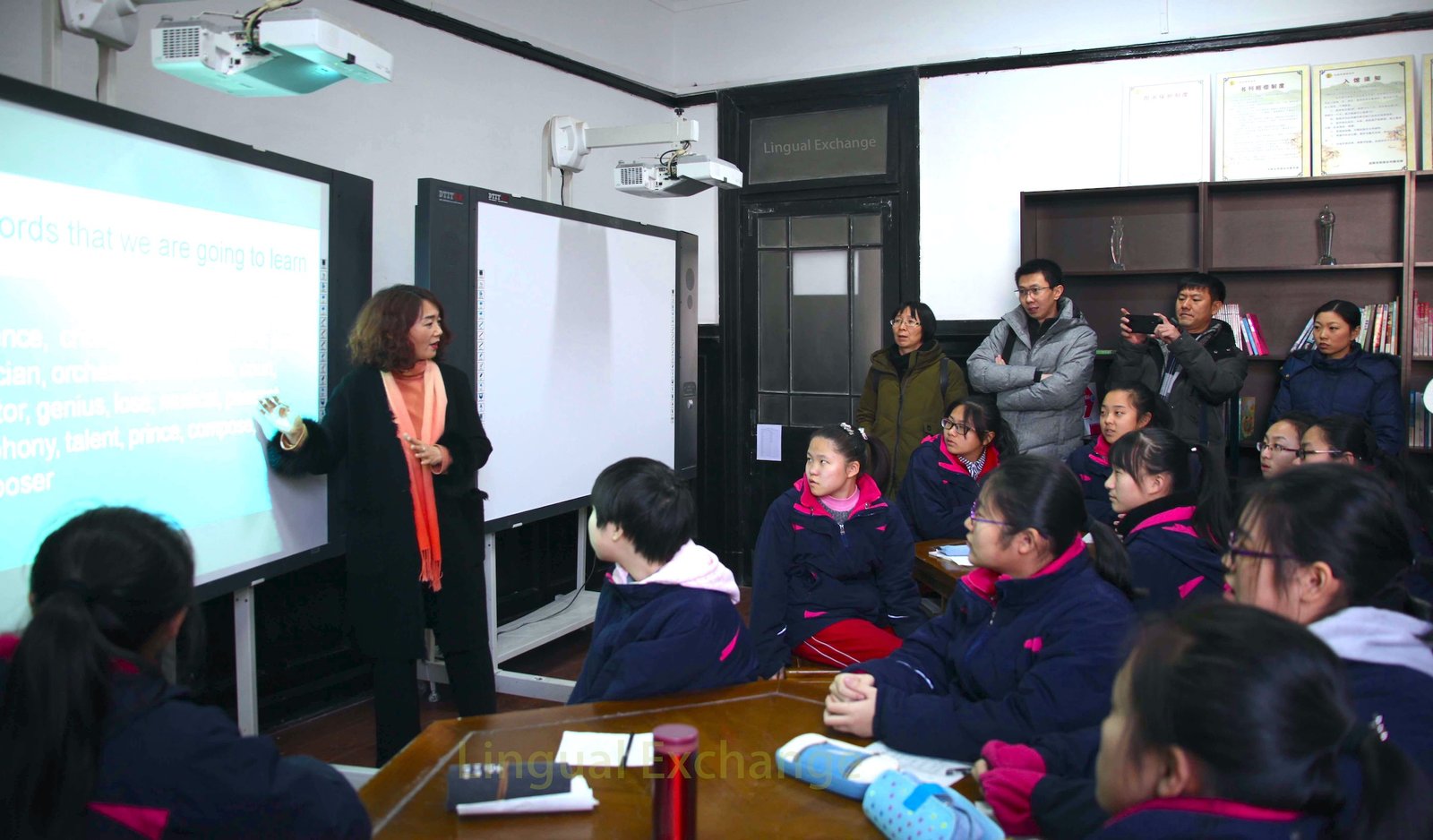
Higher Education in China


Higher Education in China


Since the implementation of reform and opening up, the reform and development of higher education have made significant achievements. A higher education system with various forms, which encompasses basically all branches of learning, combines both degree-education and non-degree education and integrates college education, undergraduate education and graduate education, has taken shape. Higher education in China has played an important role in the economic construction, science progress and social development by bringing up large scale of advanced talents and experts for the construction of socialist modernization.
In 2017, there were all together 2631 Higher Education Institutions (HEIs), among which 1243 were universities, 265 were independent colleges and 1388 were higher vocational colleges. There were also 282 higher education institutions for adults. In 2017, the total enrollment of undergraduate in the regular HEIs were 27,535,869. The total enrollment of postgraduate in the regular HEIs were 2,639,561. The total enrollment of adult higher education institutions were 5,441,429.
Chinese economic system used to be very highly centralized. To adapt to that, the former higher education system was also centralized, with education provided by the central and local governments respectively and directly under their administration. The disadvantages of this system were that the state undertook too many responsibilities and the schools lacked the flexibility and autonomy to provide education according to the needs of the society, with central departments and local governments providing education separately, the structure of education was irrational and segmented. There were too many single disciplinary HEIs and professional HEIs, With the establishment of disciplines over-lapped, the efficiency of some HEIs fell very low which in return hampered the improvement of education quality. Therefore, the structural reform of higher education has become a key for other higher education reforms. The reforms of higher education consist of five parts: reforms of education provision, management, investment, recruitment and job-placement, and the inner-institute management, among which management reform is of most importance and difficulty. The overall objectives of higher education reform are to smooth the relationship among government, society and HEIs, setting up and perfecting a new system in which the state is responsible for the overall planning and macro management while the HEIs follow the laws and enjoy the autonomy to provide education according to needs of the society.
After several years’ endeavor, the structural reform of higher education has gained heartening achievements. In the field of education provision reform, the old system in which the state undertook the establishment of all HEIs has been broken, and a new system in which the government take main responsibility with the active participation of society and individuals has been taking shape. The development of HEIs run by social forces are fully encouraged and supported.
Regarding management system reform, the relationship among universities, government and society has been gradually smoothed out by various ways such as joint establishment, adjustment, cooperation and merger. A two-level education provision system has taken shape in which the central and local government will take different responsibilities to provide education with the former responsible for the overall planning and management. As a result, the overlapping of education was overcome. At the same time, the government streamlines their administration and delegate more power to the HEIs, expanding their autonomy of providing education for the society according to the laws.
With regard to the financing system, the old system in which the funding of higher education depended on the governments only has been changed and a new system capable of pooling resources from diverse channels with the main responsibilities on government has been gradually established and perfected.
With regard to the reform of system of recruitment, fees charging and graduates job-placing, on the basis that all citizens should enjoy the legally equal right of receiving higher education, which should be consistently stick to, in the light of local economic development, a new system in which all students should pay reasonable contribution to their own higher education has taken shape. Simultaneously, a scholarship system for excellent student both academically and morally and a loan, stipend and taking part-time jobs system for students with family economic difficulties has been brought into common practice, ensuring that none students will drop out of school because of economic reasons. After their graduation, the students will mainly select their own jobs under the guidance of the state policy. In addition, the MOE is undertaking the reform of examination and recruitment of HEIs which will help HEIs to select talents and expand the autonomy of schooling, thus laying the foundation of training creative talents, and also help the secondary schools to implement comprehensive quality oriented education.
With regard to the reform of internal administration mechanism, the key lays in the personnel system and the allotment system reforms. On the basis of reasonable organization structure delimitation, all the teaching staff carries out the post responsibility system and appointment system and working achievements are emphasized concerning the personal income allotment, which strengthens the encouragement mechanism in allotment and mobilized the enthusiasm of the teaching.
Teaching Reform in Higher Education in China
1) The solidified core status of teaching in HEIs.
In HEIs, the idea that with training talents as its basic task, teaching as its melody, how to increase the education equality is its eternal theme, teaching reform is the core of any other reforms, and undergraduate education is its basis is becoming the dominant idea for higher education. The establishment of this dominant idea comes by not easily.
From the end of l980’s to the early l990’s, there used to be inadequate input in the fields of leading vigor, teaching expenditure, teachers and the students’ energy. As a result, the trend of declining or potential crisis once showed up in the field teaching. In order to stop that, the former State Education Commission took active measures and gave guiding opinions on some directing, comprehensive and strategic issues. Under the unified planning of State Education Commission, the educational executive departments at various levels energetically deliberated the policies and measures to stop the trend of teaching declining in its own areas and department. All the efforts effectively controlled the trend and potential crisis and lead the teaching work to develop in good direction.
2) The completion of the reservation of the discipline catalogue and disciplines adjustment and the beginning of the over all reservation of teaching plan.
The former SEDC began the new round of reservation of undergraduate discipline catalogue in 1997. Following the policy of being scientific, adapting and standard, the reservation came to the end successfully in July 1998 after a year’s of thorough investigation and repeated proof. The total number of disciplines was reduced from 504 to 249. After that, MOE promulgated “The basic ideas on the reservation of teaching plan of undergraduate disciplines in the HEIs.” and “The Circular of making good reservation of teaching plan of undergraduate disciplines for HEIs ” in succession. At present, according to the planning of MOE, all the regular HEIs are undertaking the new round of teaching plan reservation. The new teaching plan will come into practice in the autumn of l999.
3) Entering a substantial key stage for the reform of teaching contents and curriculum
The former SEDC launched the “Reform Plan of Teaching Contents and Curriculum of Higher Education Facing the 21st Century” in 1994, formally ratifying the establishment of 211 big projects and nearly a thousand sub-projects with tens of thousands teachers participating. This plan covers all areas of teaching such as teaching ideology, teaching contents, curriculum structure and teaching methodology. A advisory group for the reform of teaching contents and curriculum consisting of domestic famous experts from all disciplines has been set up. By now, 20 million RMB have been put into the whole plan and the aim that by the end of this century and early next century nearly a hundred new talents training patterns and almost a thousand sets of new teaching materials will come into being is being realized. At the same time, a large number of teaching reform achievements have showed up in HEIs. 1997, the National Teaching Achievements Awards organized and implemented by the former SEDC all together offered 422 State Awards. The national comparison of computer-aided teaching software research was carried out in 1995 and 1997 respectively and a bunch of preliminary systematic teaching software with high quality has sprung up.
4) The initial success of talents training bases for basic disciplines and the teaching bases of basic courses
Since the later year of l980’s, the basic disciplines in HEIs has been facing serious difficulties such as severe inadequate expenditure, very unstable teacher team, obvious decline of students’ quality. As a result, the long-term development of our science and technology and the training quality of talents in higher education were threatened. Under that circumstance, the former SEDC decided to establish the training bases for talents in basic disciplines and the teaching bases of basic courses. By the end of 1998, 84 national training bases of talents from basic disciplines of Science, 51 for basic disciplines of Arts, 45 for engineering disciplines and 13 for economics have been set up in succession. The bases attracted lots of outstanding high school graduates, thus the quality of students was improved obviously and the initiative of the teachers increased unprecedented. The establishment and reform of bases gained common approval and appreciation form higher education sector.
5) The enhancement of cultural education of university students and the exploration of new talents training models
In 1995, the former SEDC envisaged to enhance the cultural education of university students. With the tangency of enhancing the cultural quality of university students, moral and ideological quality, cultural quality, professional quality and physical and psychological quality were combined organically together. Passing on knowledge, training capacities and improve quality were be mixed and quality education was realistic strengthened. 52 HEIs participated in the pilot work. The concerning HEIs took various measures, such as identifying the compulsory reading list, strengthening classroom teaching, offering lectures, and organizing all kinds of cultural activities, to promote the programme development. Some pilot HEIs identified the goal, basic requirement and assessment standard of the programme while some others began to adjust talents training and teaching plans in the light of new requirements. After 3-year of pilot, MOE promulgated the “opinions in the enhancement of cultural education of university students”, set up directory committee for cultural education and ratified 32 “Bases for the Enhancement of cultural education of university students”, which symbolized that the enhancement of cultural education of university students was carried out fully and over the country.
6) The increase of the vitality of short 2-3 years higher education in the reform
The former SEDC have established 216 teaching reform pilots for short 2-3 years higher education nationally, and the establishments of pilot colleges are progressing successfully and a number of disciplines and colleges with short higher education characteristics are also taking shape. Recently, with the condition of education provision of those colleges greatly improved and their pace of basic construction speed up, the overall capacity of education provision of them has remarkably strengthened and important achievements have been made in the field of teaching reform. The experience and achievements gained in the reform of short 2-3 years higher education provied important experience for the development of higher vocational education. The state policy of energetically developing higher vocational education in return provides new opportunity for the development of short 2-3 years higher education, which has shown up its great vitality.
7) The establishment of macro management system on quality of higher education made stable progress
In 1993, the Department of Higher Education of former SEDC began to research the assessment plan and the practice of teaching assessment. Aimed at helping the HEIs consistently identify their schooling directive ideology, improving the schooling conditions, enhancing the basic construction of teaching, deepening teaching reform, increasing management level and gradually setting up and perfecting the system of self-development and self-restrain so as to continuously improve education quality and increase schooling efficiency, the assessment of undergraduate teaching adheres to the principle of “promoting reform and establishment through assessment, combining assessment and establishment together with the emphasis laying on establishment”. There are three forms of assessment: the first is the pass level teaching assessment to the universities with comparatively weak basis and short history of undergraduate education; the second is the excellent level assessment to the universities with good basis, high teaching level and a comparatively long history of undergraduate education; and the last one is the random level assessment to the universities between pass level and excellent level. Since 1994, 146 HEIs with weak basis and short history of undergraduate education have undertook the pass level assessment step by step and 10 key universities have undertook the excellent level assessment. The development of teaching assessment evoked intense repercussions among educational administrative departments and HEIs and played an important role in promoting the improvement of higher education quality.
8) The importance attached to the research of higher education theory and directing teaching reform with scientific theory
In early l993, with other three departments, the Department of Higher Education of former SEDC jointly sponsored and organized research team for the task of “On the research of theory for socialistic higher education with Chinese characteristics”. With the keys on what is the socialistic higher education with Chinese characteristics and how to establish such higher education, the team carried out their theoretical research. Supported by educational administrative departments at various levels, after four years’ endeavour, a number of important research achievements like “the Theory keys of Higher Education with Chinese Characteristics” have been made and aroused great influence in the higher education circle. After this research, in the light of development of our socialistic modernization construction and higher education reform and the historic opportunity of entering a new millennium for our human beings, MOE organized the research team for the task of ” Chinese Higher Education in 21st Century ” to continue the theoretical research on socialistic higher education with Chinese characteristics.
9) The track of managing higher education through laws
On 29 August, 1998, the 4th conference of the 9th standing committee of National Congress passed the “Higher Education Law of People’s Republic of China” which is implemented from 1 Jan, 1 999. Higher Education Law is the first complete higher education legal document in term of legislature. It is a law, which standardizes the internal and external complicated social re1ationship of higher education and its own activities. It is a basic law promulgated under the direction of the constitute and Education Law which laying the important foundation for the establishment of a systematic and perfect higher education legal system led by the Higher Education Law.
10) The assurance of further deepened reform through further improvement of schooling conditions
With the deepening of teaching reform, inadequate input in it has been an obstacle. In order to solve the problem, educational administrative departments at various levels and HEIs have actively explored the measures and ways to increase educational expenditure and improve schooling conditions. At present, the World Bank Loan Project, which is being carried out, will all together input $70 million to improve the experiment conditions for the basic courses in HEIs. Local governments at various levels have also take a serious of measures to expand the input to locaI HEIs to enhance the construction of disciplines, bases, curriculum, laboratory and library for HEIs, greatly improving the material conditions of these HEIs.
The Construction of Teaching Contingent
From the end of l980’s to the early l990’s, the problems of aging, lacking young teachers and low qualification have obviously shown up concerning the teaching contingent in HEIs. To change the situation, educational administrative departments at various levels and HEIs made different policies and took all kinds of measures, After l0 years unremitting efforts, all those problems have been solved primarily.
1) With many young teachers replenished, the age structure of teachers’ contingent has been adjusted. A number of middle-aged and young teachers have gradually developed themselves and become the backbone teams in teaching and research.
2) The policies relative to position promotion have been made and the position structure of teaching contingent has been adjusted.
3) The proportion of Ph. Ds and masters to be selected and remained in HEIs has been increased and the degree structure of teachers has been adjusted.
4) The knowledge structural of teachers has been adjusted through in-service training, offering in-service degree education, selecting teachers to go aboard for advanced studies and carrying out cooperative research. The teachers contingent is replenished and the development of new disciplines is promoted by recruiting the returning overseas students.
The Industry, Teaching And Research In HEIs
In recently years, taking full advantage of their talents, knowledge, science and technology, the HEIs emphasized the practical research and development in the light of economic construction of our country and made great effort to serve the central task of economic construction while at the same time strengthening the basic research. In addition, HEIs have taken part in the construction of science parks, establish high-tech enterprises run by HEIs and combine industry, teaching and research together to turn the scientific and research fruits into real productivity and spread them to the whole society. For example, with its own advantage of talents and technology, the Fourder Group run by Peking University not only revolutionized the printing industry of China, but also occupied 90% of the market of Chinese newspapers at home and aboard. The Group has its own master and doctoral training pilots, post-doctor mobilizing departments, national key laboratories and research centers for national projects, thus the integration of industry, teaching and research into reality.
Chinese government attaches great importance to the international cooperation and exchanges of higher education. Since the reform and opening up to the outside world in 1978, international cooperation and exchanges of higher education have become more and more active and achieved fruitful results. In the past 20 years, China has established educational cooperative and exchanges relationship with 154 countries and areas, sent 300,000 students to go aboard for study to more than l00 countries and areas, received 210,000 foreign students from 160 countries and areas, sent 1800 teachers and experts to teach aboard and employed 40,000 foreign teachers and experts. Recently, through the reform of sending and management of overseas students, Chinese government adopted the policy of “supporting overseas studies, encouraging overseas students to come back after they complete their studies and guaranteeing their freedom of coming and go” to encourage the overseas students to come back and serve the country in various forms after they finish their studies. By opening to the outside world, we broadly learn the useful foreign experience, promote the reform and development of our higher education and enhance mutual understanding and friendship between China and other countries.

Pre-school Education in China


Pre-school Education in China


Pre-school education is an important component of education cause in China. In urban areas, pre-school education is mainly kindergartens of 1 to 3 years, which could be full time, part-time, boarding or hour-reckoned. In rural areas, pre-school education is mainly nursery classes and seasonal kindergartens in addition. In the aging, minority, remote and poor areas, besides the normal preschool education, there are irregular education with various forms such as children activity centers, game groups, mobile aid centers, and mobile service called “caravan”.
Following the policy of providing per-schooling education by the state, collective bodies, citizens and individuals and developing through multiple channels in various forms, pre-school education in China has made significant progress. In 2017, there were 254,950 kindergartens with an enrollment of 46,001,393 young children. Per-school education has been generally universalized in big and middle-sized cities.
During recent years, pre-school education in the mass rural areas, particularly in remote, poor and minority areas, has developed rapidly. The kindergartens combine childcare with teaching so that the children will develop physically, morally, intellectually and aesthetically in a harmonious way to get ready for their formal school education. The educational activities conducted in kindergartens constitute a systematic, purposeful and multi-faceted process of education conductive to lively, invigorating and sound development of children. With playing games as the main part of educational activities in kindergartens, a good environment should be created conducive to the education with conditions and opportunities offered to children to live and display their expressiveness.
To enhance the management and guidance of kindergartens, the state has formulated a serious of regulations including “Regulations on The Management of Kindergartens” and the “Regulations on Kindergarten Work” placing the management of kindergartens on scientifically sound and institutionalized basis. The state has also formulated regulations and rules concerning the qualification of kindergarten teachers and the assessment of their performance. At present, the normal schools devoted to the training of kindergarten teachers and the discipline of pre-school education have made big stride and the training system of pre-school teachers at considerable scale has taken shape.

Guildford City


Guildford City


Guildford, town and borough (district), administrative and historic county of Surrey, England, at a ford across the River Wey on the north side of the gap by which its valley breaches the chalk ridge of the North Downs.


SAXON GUILDFORD

Guildford began as a Saxon village by a ford. It was called the guilden (golden) ford. It may have been called that because of golden flowers that grew at the riverside or because of the golden sands on the banks of the river.

The village of Guildford turned into a town in the early 10th century. At that time the English kings were building a network of fortified settlements across the country as bulwarks against the Danish invaders. It is possible that Guildford was made such a fortified settlement. If so, Guildford would have been surrounded by a ditch and earth rampart with a wooden stockade on top.

Saxon Guildford had a population of only several hundred. Nevertheless, it was a thriving community and it had its own mint. In the mid-10th century, St Mary’s Church was built or rebuilt in stone (which was unusual in an age when most parish churches were of wood). The tower still survives.

GUILDFORD IN THE MIDDLE AGES

By the time of the Domesday Book (1086) Guildford probably had a population of around 900. It might seem tiny to us but settlements were very small in those days. A typical village had only 100 or 150 inhabitants. The Normans built a wooden castle to overlook Guildford. In the 12th century it was rebuilt in stone.

In Medieval Guildford the main industry was making wool. The wool was fulled. This means it was cleaned and thickened by pounding it in a mixture of water and clay. The wool was pounded by wooden hammers, which were worked by watermills. After it was dried the wool was dyed. Apart from fullers and dyers in Guildford there were the usual craftsmen found in any Medieval town such as carpenters, blacksmiths, butchers and bakers.

Guildford was given its first charter in 1257. A charter was a document giving the townspeople certain rights. Usually it gave them the right to form their own government. Guildford was given the right to hold a market and a fair. In the Middle Ages a fair was like a market but it was held only once a year for a period of a few days and it would attract buyers and sellers from all over Surrey and North Hampshire. Furthermore from 1295 Guildford sent 2 MPs to parliament.

However Medieval Guildford failed to develop very much. Its population may have grown to about 1,300 in the 14th century but it remained a small town. Perhaps it was too near to London and the capital drew away trade.

In the early 12th century a ‘hospital’ was built for the poor and sick in Guildford. From the 13th century there were also Dominican friars in Guildford. (They were known as Black Friars because of the color of their costumes). Friars were like monks but instead of withdrawing from the world they went out to preach.

GUILDFORD IN THE 16TH CENTURY, 17TH CENTURY AND 18TH CENTURY

In 1507 a grammar school was founded in Guildford. Then in 1539 Henry VIII closed the friary and the hospital. Guildford declined in importance in the 16th century. In 1611 a writer said ‘It had been far greater than now it is’. One reason for this was the decline of the wool trade due to increasing competition from the North of England.

By 1611 Guildford Castle had fallen into ruins. In that year the king sold it to a private owner.

On the other hand Guildford continued to be an important market town for the surrounding villages. In 1602 the authorities stated that ‘the markets of this town of late years (thanks be to God) have much increased and are daily likely to be greater and greater’.

In 1619 George Abbot the Archbishop of Canterbury founded some almshouses for old people, known as Abbot’s Hospital. In 1629 he built a cloth hall where linen could be manufactured. It was supposed to provide employment for the cloth weavers affected by the decline of the wool trade. The venture was not a success however.

Like all towns in those days Guildford suffered from outbreaks of plague. It struck in 1645-46 at the end of the civil war. However in 1683 a new Guildhall was built in Guildford.

In the 18th century Guildford remained a small and relatively unimportant market town. It would seem no more than a village to us with a population of, at most, 2,500.

However a theater was built in 1789 and an iron foundry was built in 1794. Also in that year a barracks was built in the town but it closed in 1818 after the end of the Napoleonic wars.

GUILDFORD IN THE 19th CENTURY

In 1801, at the time of the first census, Guildford had a population of around 2,600. Even by the standards of the time, it was a small town.

However it grew rapidly in the 19th century. In 1818 a corn exchange where grain could be bought and sold was built. Guildford gained gas supply in 1821 and gas was used to light the streets. The first electricity supply in Guildford followed in 1891.

In 1836 a Borough Council was formed. In the 1860s the council paved the streets of Guildford. In the 1890s they constructed drains and sewers.

In the late 19th century public parks were created in Guildford. In 1885 the council bought the castle grounds to use as a park and they were opened to the public in 1888. Stoke Recreation Ground opened in 1889. A museum opened in 1898.

Guildford gained its first local newspaper in 1855. However, the biggest change was the arrival of the railway in 1845. This allowed middle class men to live in Guildford and commute to work in London. By the 1870s Guildford had become a dormitory town.

Nevertheless there were some industries in Guildford in the 19th century. These included brewing, engineering, and printing. In 1895 the Dennis brothers set up a firm making bicycles. Later they made cars and public vehicles.

In the 1860s a doctor named Thomas Sells built a new estate at Charlotteville. (It was named after his wife). As a doctor Sells named some of the roads after famous doctors (Harvey, Jenner, Bright, Addison). The first modern hospital in Guildford was built in 1866.

GUILDFORD IN THE 20th CENTURY

In 1901 the population of Guildford was 15,938. It rose rapidly in the 20th century. (Although part of the rise was due to boundary extensions). The boundaries of Guildford were extended in 1904 and 1933. They were extended again in 1974.

The first council houses in Guildford were built at the end of the 19th century. Many more were built in the 20th. Westborough estate was built in the 1920s. A bypass was built in the early 1930s. A lido was opened in 1933.

Then in 1927 Guildford was made a diocese separate from Winchester. Work on a new cathedral began in 1936 but it was held up by the 2nd world war. The cathedral was not consecrated till 1961.

The first public library in Guildford opened in 1942. In 1965 the Yvonne Arnaud Theatre was opened. It was named after a concert pianist. A Civic Hall was built in 1962. The University of Surrey took its first students in 1968. A new sports centre was built in 1971. The Royal Surrey County Hospital opened in 1980.

In the early 1980s a new estate was built at Merrow Park. The Friary Shopping Centre opened in 1980. Today the Borough of Guildford has a population of 146,000.