Learn to Speak Mandarin


Learn to Speak Mandarin


Everyone is connected and the world is extremely international. Everyone is everywhere. Yes, English is the universal language but an addition of a foreign language is not just an asset, it makes your daily life in a foreign country so much better.

In Asia, a lot of people and countries speak Mandarin. Chinese culture has infiltrated the basic levels of almost all Asian countries, from the North all the way to the South. There is no harm done in learning another language. Being an expat, and an intern, learning the local language will allow yourself to immerse yourself into the country’s culture while also getting to know the customs and traditions!

Why should you learn a foreign language?

You have an urge to explore new cultures and travel! If you’re doing an internship in Hong Kong, China, or Taiwan, it will be very beneficial to learn Mandarin, or at least the basics of Mandarin. Think about it, you’ll be living in an area where Mandarin is the dominant language for a few months. Learning Mandarin will at least allow you to create small conversations with the locals there.
Add some unique experiences to your resume! Mandarin is a popular language and being able to speak it will only make yourself even more impressive. Learning a new language can be tough, so speaking it fluently will show that you have dedicated some time to mastering it. Employers like this because you did something educational and out of the box. Learning mandarin was not mandatory but you learned it anyways. Who knows, in the future you might actually have to use mandarin to talk to international clients, or customers.
It’s required for your dream job. People learn new languages for two reasons; they want to expand their horizon or it is a requirement for their job. Yes, some internships or jobs really do need you to speak an additional language. So, knowing the specific language(s) necessary for these positions will definitely get your job application and resume pushed to the top of the pile.
Break down those language barriers. It is weird enough to be in another country while at the same time getting acclimated to its culture. Learning the local language will definitely help break down those cultural and linguistic barriers. For example, isn’t it easier to order chinese food while speaking mandarin rather than awkwardly pointing at the menu?
Ways to learn Mandarin

There are no easy ways to master a new language. The process takes time and patience. Stick with it long enough and you’ll slowly improve. However, there are ways to approach learning Mandarin that are both efficient and effective.

Make sure to research. You’re going to want to know the basics of mandarin before actually learning to speak and write. “磨刀不误砍柴工”, means the more the preparation, the more the work gets done. There are multiple crash courses to take, or videos to watch. If you’d like to really master your mandarin be sure to go through these media outlets!
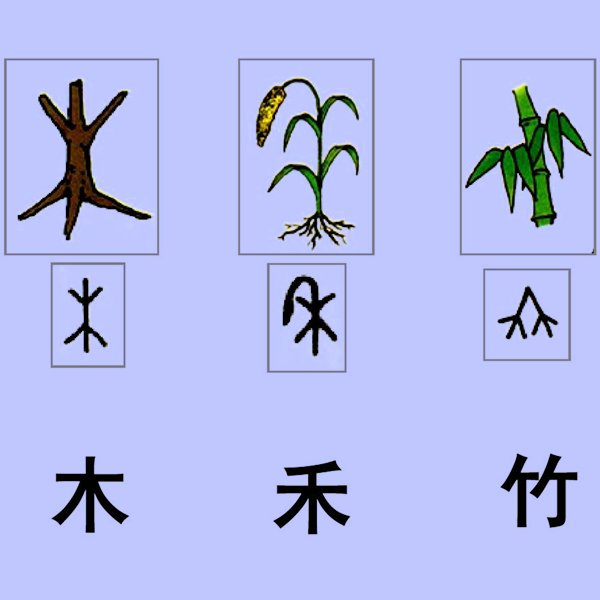
Lay down a good & strong foundation. Without a strong foundation in Mandarin, you will not be able to speak the language or talk to other people in the language. People usually want to skip the boring part in the beginning and jump to putting in practice. As ambitious as you may be, you’ll never get there without mastering the fundamentals of pronunciation in Mandarin through the Pinyin System. Behind pronunciation is the fundamentals of mandarin characters. Learn simple characters from the beginning,and you will come to realize that it is not that difficult to learn, especially when you get past the first “awkward” stage. There are four main Chinese Characters types in total. It’d be very beneficial towards yourself to learn them stroke by stroke.

Link the “knowledge points” together. Knowledge points do not necessarily mean grammar. Honestly, Chinese grammar is not all bad and impossible. There’s actually no need to change the tense, or gender, in Mandarin. Comparing English to Mandarin, you should try to acknowledge the differences first. This will give you a better overview of the language you are studying.
Always seek to improve your learning method. Self teaching is effective but sometimes, it can be very rudimentary and mundane. If you are more inclined to boredom from watching youtube videos or reading from textbooks, try to learn Mandarin with a group! You’ll get to meet new people, form friendships, and learn a new language all at once. Another extremely effective way to learn a new language is hiring a tutor. It is never a bad idea to have a mentor in this sort of situation. At AIP, we understand the importance of understanding a new culture and immersing yourself in one. Hence, we offer to place you in language classes that can teach you Mandarin. During your internship in China, take a language course at Hutong School. You will get the chance to meet people from around the world while learning Mandarin.
Speak the language frequently. All that practice will not do any good unless you put it to test! Speak the language with your friends and on your own. It may sound weird and cranky at first, but you will get better! Have faith in yourself and trust the whole process. Do not be shy to make mistakes, it is normal for someone learning a second language.

A Different Childhood


A Different Childhood


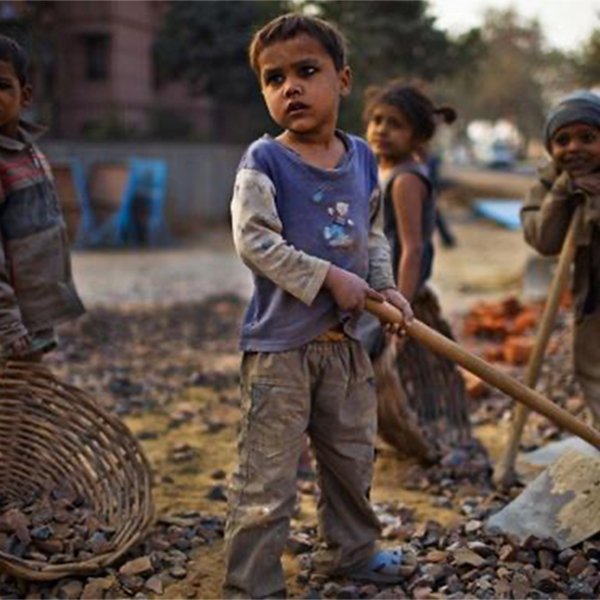
Child labour refers to the use of children as a source of labour while depriving them of their fundamental rights in the process. Such rights include the opportunity to enjoy their childhood, attend school regularly, have peace of mind, and live a dignified life.

Child labour can also refer to the practice of exploiting children for financial gain. Some industries employ children in order to cut down on labour costs since their wage demand is low.

Work that places children in a situation that is socially, mentally, physically, or morally harmful and dangerous is also defined as child labour because it ignores the well-being of such children.

When children are made to perform work that is legally prohibited to be performed by children of a certain age group, such type of work is also referred to as child labour.

According to wikipedia, Child Labour is the practice of having children engage in economic activity, on a part- or full-time basis. The practice deprives children of their childhood, and is harmful to their physical and mental development.

Causes

Child labour is caused by several factors. Some of them include:

1. Poverty: This is the single biggest factor contributing to the children working hard in factories or shops or construction sites rather than playing and getting an education. Families do not have enough resources and children often become the means for more income, even if it means having to forego the privileges of childhood. Children who come from poor families may be forced to work to support their siblings and parents or supplement the household income when expenses are more than the parents’ earnings. It is a huge problem especially in developing countries where parents are unable to generate income due to the lack of employment opportunities or education. Children can be found employed in mines or hawking in the streets to earn money that is used to provide basic necessities such as food and clothing for the family. Children may also be employed in factories to generate income for the family instead of attending school. Some children have left orphans or abandoned due to poverty. Such children do not have anyone to take care of them and end up working to feed themselves unless taken up by orphanages. Such a practice is a common phenomenon in poverty-stricken regions with large factories set up by international companies.

2. Low Aspiration: It is important for parents and children to understand that they can work hard and make something great of themselves. Low aspirations by parents and children is a major cause of child labour because in such a situation, being employed in a local factory, or selling grocery in the streets is the normal way of life. To these types of children and parents, success only belongs to a certain region or group of people. They do not aspire to become professionals in the society or great entrepreneurs. It is a mindset that forms the very foundation of child labour.

3. Huge demand for unskilled labourers: The demand for unskilled labourers is another cause of child labour. Children are mostly unskilled and provide a cheap source of labour, making them an attractive option for many greedy employers. Child labour, by virtue of being cheap, increases the margin of profits for such entrepreneurs whose only objective is profit maximization even if it comes at the expense of ethics and good business practices. These types of employers can also force children to work under unfavorable conditions through manipulation or blatant threats.

4. Illiteracy: A society with many educated people understands the importance of going to school and pursuing dreams. Children have the ability and time to become whatever they aspire to be. Illiteracy, on the other hand, makes it difficult for many people to understand the importance of education. Illiterate people view education as a preserve of the privileged in the society. They will therefore not provide support to children so that they can go to school and build solid foundations for future success. The same view of life is seen among illiterate parents who prioritize children contributing to the upkeep of the family over going to school.

5. Early Marriages: Marrying at an early age is a major contributing factor to overpopulation. Having many children with little or no resources to support them leads to child labour. Older children are forced to work in order to help their parents support the family.

6. High cost of education: Quality education is expensive. To many parents who live in abject poverty, priority is given to providing food for the family because education is too expensive to afford especially when there are many children to pay school fees for. Instead of letting children stay at home because there is lack of money to send them to school, parents opt to have them working as unskilled labourers to help support the family. Some parents can also only afford basic education which means that children will be forced to look for work since they cannot pursue their education further.

7. Gender discrimination: Often girls are required to quit school and take up work to supplement family income until they are suitably married off. This too is an observation in typically vulnerable classes.

8. Family tradition: Many families with businesses or traditional occupations like arts, etc. expect the children to work to be able to pass on the traditional arts or business only by experience.

Consequences / Effects:

Child labour has several negative impacts. Some of them include:

1. Loss of Quality childhood: It is important for human beings to enjoy every stage of their development. A child should play with friends and make memories for a lifetime. Youths should explore life and form strong foundations that would define their adult lives. Child labour, therefore, leads to loss of quality childhood as children will be deprived of the opportunity to enjoy the amazing experiences that come with being young. Children are often encouraged to play because it helps in their growth and development. A child forced to work will miss many of the good things associated with childhood.

2. Health issues: Child labour can also lead to health complications due to undernourishment and poor working conditions. It is highly unlikely that people who employ children also have the moral capacity to ensure that they have good working conditions. Working in places such as mines and badly conditioned factories may result in lifetime health issues for children employed to work in these places. A child assigned physically demanding duties may suffer physical trauma that may scar him or her for life.

3. Mental trauma: It is not a pleasant experience to be kept working as a child while your age-mates are out playing and going to school. Children also lack the ability to shield themselves from most of the challenges that occur in the workplace. Issues such as bullying, sexual exploitation, and unfavorable working hours may result in mental trauma in these children. They will find it hard to forget the past and may become societal misfits because of bad childhood experiences. Child labour may also result in the lack of emotional growth and thus insensitivity.

4. Illiteracy: Children that are employed do not have the time to go to school. They spend a lot of time in their workstations as the days and years go by. The lack of education and illiteracy makes them individuals with limited opportunities as far as employment is concerned. Education also prepares a person for several challenges in the society and without it, one may turn out to lack the basic skills required to overcome many of life’s problems. An individual who has gone to school may be aware of how to approach certain situations in life without resorting to brute force. An illiterate person, on the other hand, considers force to be the only answer to nearly all of the challenges experienced.

Solutions

How can child labour be reduced or completely eradicated? Every child born has the right to have dreams and pursue those dreams. Even though the realization of some of these aspirations may be limited by several challenges, it is still possible to overcome them and achieve the highest levels of success.

There is need to involve various stakeholders to realize this objective. These are some of the ways in which the problem of child labour can be addressed:

1. Free education: Free education holds the key to eliminating child labour. Parents that do not have money for school fees can use this as an opportunity to provide their children with education. It has already proved to be a success in many places around the globe and with more effort, the cases of child labour will greatly reduce. Mid-day meals schemes can also be used as a motivating factor for children whose parents can barely afford a meal to learn. Even if they will be attending school because of the free meals, they will still be able to learn and create a good education foundation for themselves.

2. Moral Polishing: Child labour should not be entertained at all. It is legally and morally wrong. Children should not be allowed to provide labour at the expense of getting an education and enjoying their childhood. Factory owners, shopkeepers, and industries among others should not employ children. The society should be educated on the negative impacts of child labour so that it becomes an issue that is frowned upon whenever it occurs. This type of moral polishing would act as a deterrent to people who intend to employ children and use them as a source of cheap labour. Many of the ills that go on in the society do so because people turn a blind eye or fail to consider their moral impacts. With this kind of approach, cases of child labour will greatly fall among our communities.

3. Create demand for skilled and trained workers: By creating the demand for skilled and trained workers, child labour cases will reduce since almost all child labourers fall under the unskilled worker category. It will lead to adult employment as the demand for skilled labour rises. Establishing skill-based learning centers, vocational training centers, and technical training institutions improves literacy and contributes to the availability of skilled and trained workers in the job market. Creation of job opportunities by the government is also another way that cases of unemployment can be reduced and household income for the population increased. Such government policies improve living standards and eliminate the need for children to seek work in order to support their families.

4. Awareness: Creating awareness about the illegality of child labour can also help in stemming the practice. Parents should be made aware that sending their children to work has legal ramifications and the law would take its course if they are found to be aiding and abetting this vice. It is the ignorance among many parents and members of the society that makes them participate in child labour practices. Conducting a campaign to create awareness about its harmful effects would eliminate the practice. The government, together with non-governmental organizations and the civil society, can create a strategy to make such an initiative a success.

5. Empowerment of poor people: Poor people are the most affected by child labour. The poor living standards and financial constraints sometimes make them unwilling participants in this vice. Empowering poor people through knowledge and income generating projects would go a long way in reducing cases of child labour. Parental literacy also plays an important role in ensuring that the rights of children are upheld, and minors are not used as a source of labour. Empowering parents with this kind of knowledge can create a positive change in the society and encourage the shunning of child labour practices in communities.

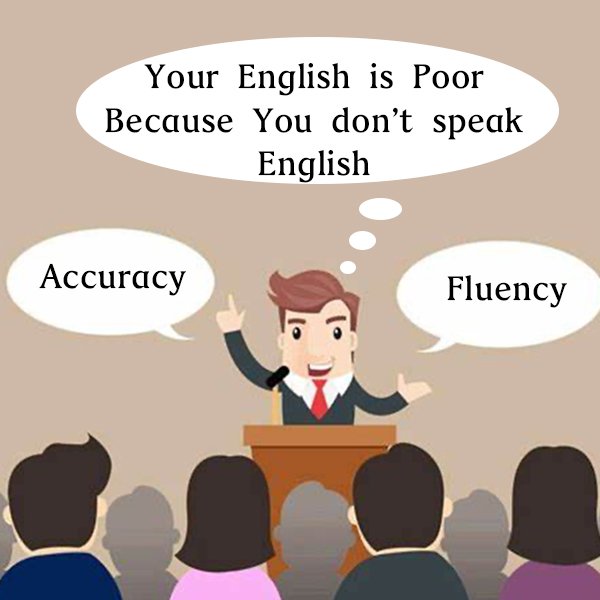
Developing Accuracy and Fluency in Spoken English


Developing Accuracy and Fluency in Spoken English


What is fluency?
As someone who worked in dictionaries, the meaning of words has always interested me – and fluency is a particular case in point. Language learners often set themselves the goal of becoming fluent in a language. Job adverts often specify “fluent in English or Spanish” as a requirement. But what does being “fluent” in a language actually mean? If we look in the Longman Dictionary of Contemporary English (no apologies for plugging one of my own titles!), we see that fluent means “able to speak a language very well”. Fluent speech or writing is described as “smooth and confident, with no mistakes”. In general, fluency is most often associated with spoken language – but is that the goal of all language learners? And what does being able to speak fluently show about the other language skills?

Describing English proficiency
Before entering the world of dictionaries, I taught English as a foreign language in France. At that time, the Common European Framework of Reference for Languages (CEFR) had not yet been published and learners were described in very general terms – beginner, intermediate, advanced – with no agreed standards on what learners at each level were expected to know. As well as establishing standards, the CEFR also shifted the focus of language assessment from knowledge of grammar and vocabulary to functional competence, i.e. what can a student actually do with the language they’re learning across the four skills: listening, reading, speaking and writing. Interestingly, while calling out specific objectives for each skill, almost two-thirds of the information in the CEFR describes spoken language. This seems to imply that spoken fluency is indeed the most important goal for all language learners.

Mapping out a personalised path to proficiency
As a global publisher, Pearson English recognises that all learners are different – in their backgrounds, in their learning environments and in their learning goals. This is why we have undertaken new research to extend the set of learning objectives contained in the CEFR to account for learners who need detailed information about their level in all four skills, not just in one (typically, that of speaking).

No learner will be equally proficient in all four language skills – in the same way that no native speaker is equally proficient in all skills in their first language. Some of us are better at writing than speaking, and many are illiterate in their first language. A true measure of language proficiency needs to take into account all of the skills. Equally, not every learner of English will need to be “fluent” in spoken communication.

Many researchers need to read papers in English and attend conferences in English – but will only ever present and write in their first language. Is “fluency” a good way to describe their goal? And if it isn’t, does that in some way diminish their language achievements? By acknowledging proficiency in individual skills – rather than catch-all terms such as “fluent” – we gain a clearer understanding of goals and outcomes, and with this knowledge we are in a better position to tailor learning to the individual.

Phonics


Phonics


WHAT EXACTLY ARE PHONICS?

Phonics can be defined as a body of knowledge and skills regarding how the alphabet works.

In the context of this article, phonics refers to the method of teaching a student to read by developing their phonemic awareness and an understanding of the links between these sounds and how we use the letters of the alphabet to represent them.

This understanding is essential to not only read well, but to bridge the gap between reading and writing.

With a good foundation of phonics knowledge, students can quickly become confident readers and strong independent writers.

How To Teach Reading Using Phonics
PHOnics is a research based solution to improving reading
PHONICS IS A RESEARCH BASED SOLUTION TO IMPROVING READING

The use of phonics, or synthetic phonics as this method is technically known, is an effective and efficient means of teaching young students how to read. For this reason, phonics is the primary methodology for teaching reading in the school systems of many English-speaking countries.

In English, there are around 44 sounds or phonemes. Given that there are only 26 letters used in the language, and that many sounds have more than one possible spelling, it is helpful that students learn the relationships between the letters and sounds in a straightforward and explicit manner.

To achieve this, phonics centers on the relationship between sounds and the ways in which they can be spelled.

It focuses on the letter and sound correspondences to enable students to break written words down into their component sounds, before later recombining them to read the whole word. This process is known as segmenting and blending.

SEGMENTING AND BLENDING

Rather than allowing students to struggle to recognize complete words, as in the whole word method, or to look for contextual clues to figure out what is being said in a text, phonics teaches students to look at the letters of a word and segment it into its component sounds, before blending these sounds back together to read the entire word.

For example, when faced with the word cat a student might run their finger under the first letter and make the initial /k/ sound, then /a/, and, finally, /t/.

Once they have successfully segmented these individual sounds, they then blend them together to say the word /kat/.

With practice, the speed with which students can look at a word, segment the sounds, and then blend these sounds together to read the word rapidly increases. This makes learning to read through the phonics method the most efficient way for most children to learn not just to read, but to write too.
segmenting_phonics.jpg
DECODING AND ENCODING: THE BRIDGE BETWEEN READING AND WRITING

Initially, phonics reaps rich rewards for students in terms of the passive skill of reading. This is also known as decoding.

Later, the student’s knowledge of phonics can help them develop the active skill of writing, or encoding.

For this reason, teachers will often weave emergent writing skills, such as letter formation, into their phonics lessons to take advantage of the opportunity to bridge this gap between the skills of reading and writing.

WHAT ABOUT SIGHT WORDS?

As effective as synthetic phonics are in teaching students to read, they won’t be enough on their own to unravel all the opaque mysteries of English orthography.

English is something of a mongrel language. Over the centuries it has been influenced by the German, Latin, French, Greek, and Celtic languages, among others.

This fact has led to many inconsistencies in spelling surviving in the modern language. Sometimes phonics won’t be enough to decode these words. That’s why it is important for students to learn to read some words by sight alone.

Sight words, or high frequency words as they are also known, are those extremely common words used time and again in most texts. Many of them are phonetically irregular and follow no conventional spelling rules. For children’s reading books, sight words can account for up to 75% of the words in the text.

Therefore, it’s best to combine the study of phonics with the learning of these sight words for maximum effectiveness. This is something to consider when engaged in in your long term planning.

The most effective strategies for learning these sight words is for discussion another day, for the remainder of this article we will focus exclusively on the teaching of phonics.

THE STAGES OF PHONICS TEACHING

Before beginning to teach phonics, it is helpful to have a broad overview of the various stages that comprise a comprehensive synthetic phonics program. The following outline can serve as a useful general guide.

1. THE PRE-PHONICS STAGE

Prior to beginning to learn phonics in earnest (e.g. sound/letter correspondences), there are certain prerequisite skills that need to be developed, including:

● Listening Skills:

Children must be able to listen carefully to the sounds of speech. They must learn to filter speech sounds from other unrelated environmental sounds. This is usually best achieved by the playing of various listening games. When children have developed good aural comprehension, the game Simon Says is a fun way to further develop listening skills.

● Sound Reproduction Skills:

Once the children have learned to discriminate between various sounds, they should learn to reproduce these themselves. This is usually achieved by modeling the sounds carefully for the children and encouraging them to copy these with particular attention paid to the shape of the mouth when making each sound. The popular fun game Telephone is great for this.

● Sequencing Skills:

It is important for children learning to read to be able to sequence not only the events of a story, but the individual sounds of the words they hear. They must be able to recognize which sound comes before or after another. They should also be familiar with sequencing language such as first, second, before, after, then etc.

3. THE LETTER AND SOUNDS CORRESPONDENCES
letters_and_sounds.jpg
Explicitly teaching the letter and sound correspondences lie at the heart of good phonics teaching.

It is essential to understand a little of the theory of synthetic phonics to be effective here. Here are a few important points to consider:

● Letter Names vs. Letter Sounds

It is crucial that children understand the difference between the names of the letters of the English alphabet and the sounds as these are two very different things. For example, the letter c is called /see/ but the letter itself usually denotes either a /k/ or /s/ sound. It may seem obvious, but many teachers not trained in the teaching of phonics overlook this distinction and unwittingly make learning to read much more difficult for their students as a result.

● Letters Don’t Make The Sounds

As the limited letters used in English are needed to represent many different sounds, it’s important to point out to students that letters don’t make the sounds, they are simply an option for showing the sound. Often there will be more than one way to show the same sound, for example the sound /s/ can be encoded in a number of different ways including as: s, c, ps. When you are asking your students to write something, you can make the sound and ask them what letter could they use to show this sound. This type of phrasing reinforces the correct relationship between the letters and sounds.

● Avoid The Lazy Vowels

It is also important to remember that when teaching the letters and sounds to avoid making the the lazy vowel or schwa sound at the end of a sound. For example, when pronouncing the /k/ sound, make it crisp and short, rather than adding in an extra -uh sound at the end. This will make it much easier for the students to blend sounds together later.

HOW TO PLAN A PHONICS LESSON FOR YOUR CLASS
teaching_phonics.jpg
The detail and delivery of your phonics lessons will depend greatly on the specific situation of your students. However, there are some general points that it’ll be helpful to consider when planning a phonics lesson for your class.

● Keep Phonics Lessons Short and Sweet

To avoid getting bogged down and boring your kids, keep phonics lessons short. In and around 10 to 15 minutes is ideal and no more than 20 minutes. Remember, we want our kids to be lifelong readers and that means they need to enjoy it!

● Be Consistent

There is a lot of ground to cover here and consistency is key. If your students are learning to read, they’ll need to practice and study their phonics every day – preferably at the same time each day too.

● Keep on Moving

While a lot of reinforcement will be required over the course of the year, research has shown that keeping a brisk pace through a phonics program achieves best results. Don’t get bogged down waiting for everyone to get everything before moving on. You will be revisiting material.

● Keep Things Fun!

Learning to read should be a positive experience, particularly as learning to read means acquiring one of the most empowering skills a child will ever have. To keep things fun, be sure to incorporate lots of enjoyable activities and games into your phonics lessons.