

City Stories
Museum Stories

Science Behind Composting
Science Behind Composting
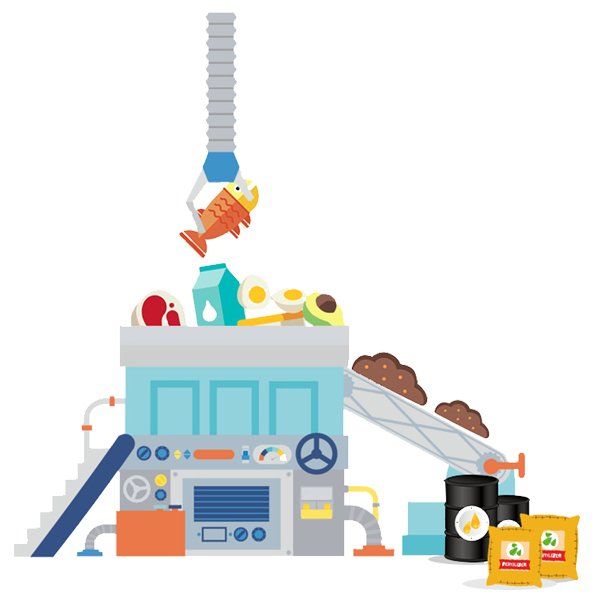
That banana peel in the waste bin will eventually, naturally decompose, as will all organic waste, thanks to helpful microorganisms in the environment that feed on the decaying detritus.
Composting is a process that works to speed up the natural decay of organic material by providing the ideal conditions for detritus-eating organisms to thrive, according to the United States Department of Agriculture (USDA). The end-product of this concentrated decomposition process is nutrient-rich soil that can help crops, garden plants and trees to grow.
The composting process
Microorganisms are vital to the composting process and are found everywhere in the environment, said Matthew Worsham, the sustainability and energy coordinator at the University of Dayton in Ohio.
The key to effective composting is to create an ideal environment for the microorganisms to thrive, Worsham told Live Science — warm temperatures, nutrients, moisture and plenty of oxygen.
According to Cornell University, there are three main stages in the composting cycle in which different types of microorganisms thrive.
The first stage is typically only a couple of days long during which mesophilic microorganisms, or microorganisms that thrive in temperatures of about 68 to 113 degrees Fahrenheit (20 to 45 degrees Celsius), begin physically breaking down the biodegradable compounds. Heat is a natural byproduct of this initial process and temperatures quickly rise to over 104 degrees F (40 degrees C).
Mesophilic microorganisms are replaced by thermophilic microorganisms (microorganisms that thrive in the increased temperatures) during the second stage, which can last from a few days to several months. The thermophilic microbes work to break down the organic materials into finer pieces. The higher temperatures are more conducive to breaking down proteins, fats and complex carbohydrates.
Also, during the second stage, temperatures continue to rise and if not closely watched, the compost pile can get so hot that it can eventually kill off all the helpful microorganisms. Techniques such as aeration and turning over the compost pile help keep temperatures below about 149 degrees F (65 degrees C), as well as provide additional oxygen and new sources for the thermophilic microorganisms to break down.
The third stage, which typically lasts for several months, begins when the thermophilic microorganisms use up the available supply of the compounds. At this stage, temperatures begin to drop enough for mesophilic microorganisms to resume control of the compost pile and finish breaking down the remaining organic matter into usable humus.
The organisms that help
There are two main classes of composting microorganisms, known as aerobes and anaerobes, according to Planet Natural.
The aerobes are bacteria that require oxygen levels of at least 5 percent to survive and are the most important and efficient composting microorganisms, according to the University of Illinois. The aerobes consume the organic waste and excrete chemicals such as nitrogen, phosphorus and magnesium, which are nutrients plants need to thrive.
Anaerobic microorganisms are bacteria that don’t require oxygen. They also don’t process the organic waste as efficiently as aerobic bacteria. Anaeorbs produce chemicals that are occasionally toxic to plants, and they cause composting piles to stink because they release hydrogen sulfide, which smells like rotten eggs.
About 80 to 90 percent of all microorganisms found in compost piles are bacteria, according to Cornell University. The remaining percentage of microorganisms are species of fungi, including molds and yeasts.
In addition to microorganisms, other helpful creatures, such as pill bugs, centipedes and worms, will find their way to the composting pile if the conditions are right. These animals break down the food waste, yard trimmings and other organics in the compost pile and help turn the waste material into nutrient-rich soil.
Worsham is building composting resources at the University of Dayton and is including red wiggler worms in the composting piles. Red wigglers (Eisenia fetida) are the most common worm used in vermicomposting, or composting with worms, Worsham said. The university’s vermicomposting piles can break down 10 pounds of food waste and paper per day.
What does and doesn’t go in?
According to the United States Environmental Protection Agency, a balance of “greens” and “browns” is needed to create the proper environment for composting to occur. Greens are nitrogen-rich, and include items such as grass clippings, fruit and vegetable waste, and coffee grounds. Browns are the carbon-rich yard clippings, such as dead leaves, branches and twigs.
A carbon-to-nitrogen ratio between 25 to 1 and 30 to 1 is ideal for rapid composting, according to the University of Illinois. Microorganisms feed on both carbon and nitrogen. The carbon gives the microorganisms energy, much of which is released as carbon dioxide and heat, and the nitrogen provides additional nutrition to continue growing and reproducing.
If there is too much carbon in the compost pile, decomposition occurs at a much slower rate as less heat is generated due to the microorganisms not being able to grow and reproduce as readily, and therefore not able to break down the carbon as readily. On the other hand, an excess of nitrogen can lead to an off-putting ammonia smell and can increase the acidity of the compost pile, which can be toxic for some species of microorganisms.
Proper moisture is also vital for the health of the microorganisms that help with the composting process. A moisture content between 40 and 60 percent provides enough dampness to prevent the microorganisms from becoming dormant but not enough so that oxygen is forced out of the pile.
The amount of oxygen within the compost pile is also important as an oxygen deficit leads to anaerobic microorganisms taking over, and that can lead to a stinky compost pile. Oxygen can be added into the compost pile by stirring or turning over the pile.
What to compost:
Fruits and vegetables
Eggshells
Coffee grounds and filters
Tea bags
Nut shells
Shredded newspaper, paper and cardboard
Yard trimmings including grass, leaves, branches, and twigs
Houseplants
Hay and straw
Sawdust
Woodchips
Cotton and wool rags
Dryer and vacuum cleaner lint
Hair and fur
Fireplace ashes
(Note: The USDA recommends burying food waste if using an open-composting pile to deter unwanted pests looking for a free meal, such as flies, rodents and raccoons.)
What not to compost:
Certain types of tree leaves and twigs such as black walnut, as it releases substances that may be harmful to plants
Coal or coal ash, as they might contain substances that are harmful to plants
Dairy products, eggs, fats and oils, and meat or fish bones and scraps, due to potential odor problems that attract pests such as rodents and flies
Diseased or insect-infested plants, as the disease or insects may survive and be passed along to other plants
Pet waste (including dog and cat feces and used cat litter), as it might contain harmful parasites, bacteria or viruses
Yard trimmings treated with chemical pesticides; as the pesticides might kill composting organisms
Commercial composting companies also collect products such as paper carry-out containers for food and compostable dinnerware and flatware that are specifically labeled BPI Certified Compostable.
Dairy products, eggs, meat products and fats are typically not recommended for the composting pile, but there are many larger commercial composting facilities that are well-suited for dealing with the smells and pathogens that may exist in these products.
To help with the more complex waste, livestock manure is often added to commercial composting sites to help increase the heat and the rate of composting. According to North Dakota State University, livestock manure from herbivores, including cows, sheep and goats, already contains a high amount of nitrogen and many of the aerobic microorganisms that are essential to composting. This type of manure is also typically free of dangerous pathogens that can be found in the manure of meat-eating animals, such as cats and dogs.
What else can be composted?
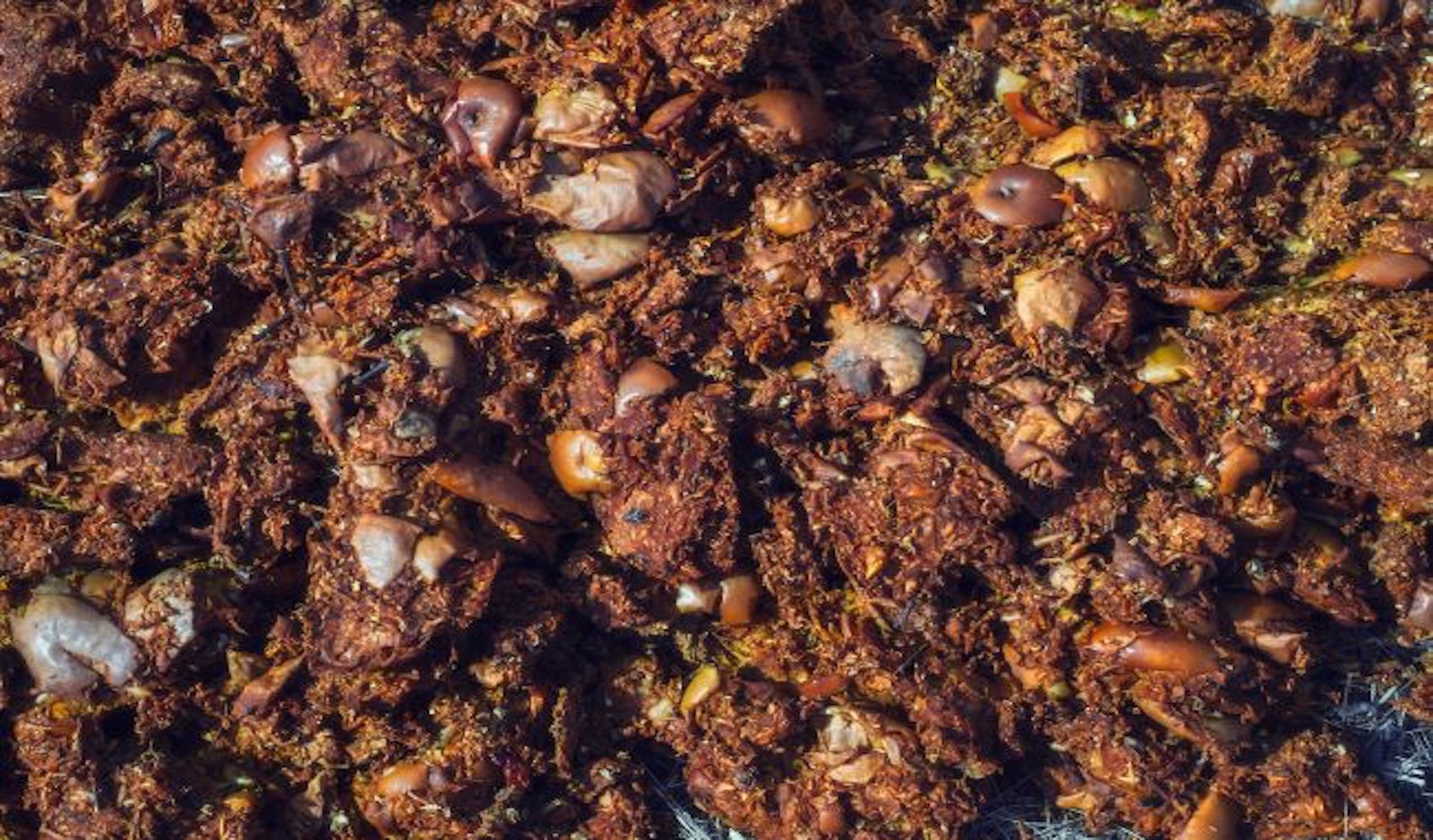
Many companies are developing more products that can be composted when disposed of, including dinner and flatware, garbage bags and even diapers. Before putting these items in the compost pile, it is important to make sure they are safe to compost at home or accepted by the local compost collector. [Top 10 Craziest Environmental Ideas]
Huantian Cao, professor of fashion and apparel studies at the University of Delaware, co-directs a sustainable apparel project that’s working on developing compostable apparel. Cao and his team have developed a shoe that is essentially made of mushrooms.
The prototype sandal is made from a variety of compostable parts, Cao told Live Science. The midsole is made from a mushroom mycelium composite that can go right into a home composter along with all the food scraps. The insole and outsole of the shoe are made with biodegradable vegetable-tanned leather and the straps of the sandal are made with cotton, both of which can be composted at larger, commercial composting sites.
Composting at home
Randi Cox and Kathy Gutowsky, owners of the commercial composting company, Green Camino, have been composting since they were young and now educate their community about the benefits of composting, whether through use of their company or at home.
“Composting is an entryway drug to zero waste,” Gutowsky said. “As you start composting, you are really starting to pay attention to what you are throwing away and you start to look at what you are buying and what is coming in.”
Gutowsky said that many of their clients make lifestyle changes to minimize what goes in their waste bins, including not buying products with excess plastic packaging and buying locally when possible. “It’s really a mindset shift,” Gutowsky told Live Science.
If you don’t have access to a commercial composting site, getting started at home is as easy as putting together a pile in the corner of your yard. Many hardware stores sell composting bins of various types and sizes to accommodate each home’s need. Be sure to check regulations on composting where you live by visiting your city or county waste department web page. Additional help getting started or any questions you may have can often be answered at your local hardware store, nursery or local farmer’s markets.
Activity:
Keyhole Garden with Composter
Overview A very water, nutrient and space efficient concept. The keyhole garden is easy to construct. A cylinder of wire mesh is put in the middle of a keyhole-shaped wall made from bricks, stones or glass or plastic bottles. Topsoil or compost (See the composter) is then is added and plants can be planted as shown. Organic material is added to the centre inside the mesh. This retains water and nutrients that can pass through to feed the plants. The keyhole shape allows the organic material to be added easily. Design Task You are to create the most efficient keyhole garden Some questions you may want to think about:
- What is the most efficient size to build?
- How deep should the soil be?
- How big should the cylinder be?
- What is the best way to stack the compost?
Science Behind Alternative Energy
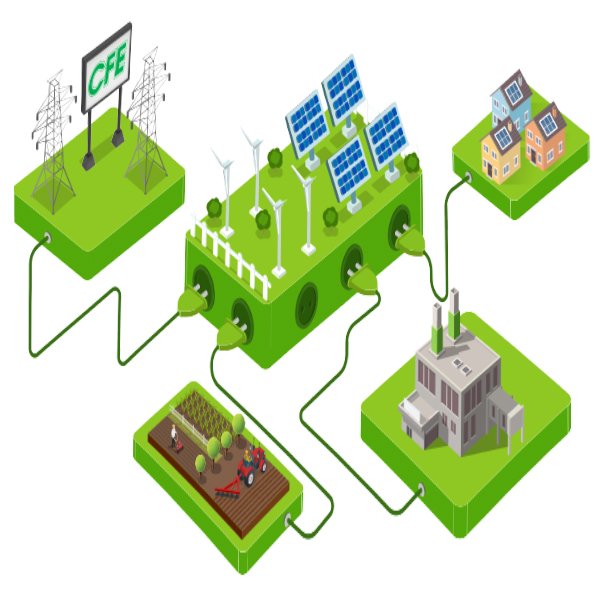
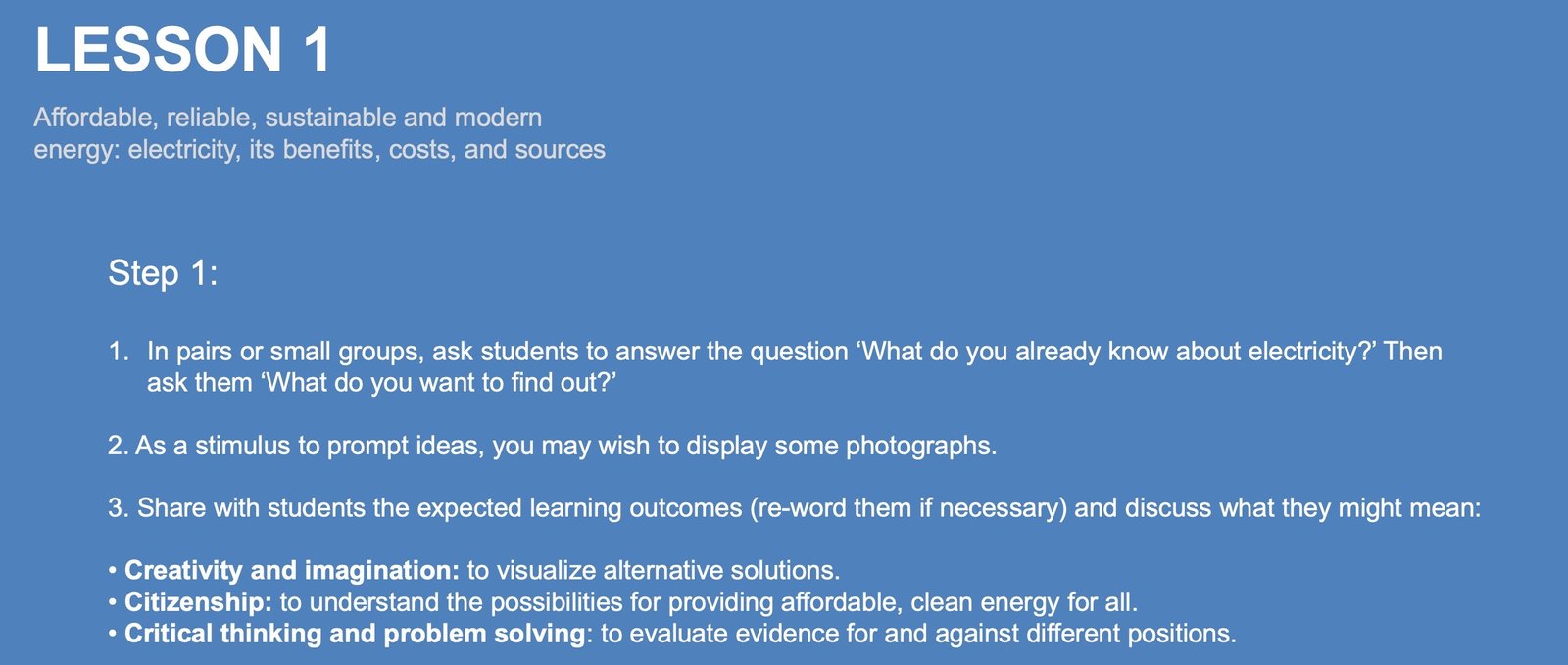
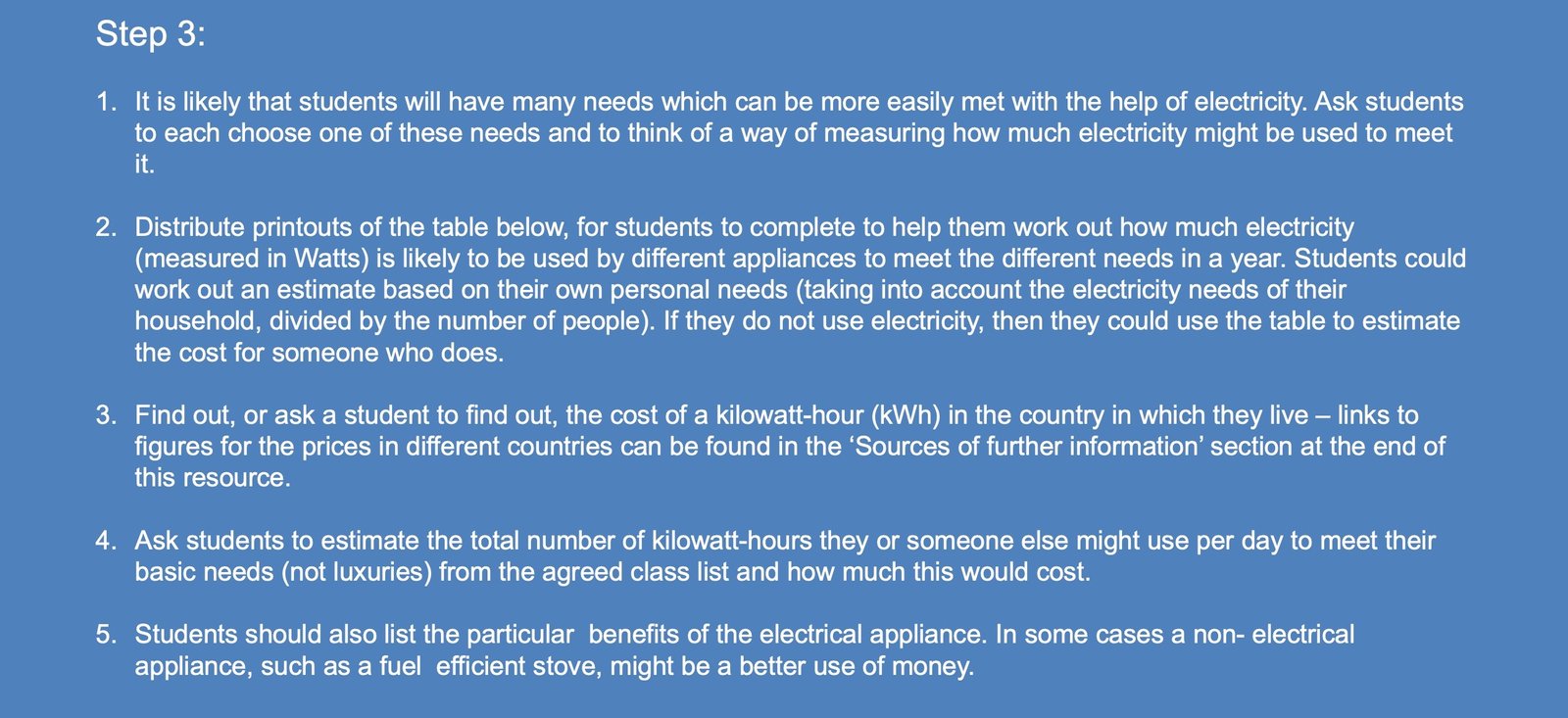

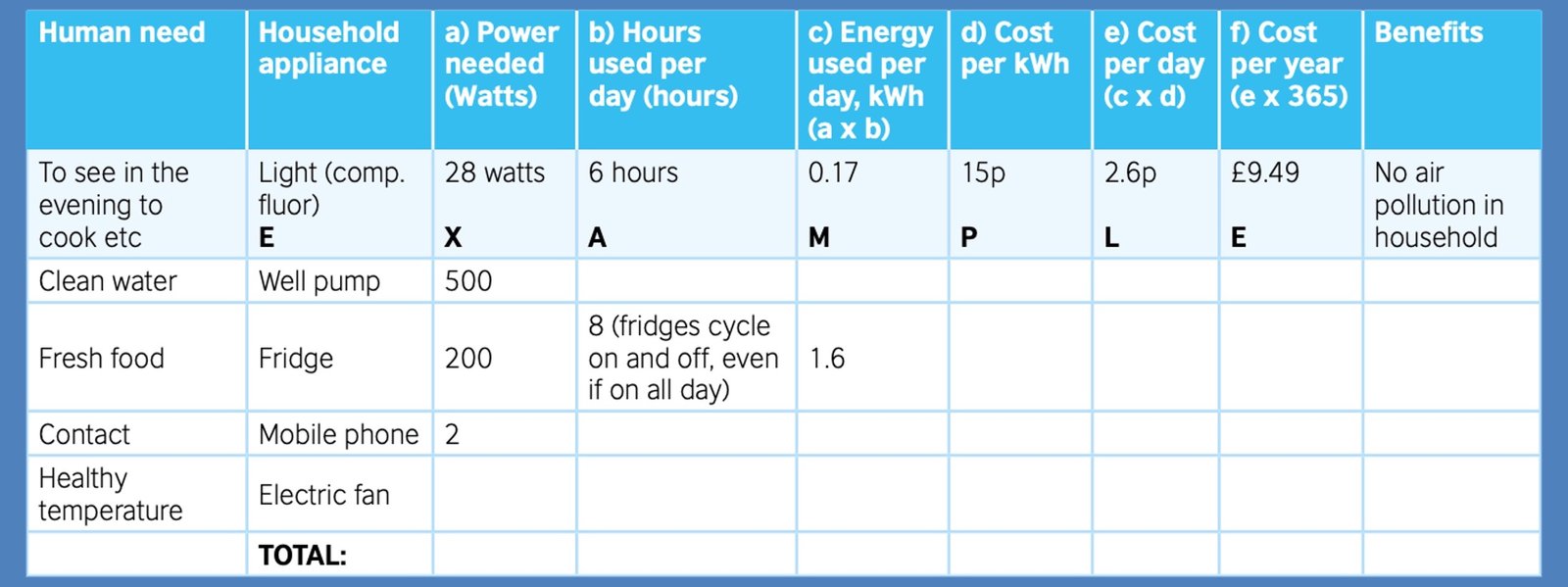
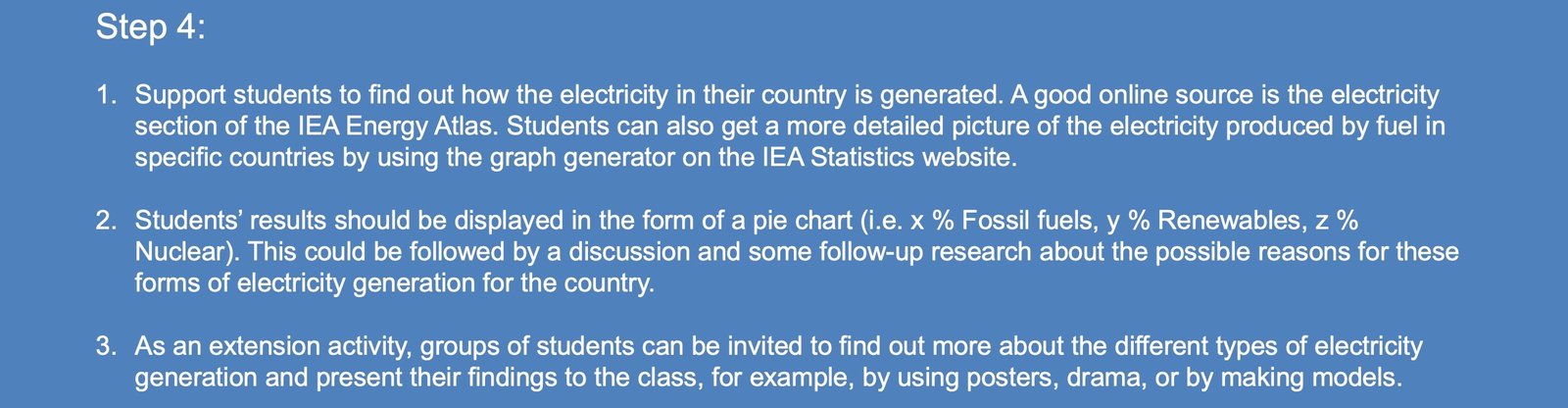
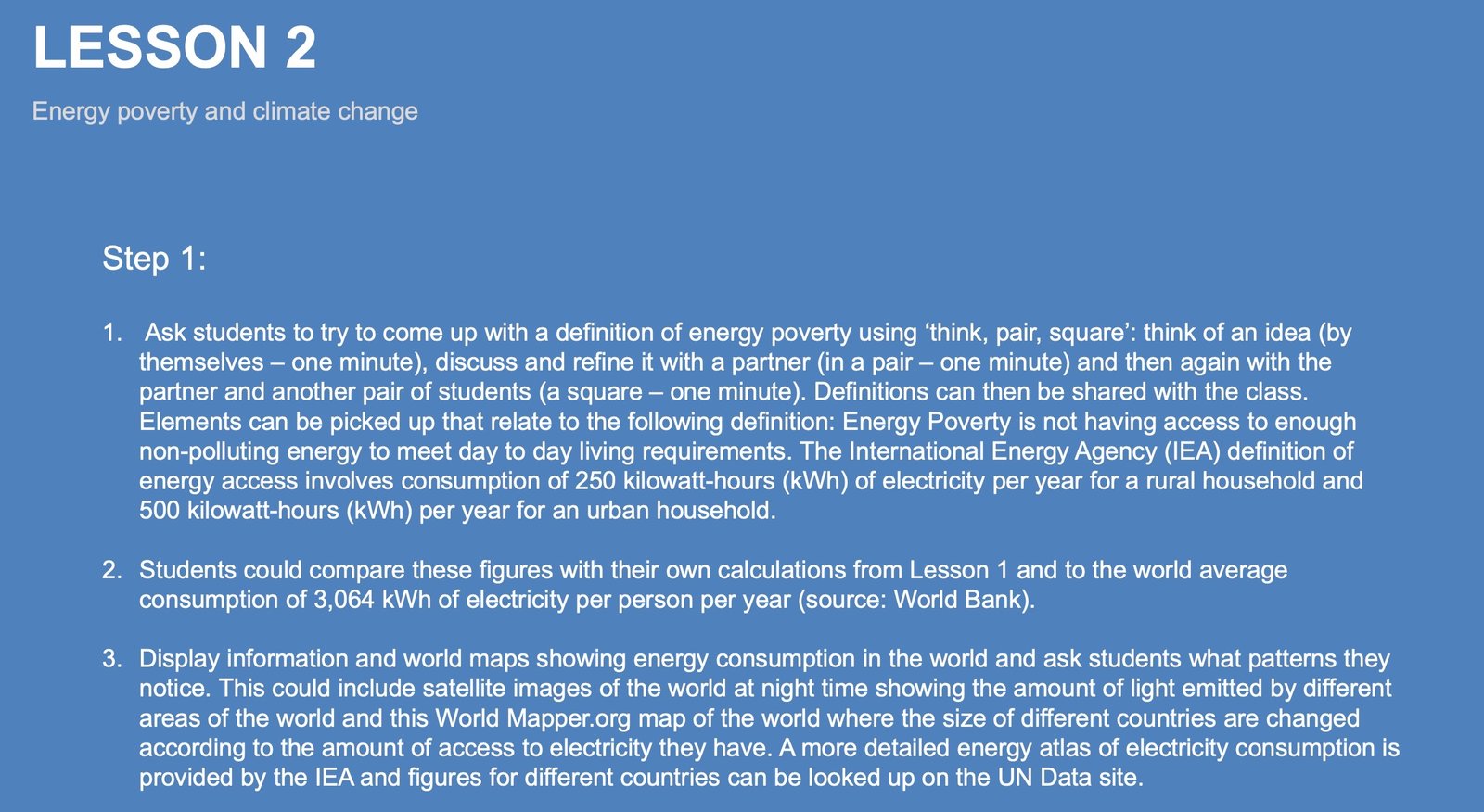
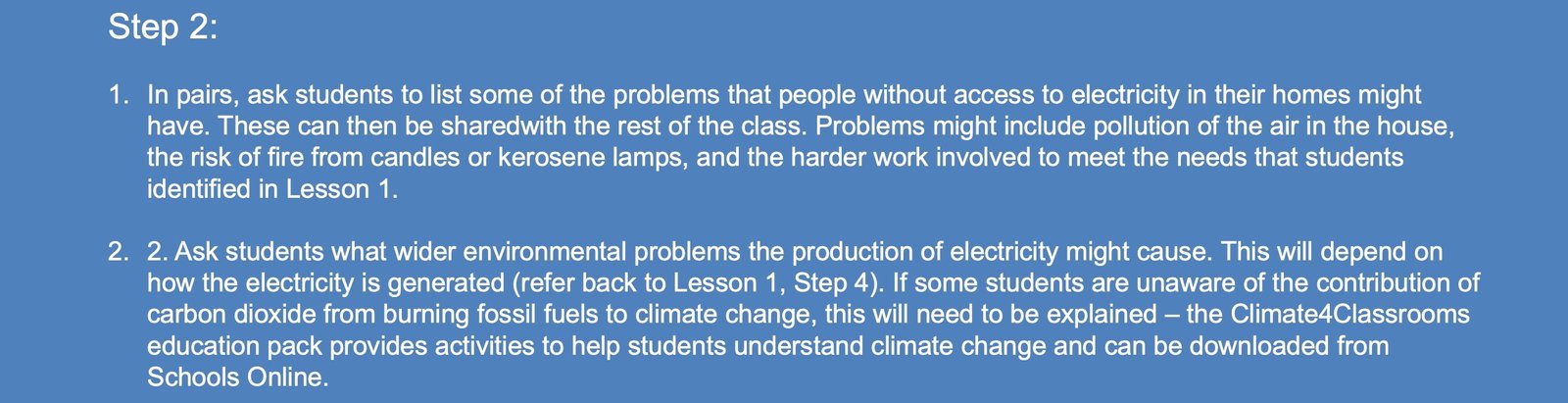
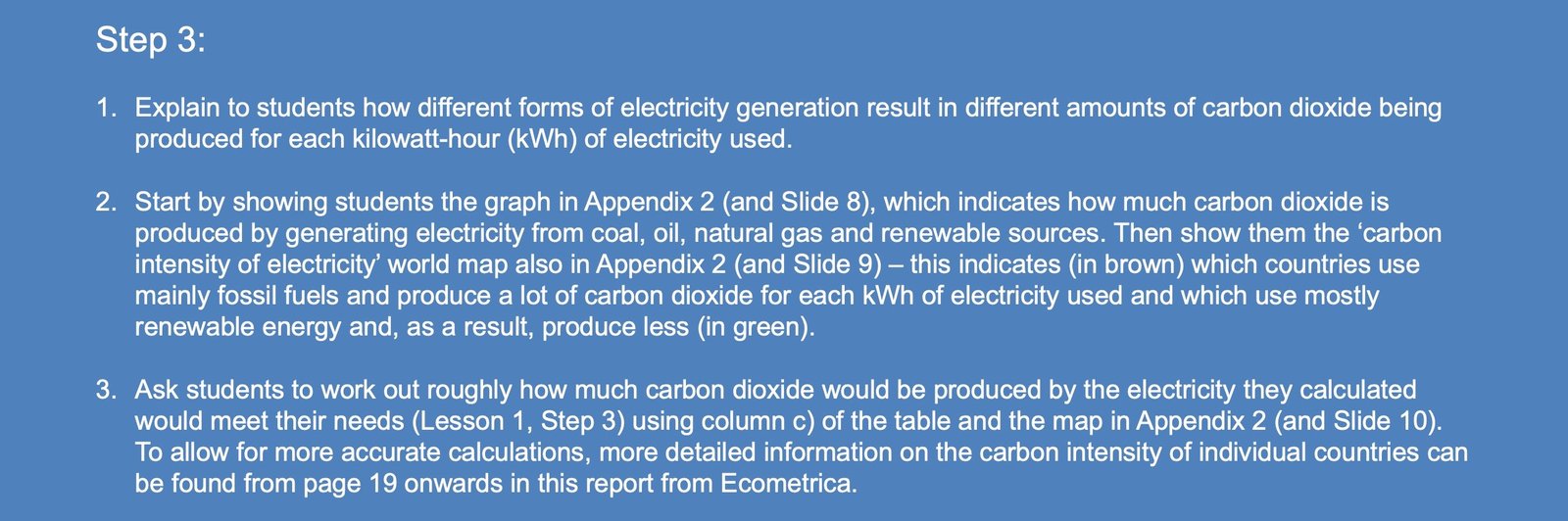
 As the world population rises and many millions continue to move to urban areas, there is a huge increase in the demand for cost effective and reliable modern energy.
Science Behind Grow Light
Science Behind Grow Light
The growth of a plant might seem like a simple and straightforward process. The plant needs to be watered, the soil needs to have certain nutrients, and it needs to be in an environment where it receives light for a certain amount of time. Yet not many know how the latter can have a big impact in the development of a plant… until now.In this post, I’ll explain how different color lights affect plant growth, jumping into detail on the characteristics that light possess, and how you can use different colored LED grow lights to change the properties of plants and make plants grow faster
What Exactly is Visible Light?
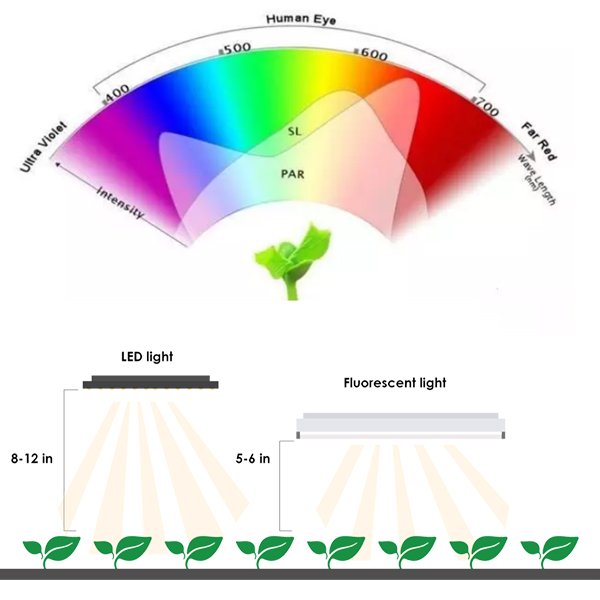
A crucial component in the growth of a plant besides water and oxygen, is sunlight. By receiving it, a plant is able to convert sunlight into edible food that it can use. This process is called photosynthesis. Water, oxygen, and sunlight make the holy trinity for plants.Visible light as we perceive it behaves as a wave. As such, it displays different properties depending on its wavelength. For example, a source of light with a wavelength of around 650 nm will be detected as having a red color.
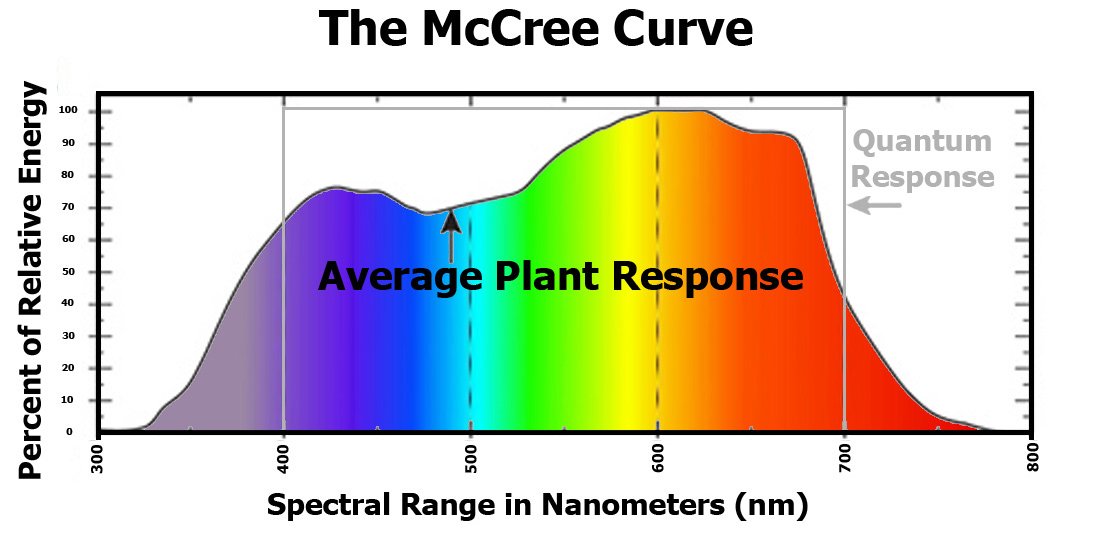
Multiple studies have been conducted on how different colors of lights can have varying effects on the growth of a plant.
Thanks to the recent developments in LED (light emitting diode) grow light technology, specific light wavelengths can now be isolated in order to control the different physical properties that a plant displays as it develops throughout its life cycle. These properties include, but are not limited to, height, weight, color, and texture, as well as the chemical composure of the plant itself.
As a plant grows, you can use LED grow lights to manipulate these physical properties depending on the plant characteristics that you desire.
The Effects of Each Color of Light
In the following paragraphs, I explain what each light color does, and the effects that adding or removing them will have. But first, here is a quick summary, with extended information following:
Ultraviolet – No exposure produces better growth
Violet – Enhances the color, taste, and aroma of plants
Blue – Increases the growth rate of plants
Green – Enhances chlorophyll production and is used as a pigment for proper plant viewing
Yellow – Plants exhibit less growth compared to blue and red light
Red – When combined with blue light it yields more leaves and crops, depending on what is being grown
Far Red – Speeds up the Phytochrome conversion which reduces the time a plant takes to go into a night-time state. This allows the plant to produce a greater yield
Ultraviolet (20nm to 380 nm)
Being exposed to UV light for a long period of time has harmful effects on humans. Likewise, exposure for a long time to this type of light will damage the plants that you are growing.A study conducted demonstrated that plants raised without exposure to UV light exhibited enhanced growth.
Violet (380 nm to 445 nm)
On the other hand, studies have shown that when a plant receives visible violet light, the color, taste, and aroma of the plant are enhanced.Additionally, the plant’s antioxidants are able to perform their functions more efficiently, which prevents the cells in the plant from being damaged
Blue (450 nm to 495 nm)
Blue light has one of the largest effects on the development of a plant. Multiple studies have shown that exposing a plant to this color influences the formation of chlorophyll, which enables the plant to intake more energy from the sun. It also controls a plant’s cellular respiration and lessens water loss through evaporation during hot and dry conditions.
Blue light also has an effect on photosynthesis, and more exposure to this light can increase a plant’s growth and maturity rates. This process is called photomorphogenesis.
Overall, blue light has an influence over multiple functions in a plant’s life, and is a crucial color to have in your own grow room or grow box in order to ensure the most optimal growth.
Green (495 nm to 570 nm)
Most of the plants that we see around us possess a green color. This is due to the fact that they absorb all of the colors in the light spectrum (blue, red, violet, etc) but reflect the green one. As such, only the green light is bounced back to our eyes.
Even with the relatively low amount absorbed compared to the other colors, a study found that green light enhances the production of chlorophyll which helps with photosynthesis while giving the plants a greener color.
Overall, adding the green color to your plants does not have much effect in their life process compared to other light colors such as blue. Employing this type of light would be as a pigment for proper viewing of your plants in the grow room or grow box, but not necessary for the growth of the plant itself.
Science Behind Soilless Culture
Science Behind Soilless Culture
Benefits Of Hydroponics:
No Soils Needed
The most significant advantage of this technique is that the crops can be grown where the land is limited or is heavily contaminated.
Low water requirement
This soil less method uses only 10% of water in comparison to soil agriculture.
Effective use of nutrients
All the essential nutrients required by the plants for their growth are mixed with water and directly applied to their roots. Hence, they can be readily utilized by the plants.
Less soil related problems
All the weeds and vulnerable soil-borne pests and diseases are eliminated in a hydroponic system.
Controlled environment
Growers can take control of the surrounding environment and can bestow with the ideal conditions that plant requires optimum temperature, light, humidity, pH, etc.
Better growth rate
With a sufficient amount of nutrients and controlled conditions, the growth of a hydroponic plant is twice as that of soil-grown species.
High Yield
Higher yields are possible in a disease-free and well-controlled environment.
Types of Hydroponics System
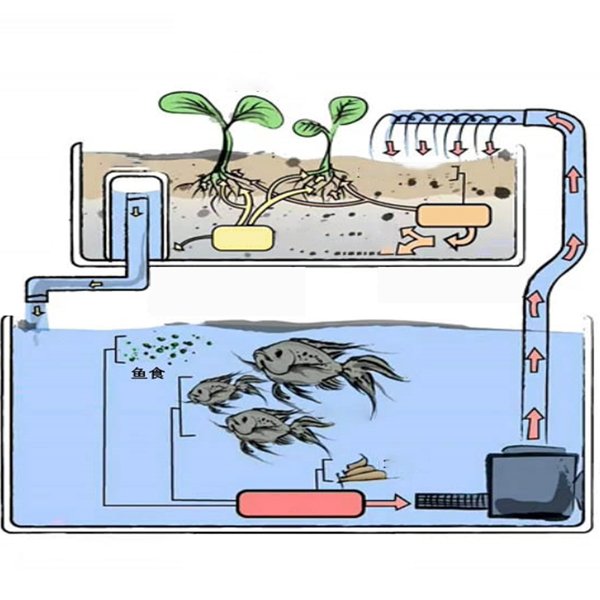
There are six types of hydroponic systems. These systems can either be active or passive in nature. If the nutrient solution is moved usually by a pump, then it is considered an active system. The passive system contains a wick which helps the nutrients to flow to the plant roots.
Wick system:
As the name suggests, this system consists of a wick by which the nutrients are drawn into the growing medium from the reservoir.
Water culture:
It is the purest type of active recovery system. It contains a platform made up of styrofoam which holds the plant upright. An air pump is used to supply oxygen to the roots of the plants.
Ebb and flow:
This system usually consists of a pump connected to a timer which is used to pull the nutrients in the grow tray periodically and then drain the solution back into the reservoir.
Drip System:
In this system, a small drip line is placed near the base of each plant by which the nutrient solution is drawn using a submerged pump which is controlled by a timer.
Nutrient film technique(NFT):
It works by continuously flowing nutrient solution into the grow tray. Hence, it doesn’t need a timer. The nutrient solution flows through the roots of the plants and then drains back into the reservoir. Usually, this system doesn’t use any growing medium except air.
Aeroponics:
This is probably the most advanced system among all. It doesn’t require any growing medium as the roots hanging in the air. The roots are misted continuously using a nutrient pump which is controlled by a timer.
Research Questions:
Which method of growing the bean plants worked the best? Which produced the fastest growth? Which produced the tallest growth? Overall, which do you think was the better medium – soil or water?
Materials:
- Bean plant seeds
- Four plastic plant pots
- One bag of potting soil
- Two- to four gallons of distilled water
- Two peat pellets
- Two potting nets for hydroponic growing
- Ruler
- Journal/logbook
Experimental Procedure:
- Prepare two soil pots with potting soil. Plant bean plant seeds about ¼ to ½ inch into the soil and cover loosely with a sprinkling of soil on the top. Give the plants plenty of sun and keep them in the same climate. Any variables between the soil and hydroponic plants can affect the experiment, so try to keep variables nonexistent or at a low.
- Prepare the hydroponic growing pots by placing the seeds in a peat pellet and saturating with water to cause them to “puff up.” Make sure the bean plant seeds are covered by a little bit of peat before “planting.”
- Fill the other two pots with distilled water. Place the hydroponic potting nets on top of the pots, making sure that the water touches the nets. Place the peat pellets with the seeds inside the nets.
- Water the soil plants every three days or when the soil feels dry to the touch. For the hydroponic pots, sprinkle a little water on the peat pellet to keep the pellet moist. As the roots grow, they will grow down into the pot of water. Remember to keep the pot full!
- Observe, record, and analyze: Measure the hydroponic bean plants and the soil plants every three days or so. Determine a good schedule in which to measure the plants. Record in millimeters how tall the plants are getting and how quickly they are growing. Compile a chart of the results.
Science Behind Recycling
Science Behind Recycling
Recycling is a pretty simple concept: take something that isn’t useful anymore and make it into something new instead of just throwing it away. It can be anything from recycling old paper into new paper, to making an old hubcap into a decorative birdbath. In reality, recycling can get pretty complex — how it interacts with our environment, our politics, our economy and even our own human behavior patterns will play a major role in the future of our planet. In this article, we’ll look at what recycling is, why and how it works and some criticisms of the practice.
Recycling can take many forms. On a small scale, any time you find a new use for something old, you’re recycling. One example is making old cereal boxes into magazine holders [source: All Free Crafts].
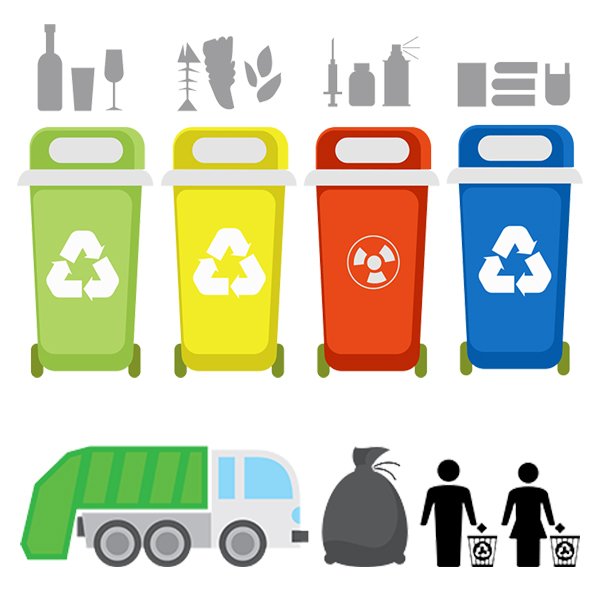
Recycling becomes more important on larger scales. At this level, used consumer goods are collected, converted back into raw materials and remade into new consumer products. Aluminum cans, office paper, steel from old buildings and plastic containers are all examples of materials commonly recycled in large quantities, often through municipal programs encouraging bulk household collections.
It’s rare for a recycled product to be exactly the same as the original material from which it was recycled. Recycled paper, for example, contains ink residue and has shorter fibers than virgin paper (paper made from wood pulp). Because of this, it may be less desirable for some purposes, such as paper used in a copy machine. When a recycled good is cheaper or weaker than the original product, it’s known as down-cycling (or downstream recycling). Eventually, goods move so far down the recycling stream it isn’t feasible to recycle them any further. After being recycled a few times, paper is no longer usable. In some cases, goods can be up-cycled — made into something more valuable than the original product. An example of this is a company making upscale, artistic furniture pieces out of old newspapers and aluminum cans
Although recycling may seem like a modern concept introduced with the environmental movement of the 1970s, it’s actually been around for thousands of years. Prior to the industrial age, you couldn’t make goods quickly and cheaply, so virtually everyone practiced recycling in some form. However, large-scale recycling programs were very rare — households predominantly practiced recycling.
The mass production of the industrial age is, in many ways, the very reason we need to worry about large-scale recycling. When products can be produced (and purchased) very cheaply, it often makes more economic sense to simply throw away old items and purchase brand new ones. However, this culture of “disposable” goods created a number of environmental problems, which we’ll discuss in detail in the next section.
In the 1930s and 40s, conservation and recycling became important in American society and in many other parts of the world. Economic depressions made recycling a necessity for many people to survive, as they couldn’t afford new goods. In the 1940s, goods such as nylon, rubber and many metals were rationed and recycled to help support the war effort. However, the economic boom of the postwar years caused conservationism to fade from the American consciousness [source: Hall]. It wasn’t until the environmental movement of the 1960s and 70s, heralded by the first Earth Day in 1970, that recycling once again became a mainstream idea. Though recycling suffered some lean years — due to public acceptance and the market for recycled goods not growing — it has generally increased from year to year [source: Hall] The success of recycling traces to wide public acceptance, the improved economics of recycling and laws requiring recycling collections or enforcing recycled content in certain manufacturing processes.
Most of the reasons we recycle are environmental, although some are economic. These include:
Too Much Garbage
One of the main reasons for recycling is to reduce the amount of garbage sent to landfills. Landfill usage peaked in the 1980s, when Americans sent almost 150 million tons (136.08 million metric tons) of garbage to landfills each year. Today, we still dump more than 100 million tons (90.719 million metric tons) of trash into landfills annually [source: Hall]. Even though modern sanitary landfills are safer and less of a nuisance than the open dumps of the past, no one likes having a landfill around. In heavily populated areas, landfill space is scarce. Where space is plentiful, filling it with garbage isn’t a very good solution to the problem. Today, recycling efforts in the United States divert 32 percent of waste away from landfills. That prevents more than 60 million tons (54.432 million metric tons) of garbage from ending up in landfills every year [source: EPA].
Pollution from Landfill Leachate
Landfills cause another problem in addition to taking up lots of space. The assortment of chemicals thrown into landfills, plus the chemicals that result when garbage breaks down and blends into a toxic soup known as leachate, creates huge amounts of pollution. Leachate can drain out of the landfill and contaminate groundwater supplies. Today, impermeable clay caps and plastic sheeting prevent much of this run off, making the landfills much safer than they were just a few decades ago. Still, any leachate is too much if it’s draining into your neighborhood.
New Goods Use Up Resources
Making a brand-new product without any recycled material causes natural resources to deplete in the manufacturing process. Paper uses wood pulp from trees, while the manufacture of plastics requires the use of fossil fuels like oil and natural gas. Making something from recycled materials means using fewer natural resources.
Recycling (Sometimes) Uses Less Energy
There’s room for debate on this aspect of recycling, but many recycling processes require less energy than it would take to manufacture the same item brand-new. Manufacturing plastic is very inexpensive, and some plastic goods can be difficult to recycle efficiently. In those cases, the recycling process probably takes more energy. It can also be difficult to weigh all the energy costs along the entire chain of production. Recycling steel certainly uses less energy than the entire process of mining iron ore, refining it and forging new steel. Some contend that the fleet of recycling trucks collecting plastic and paper door to door every week in cities across the United States tips the balance of energy out of recycling’s favor. Energy use is a factor weighed on a case-by-case basis.
Money
Recycling has a variety of economic impacts. For the companies that buy used goods, recycle them and resell new products, recycling is the source of all their income. For cities in densely populated areas that have to pay by the ton for their landfill usage, recycling can shave millions of dollars off municipal budgets. The recycling industry can have an even broader impact. Economic analysis shows that recycling can generate three times as much revenue per ton as landfill disposal and almost six times as many jobs. In the St. Louis area, recycling generates an estimated 16,000 jobs and well more than $4 billion in annual revenue [source: Essential Guide].
Almost anything can be recycled, but certain things are more common.
Paper
From curbside and workplace collections, paper is sorted based on the type of paper, how heavy it is, what it’s used for, its color and whether it was previously recycled. Then a hot chemical and water bath reduces the paper to a soupy, fibrous substance. Magnets, gravity and filters then remove things like staples, glues and other unwanted chemicals from the pulp. The ink is removed by either a chemical wash, or by blowing the ink to the surface where it’s skimmed off. The pulp — which may be bleached — is then sprayed and rolled into flat sheets, which are pressed and dried. Sometimes new pulp is added to the recycled pulp to make the paper stronger. The giant sheets of paper, when dry, are then cut into the proper size for resale back to consumers [source: Essential Guide].
Glass
Recycling glass represents significant energy and cost savings over making virgin glass, because there’s virtually no down-cycling when glass is recycled. There are two ways to recycle glass. Some companies collect bottles from their customers and thoroughly wash and disinfect them before reuse. Other glass recyclers sort the glass by color (clear, green and brown glass shouldn’t mix because it’ll give it a mottled effect). The glass is ground up into fine bits known as cullet, thoroughly sifted and filtered using lasers, magnets and sifters, then melted down and reformed into new glass.
Only glass used in containers like jars and bottles is commonly recycled. Window glass and glass used in light bulbs is too expensive and difficult to recycle.
Steel
The recycling of scrap steel from cars and old buildings has a long history in the United States. Steel is relatively easy to recycle — giant machines shred junk cars and construction waste. In addition, U.S. law requires a certain proportion of all steel to be made with recycled steel — all U.S. steel contains at least 25 percent recycled steel.
Once sorted, scrap steel is melted down and re-refined into huge sheets or coils. These can be shipped to manufacturers to make car bodies or construction materials.
Glass
Recycling glass represents significant energy and cost savings over making virgin glass, because there’s virtually no down-cycling when glass is recycled. There are two ways to recycle glass. Some companies collect bottles from their customers and thoroughly wash and disinfect them before reuse. Other glass recyclers sort the glass by color (clear, green and brown glass shouldn’t mix because it’ll give it a mottled effect). The glass is ground up into fine bits known as cullet, thoroughly sifted and filtered using lasers, magnets and sifters, then melted down and reformed into new glass.
Only glass used in containers like jars and bottles is commonly recycled. Window glass and glass used in light bulbs is too expensive and difficult to recycle.
Steel
The recycling of scrap steel from cars and old buildings has a long history in the United States. Steel is relatively easy to recycle — giant machines shred junk cars and construction waste. In addition, U.S. law requires a certain proportion of all steel to be made with recycled steel — all U.S. steel contains at least 25 percent recycled steel.
Once sorted, scrap steel is melted down and re-refined into huge sheets or coils. These can be shipped to manufacturers to make car bodies or construction materials.
Plastics
Plastic is a serious problem because it’s very cheap to produce, and it’s not biodegradable because of its long, complex molecular chains. When plastic is recycled, it’s usually made into a new form. The plastic is sorted into different types and colors, filtered and sifted of contaminants, then chopped and melted into pellets or extruded into fibers. These materials can be used many ways: fleece fabric, durable construction materials, molded furniture or insulation.
Cans
Aluminum cans are a partial success story — when they’re recycled, they save 95 percent of the energy used to make new cans, not to mention the energy usage and pollution caused by the mining and refining of bauxite, the mineral from which aluminum comes [source: Essential Guide]. The United States recycled 51.9 billion cans in 2006. Thanks to incentives such as five-cent deposits, 51.6 percent of all cans are recycled, more than any other beverage container [source: Aluminum.org]. That’s why the success is partial — as impressive as can recycling rates are, we could be doing better. When recycled, cans are chopped up, then heated to remove the paint coating. The pieces melt and mix in a vortex furnace. After being filtered and treated, the molten aluminum is poured into ingots, which are rolled into flat sheets ready to be made into new cans [source: Essential Guide].
Electronics
Recycling electronic goods isn’t as common as recycling cans or plastics. It’s labor-intensive to separate the many components of electronic equipment, and market prices for electronic scrap aren’t high. In fact, it costs consumers and businesses money to recycle electronics, and there’s a variety of toxic materials found in them, such as mercury, lead and chemical refrigerants. However, there are companies that specialize in recycling this “e-waste” and can safely dispose of or reuse these materials for a nominal fee.
Other
There are dozens of other materials that can be recycled. Organic waste can be composted and turned into fertilizer. Rubber tires can be shredded, decontaminated and made into insulation or other innovative products. If you’re looking for new ways to recycle, simply give a moment’s thought when you throw something out. Could it be reused or broken down in a useful way?
The Hungry Locust
The Hungry Locust
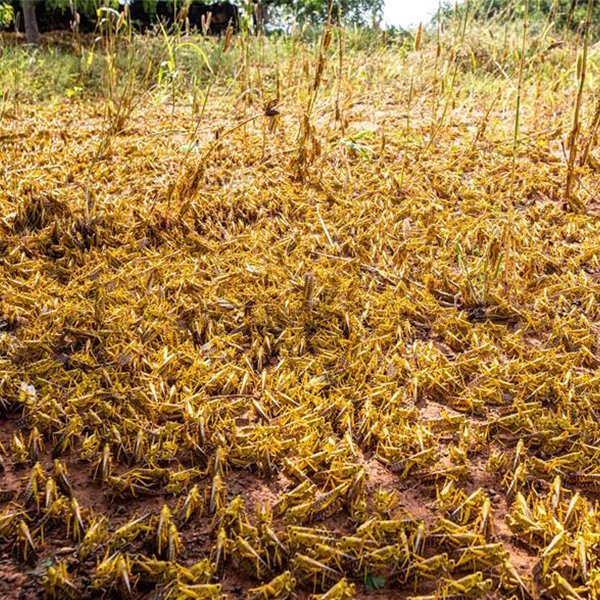
Hundreds of billions of locusts in swarms the size of major cities are laying waste to the crops in their path. It’s the worst outbreak in 25 years in Ethiopia. In Kenya, make that the worst in seven decades.
Fueling the locusts’ destruction is a bounty of vegetation following unusually heavy rains. All that food means the landscape can support a huge number of rapidly breeding insects. And the problem is about to get a lot worse—the insect population could boom by a factor of 500 by June. The Food and Agriculture Organization of the UN is calling the situation in the Horn of Africa “extremely alarming,” and estimates that a swarm covering one square kilometer can eat as much food in a day as 35,000 humans. Farmers throughout East Africa now face food shortages, as the plague consumes both crops in the field and in storage.
Locusts are actually special kinds of grasshoppers known for their gregariousness, and not in a good way. Around 20 species of the 7,000 known grasshopper varieties transform into what’s known as a gregarious phenotype, which means their bodies actually change as they socialize into swarms. Normally solitarious (a word that locust biologists made up, by the way), they change color and grow bigger muscles as they gather into massive clouds, rolling across landscapes and devastating crops. “They have this sort of Dr. Jekyll and Mr. Hyde switch,” says Arianne Cease, director of the Global Locust Initiative at Arizona State University.
(The kind of desert locust currently plaguing East Africa is in fact named for this tendency to socialize: Schistocerca gregaria.)
But why does the desert locust go gregarious, when the vast majority of grasshopper species remain solitarious? That might have something to do with the dry environments these species call home. Desert locusts only lay eggs in moist soil, to keep them from drying out. When heavy rains come in to saturate the desert, locusts—ever the opportunists—breed like mad and fill the soil with their eggs, perhaps 1,000 per square meter of soil. When those eggs hatch, they’ll have plenty of vegetation to eat, until things dry up once again.
As soon as things start getting crowded, desert locusts become gregarious and migrate away in search of more food. “If they were to stay locally, one potential is that there are too many of them and they would run out of food,” says Cease. “And so they migrate to find better resources.” By doing so in swarms, the locusts find safety in numbers—any individual is less likely to get eaten. But for farmers in surrounding countries, the locusts’ newfound mobility can spell ruin.
To adapt to this new social life, the locusts’ bodies transform, inside and out. They change color from a drab tan to a striking yellow and black, perhaps a signal to their predators that they’re toxic. Indeed, while solitarious locusts avoid eating toxic plants, the gregarious locusts are actually attracted to the odor of hyoscyamine, a toxic alkaloid found in local plants. Sure, by eating those plants and assuming their toxicity and changing color to yellow and black, the insects make themselves more conspicuous, but that isn’t such a big deal when there’s millions of them barreling across a landscape—no one’s trying to hide. Being bright and alone, especially in a barren desert, probably isn’t a good strategy for the solo locust, so they stay drab.
And speaking of food, you might assume that to fuel their epic migrations—an individual locust might travel over 90 miles in a day, consuming its own weight in plant matter—the insects would need to load up on protein, especially since their new bodies come with extra muscle mass. To put it in human terms, says Rick Overson, research coordinator of the Global Locust Initiative, “If your friend told you that they were going to become a vegan, one concern you might have for them is to make sure to get enough protein.”
But that’s not how locusts seem to operate. Cease and Overson have shown that for South American locusts, at least (they haven’t yet done field tests on desert locusts in Africa), it’s more about loading up on carbohydrates, especially as they’re transforming into their gregarious phenotype.
And it’s precisely this physiological quirk that turns a locust swarm into a plague: These swarming grasshoppers love grains, a staple of the human diet. This is particularly threatening to farmers with depleted soils, because overgrazed lands tend to harbor more carbohydrate-rich species—grasses in particular are sapped of their protein as nitrogen washes out of overworked soil. It all but guarantees a swarm is going to make itself at home on somebody’s farm. “Going back to the Bible and the Koran, humans have perceived themselves as passive victims of these locust swarms that appear from nowhere and darken the skies,” says Overson. “And this connection to nutrition sort of illuminates a different dimension to this, in that we might be more active players as humans in the complex dynamics of locusts swarming.”
Water, another critical factor of locust biology, also helps explain why things are so bad in Africa right now. In 2018, the heavy rains that locusts crave came with two cyclones, in May and October, that made landfall in nearly the same place in the southern Arabian Peninsula. The May storm alone dumped enough water for desert vegetation to grow for six months, which is long enough for two generations of locusts to appear and explode their populations—fast. “Mind you, there’s an exponential increase of about 20-fold for each generation,” says Keith Cressman, senior locust forecasting officer with the UN’s Food and Agriculture Organization. “So that means after six months—since each generation is three months—you’ve got about 400-fold increase.” Then the October cyclone added several more months’ breeding time.
This insect population boom unfolded in the remote deserts of Oman, far from humans who might see the growing threat. Cressman’s organization, the FAO, helps coordinate a vast network of human observers and satellite data to forecast locust plagues. All told, the network includes operators from two dozen front-line countries between West Africa and India with national locust control programs, patrolling the wilds in trucks, looking for the first sign of trouble. Everyone’s in touch, monitoring in real time, coordinating with Cressman at the FAO headquarters in Rome.
But this outbreak eluded the monitoring network. “Nobody knew what was going on because this was just in one of the most remote places on this planet,” says Cressman. “There’s nothing there—there’s no roads, no infrastructure, no Facebook, no anything. All you have is towering sand dunes that are as tall as skyscrapers.”
It wasn’t until observers found locusts in southern Oman at the end of 2018 that Cressman could raise the alarm. The following January, the region started to dry, and you can imagine how things went from here. Like armies in search of conquests, locust populations started spreading north into Iran and south into Yemen in search of food. “As those weeks kept continuing, and more and more swarms are coming out of that area, you start to appreciate the magnitude of what was in that area to begin with,” says Cressman.
Yemen, ravaged by war, no longer had the means to deploy the specially trained crews that spray common pesticides that kill the insects in a matter of hours. (It’s too dangerous for farmers and other regular folks to spray the pesticides themselves.) Then, catastrophically, heavy rains hit the country, providing yet more breeding opportunities for the invading locusts. Early last summer, the plague jumped the gulf and landed in Somalia, then continued its march into Ethiopia and Kenya.
In an ideal world, Cressman and his colleagues would catch and quash the threat early. They can project where the locusts might head over a month ahead of time, and alert those countries to mobilize their forces—distributing pesticides from a central repository, prepositioning aircraft for aerial control operations, and readying the professional locust hunters. “A locust plague is much like a wildfire,” Cressman says. “If you can find it when it’s just a tiny campfire, and you can put it out, you’re good. No problem.” But if they can’t detect and obliterate the locust plague early, it will grow and grow, really only stopping when the swarm runs out of food.
Once the pesticide operation begins, people occupying infected lands have to vacate for 24 hours until the chemicals break down. And if the pesticides aren’t sprayed precisely, other insects in the environment become collateral damage. A new biocontrol method, though, is showing promise, says Cressman: The killer fungus Metarhizium acridum, which only torments locusts and grasshoppers, could more selectively target the menace.
It’s a menace that may only grow stronger, because locusts will likely be winners on a warming planet. They need a lot of vegetation to fuel their swarms, and that requires rain. The highly active cyclone seasons the past few years may be a sign of things to come. Warmer seas spawn more cyclones, and more cyclones—especially sequential ones that give locusts wet soils to breed in as they march across the landscape—could mean more locusts.
On the climatic flip side, locusts are highly adapted to a life of heat and drought: The Global Locust Initiative’s experiments have shown that Australian plague locusts can survive up to a month without water. So while other species struggle to adapt to a rapidly-warming planet, the locusts will have an advantage both in their heat-tolerant physiology, and potentially from a decrease in competition from less fortunate insects. “If climate change does accelerate aridification and temperature—as it’s predicted to do in many areas—it would be very easy to imagine that some locust species could expand their range,” says Overson, of the Global Locust Initiative. “For the desert locust, this would increase the already daunting geographic area that needs to be monitored.”
Yellow vs Green
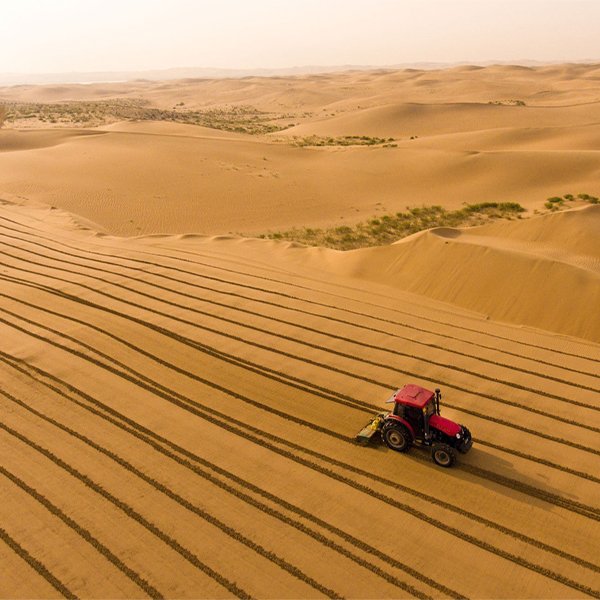
As global temperatures rise and the human population expands, more of the planet is vulnerable to desertification, the permanent degradation of land that was once arable.
While interpretations of the term desertification vary, the concern centers on human-caused land degradation in areas with low or variable rainfall known as drylands: arid, semi-arid, and sub-humid lands. These drylands account for more than 40 percent of the world’s terrestrial surface area.
While land degradation has occurred throughout history, the pace has accelerated, reaching 30 to 35 times the historical rate, according to the United Nations. This degradation tends to be driven by a number of factors, including urbanization, mining, farming, and ranching. In the course of these activities, trees and other vegetation are cleared away, animal hooves pound the dirt, and crops deplete nutrients in the soil. Climate change also plays a significant role, increasing the risk of drought.
All of this contributes to soil erosion and an inability for the land to retain water or regrow plants. About 2 billion people live on the drylands that are vulnerable to desertification, which could displace an estimated 50 million people by 2030.
Where is desertification happening, and why?
The risk of desertification is widespread and spans more than 100 countries, hitting some of the poorest and most vulnerable populations the hardest, since subsistence farming is common across many of the affected regions.
More than 75 percent of Earth’s land area is already degraded, according to the European Commission’s World Atlas of Desertification, and more than 90 percent could become degraded by 2050. The commission’s Joint Research Centre found that a total area half of the size of the European Union (1.61 million square miles, or 4.18 million square kilometers) is degraded annually, with Africa and Asia being the most affected.
The drivers of land degradation vary with different locations, and causes often overlap with each other. In the regions of Uzbekistan and Kazakhstan surrounding the Aral Sea, excessive use of water for agricultural irrigation has been a primary culprit in causing the sea to shrink, leaving behind a saline desert. And in Africa’s Sahel region, bordered by the Sahara Desert to the north and savannas to the south, population growth has caused an increase in wood harvesting, illegal farming, and land-clearing for housing, among other changes.
The prospect of climate change and warmer average temperatures could amplify these effects. The Mediterranean region would experience a drastic transformation with warming of 2 degrees Celsius, according to one study, with all of southern Spain becoming desert. Another recent study found that the same level of warming would result in “aridification,” or drying out, of up to 30 percent of Earth’s land surface.
When land becomes desert, its ability to support surrounding populations of people and animals declines sharply. Food often doesn’t grow, water can’t be collected, and habitats shift. This often produces several human health problems that range from malnutrition, respiratory disease caused by dusty air, and other diseases stemming from a lack of clean water.
Desertification solutions
In 1994, the United Nations established the Convention to Combat Desertification (UNCCD), through which 122 countries have committed to Land Degradation Neutrality targets, similar to the way countries in the climate Paris Agreement have agreed to targets for reducing carbon pollution. These efforts involve working with farmers to safeguard arable land, repairing degraded land, and managing water supplies more effectively.
The UNCCD has also promoted the Great Green Wall Initiative, an effort to restore 386,000 square miles (100 million hectares) across 20 countries in Africa by 2030. A similar effort is underway in northern China, with the government planting trees along the border of the Gobi desert to prevent it from expanding as farming, livestock grazing, and urbanization, along with climate change, removed buffering vegetation.
However, the results for these types of restoration efforts so far have been mixed. One type of mesquite tree planted in East Africa to buffer against desertification has proved to be invasive and problematic. The Great Green Wall initiative in Africa has evolved away from the idea of simply planting trees and toward the idea of “re-greening,” or supporting small farmers in managing land to maximize water harvesting (via stone barriers that decrease water runoff, for example) and nurture natural regrowth of trees and vegetation.
“The absolute number of farmers in these [at-risk rural] regions is so large that even simple and inexpensive interventions can have regional impacts,” write the authors of the World Atlas of Desertification, noting that more than 80 percent of the world’s farms are managed by individual households, primarily in Africa and Asia. “Smallholders are now seen as part of the solution of land degradation rather than a main problem, which was a prevailing view of the past.”